
Caesar dressing represents one of culinary history’s most beloved accidents, born from necessity and creativity in 1924 when Italian immigrant Caesar Cardini ran low on ingredients at his Tijuana restaurant. What emerged was a homemade Caesar dressing that would become a global phenomenon, proving that the best recipes often come from resourcefulness rather than abundance.
Why Homemade Caesar Dressing Matters
Creating your own Caesar dressing connects you to a rich culinary tradition while giving you complete control over ingredients and flavor intensity. For those seeking more salad inspiration, our balsamic vinaigrette dressing offers another homemade option, while our collection of healthy dinner ideas provides perfect pairings. Understanding umami flavors becomes crucial when working with anchovies, as explained in this beginner-friendly explanation, and mastering creamy salad dressing techniques will elevate your entire repertoire.
The evolution of Caesar dressing reflects changing American tastes and the democratization of fine dining. Originally served tableside with theatrical flair, Caesar salad became a symbol of sophistication in mid-century America. The dressing itself underwent countless interpretations, from anchovy-heavy versions honoring Italian roots to milder adaptations catering to broader palates.
What makes homemade Caesar dressing superior to commercial versions lies in the freshness of ingredients and the emulsification process. Store-bought dressings rely on stabilizers and preservatives that mask the bright, clean flavors achievable through proper technique. The magic happens when raw egg yolks meet quality olive oil, creating a silky base that carries the complex flavors of anchovies, garlic, and aged cheese.
Homemade Caesar Dressing Ingredients
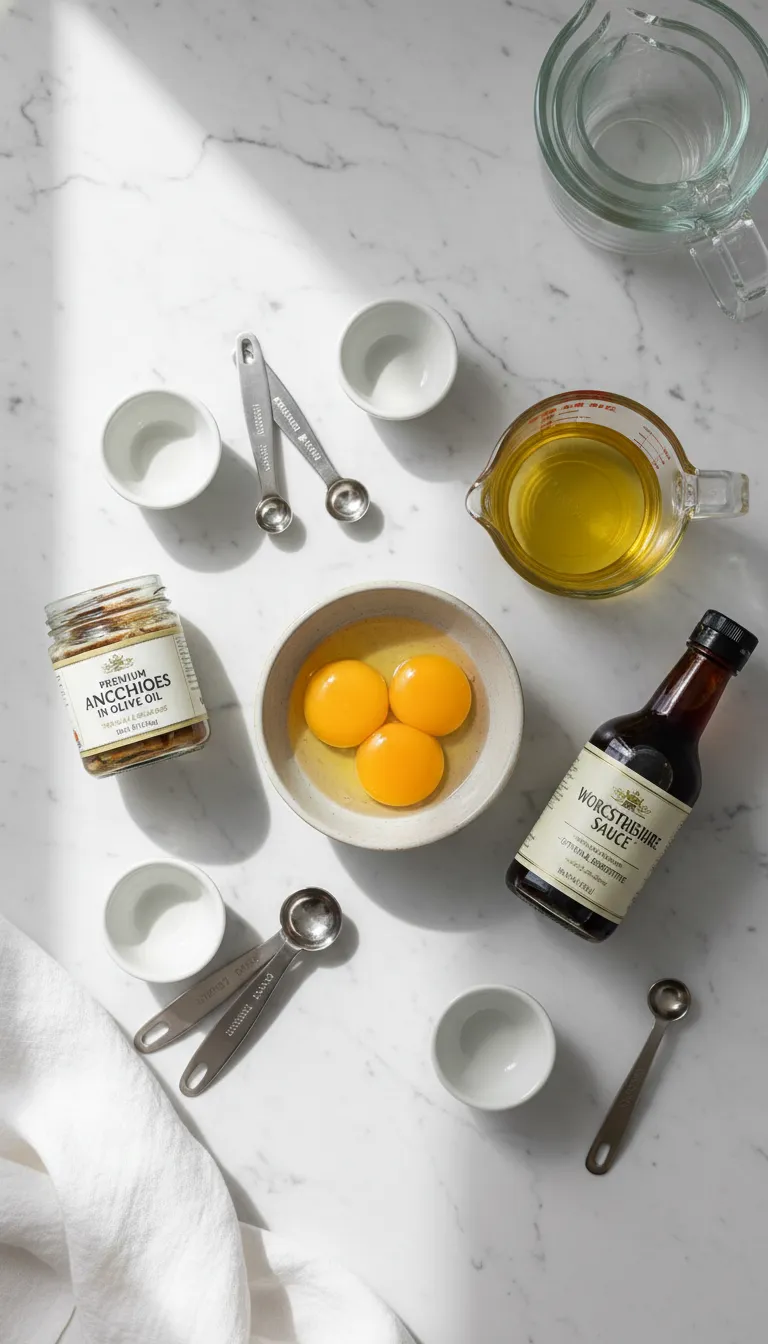
The foundation of exceptional homemade Caesar dressing rests on selecting premium ingredients that each contribute essential elements to the final flavor profile:
- 4-6 anchovy fillets in olive oil – Choose high-quality anchovies packed in olive oil rather than salt-packed varieties for cleaner flavor
- 2 large raw egg yolks – Use the freshest eggs possible, preferably from pastured chickens
- 1/2 cup vegetable oil or extra-virgin olive oil – A neutral oil creates smoother emulsion, while olive oil adds complexity
- 1 tablespoon Worcestershire sauce (optional) – Serves as anchovy substitute for those preferring milder umami
- 2 cloves garlic, minced – Fresh garlic provides sharp brightness
- 1/4 cup fresh lemon juice – Balances richness with essential acidity
- 1/2 cup grated Parmesan cheese – Aged Parmigiano-Reggiano delivers nutty depth
- 1/2 teaspoon Dijon mustard – Aids emulsification while adding subtle heat
- Salt and black pepper to taste – Fine sea salt enhances all flavors
Ingredient Spotlight
Anchovies serve as the umami backbone, providing deep, savory notes that distinguish Caesar from other creamy dressings. Quality anchovies dissolve completely when whisked, leaving only their essential flavor contribution without fishy overtones.
Raw egg yolks create the luxurious texture that makes Caesar dressing cling beautifully to lettuce leaves. The lecithin in yolks acts as a natural emulsifier, binding oil and water-based ingredients into smooth harmony.
Oil selection dramatically impacts final flavor – neutral oils like canola allow other ingredients to shine, while extra-virgin olive oil contributes fruity, peppery notes that complement the Mediterranean character.
Fresh lemon juice provides essential acidity that brightens the rich base while helping preserve the dressing. Always use fresh juice rather than bottled for optimal flavor and natural preservation.
Timing
This homemade Caesar dressing requires minimal time investment while delivering maximum flavor impact:
- Preparation time: 10 minutes
- Cooking time: 0 minutes (no cooking required)
- Total time: 10 minutes
- Servings: Approximately 1 cup of dressing
Compared to store-bought alternatives, making Caesar dressing at home takes roughly 20% less time than a grocery store trip and costs significantly less while providing superior flavor and freshness control.
Step-by-Step Instructions for Perfect Homemade Caesar Dressing
Step 1: Prepare the Anchovy Base
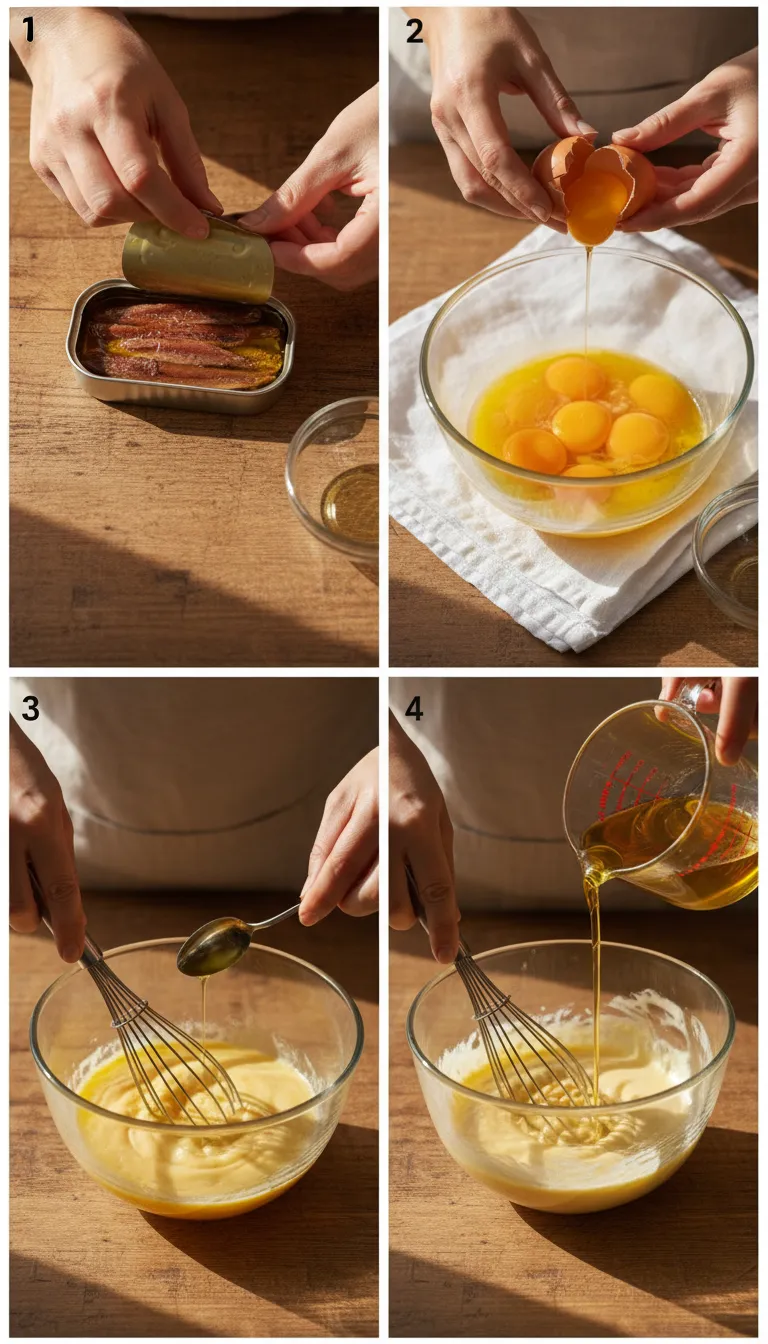
Mash 4-6 anchovy fillets with the flat side of a knife blade until they form a smooth paste. This technique ensures even distribution throughout the dressing while eliminating any chunks that might create texture issues.
Step 2: Create the Emulsion Foundation
In a medium bowl, whisk together the anchovy paste, 2 egg yolks, minced garlic, Dijon mustard, and lemon juice until well combined. This base mixture should appear slightly pale and smooth.
Step 3: Begin Oil Incorporation
Add oil drop by drop while whisking vigorously until the mixture becomes glossy and begins to thicken. This crucial step prevents the emulsion from breaking and ensures proper texture development.
Step 4: Stream in Remaining Oil
Once the base stabilizes, slowly stream in the remaining oil while whisking continuously. The dressing should gradually thicken to coat the back of a spoon without being heavy or gluey.
Step 5: Final Seasoning and Adjustment
Whisk in grated Parmesan cheese, then season with salt and pepper to taste. Adjust acidity with additional lemon juice if needed, keeping in mind that flavors will meld and intensify over time.
Tips & Tricks for Perfect Homemade Caesar Dressing Results
- Temperature control: Use room-temperature ingredients to ensure smooth emulsification and prevent the mixture from breaking or separating.
- Gradual oil addition: Patience during oil incorporation creates the silky texture that distinguishes restaurant-quality Caesar from homemade attempts.
- Fresh egg selection: Choose the freshest eggs available and save the egg whites for meringues, scrambles, or other recipes to minimize waste.
- Anchovy quality matters: Invest in premium anchovies packed in olive oil for cleaner flavor without overwhelming fishiness.
- Immediate serving advantage: Fresh homemade Caesar dressing tastes brightest when used within hours of preparation, though it keeps well refrigerated for up to one week.
Recipe Variations & Substitutions
Anchovy-Free Version: Replace anchovies with 2 tablespoons Worcestershire sauce plus 1 teaspoon soy sauce for umami depth without fish products.
Vegan Adaptation: Substitute egg yolks with 2 tablespoons tahini or cashew cream, using nutritional yeast instead of Parmesan cheese for similar savory notes.
Lighter Alternative: Replace half the oil with Greek yogurt for reduced calories while maintaining creamy texture and tangy flavor balance.
Garlic Lover’s Version: Double the garlic and add 1 teaspoon garlic powder for intensified garlic presence throughout the dressing.
Behind the Recipe
This homemade Caesar dressing recipe emerged from countless experiments seeking the perfect balance between traditional authenticity and modern accessibility. The technique emphasizes proper emulsification while respecting the original’s bold flavors, creating a version that honors Caesar Cardini’s legacy while adapting to contemporary kitchens and ingredient availability.
Pairing Ideas
Beyond classic romaine lettuce, this versatile dressing enhances grilled vegetables, roasted potatoes, and grain bowls. Pair with sparkling water infused with lemon, iced herbal teas, or fresh vegetable juices that complement rather than compete with the dressing’s rich complexity.
Leftover & Reuse Ideas
Transform leftover dressing into pasta salad base, sandwich spread for wraps, or dipping sauce for raw vegetables. Mix with mayonnaise for elevated potato salad or use as marinade for chicken before grilling for Caesar-inspired main dishes.
Nutritional Information
Each 2-tablespoon serving provides approximately 140 calories, 14g fat, 2g carbohydrates, and 3g protein. The dressing contains healthy monounsaturated fats from olive oil, complete proteins from eggs, and calcium from Parmesan cheese.
Serving Suggestions
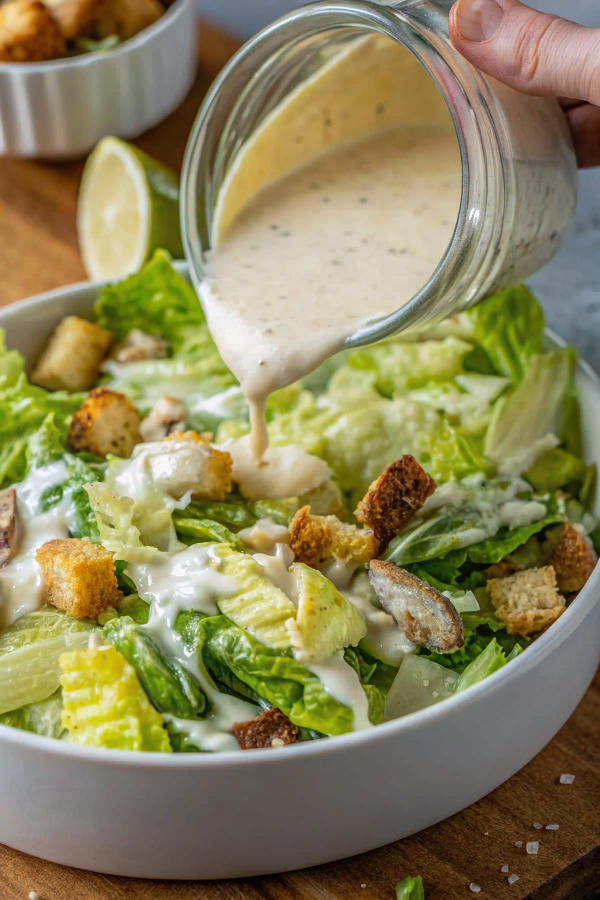
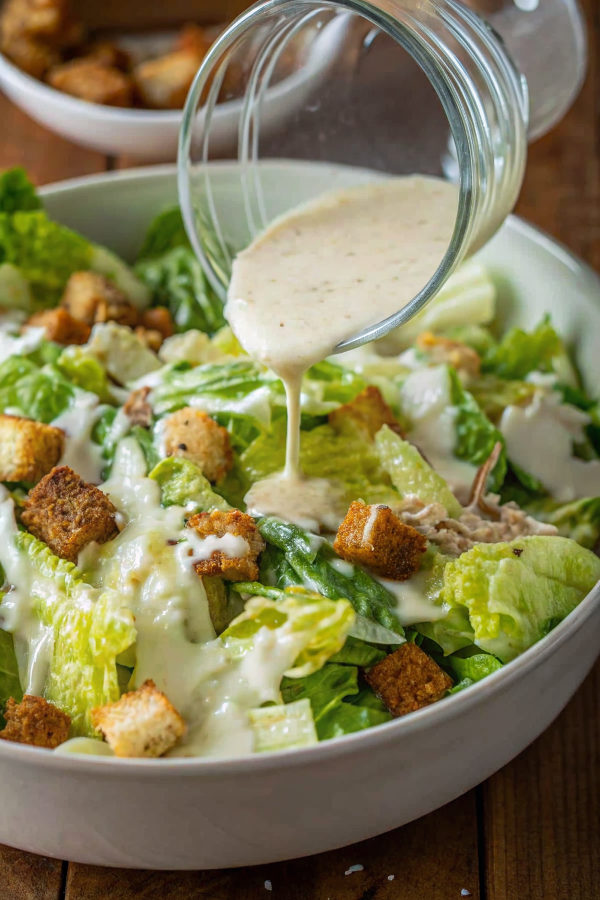
Serve immediately over crisp romaine hearts with homemade croutons and additional Parmesan shavings. The dressing works beautifully as a dip for crudité platters or drizzled over grilled chicken for elegant presentation.
Common Mistakes to Avoid
Broken emulsion: Adding oil too quickly causes separation. Fix by whisking a fresh egg yolk in a clean bowl and gradually whisking in the broken mixture.
Overpowering anchovy flavor: Start with fewer anchovies and adjust upward to prevent overwhelming the delicate balance of flavors.
Cold ingredients: Refrigerated eggs and oil resist emulsification, leading to unstable dressing that may separate during storage.
Storage & Reheating Tips
Store homemade Caesar dressing in an airtight container in the refrigerator for up to one week. Bring to room temperature before serving and whisk briefly to restore smooth consistency. Never freeze egg-based dressings as they will separate permanently upon thawing.
Frequently Asked Questions
Is homemade Caesar dressing safe to eat with raw eggs?
Using fresh, high-quality eggs from reputable sources minimizes risk. The acid from lemon juice provides some protection, though pregnant women and immunocompromised individuals should consider pasteurized egg products.
Can I make homemade Caesar dressing without anchovies?
Yes, substitute Worcestershire sauce or a combination of soy sauce and miso paste to achieve similar umami depth without fish products.
How long does homemade Caesar dressing last?
Properly stored homemade Caesar dressing maintains quality for 5-7 days refrigerated, though flavor peaks within the first 2-3 days of preparation.
Why did my Caesar dressing break or separate?
Emulsion breaks typically result from adding oil too quickly or using cold ingredients. Rescue broken dressing by starting fresh with a room-temperature egg yolk and gradually whisking in the separated mixture.
What’s the best oil for homemade Caesar dressing?
Light olive oil or neutral oils like canola create smooth emulsions, while extra-virgin olive oil adds complexity but may overpower delicate flavors depending on personal preference.
Conclusion
Homemade Caesar Dressing
Mastering homemade Caesar dressing opens doors to countless culinary possibilities while connecting you to a cherished tradition of scratch cooking. The satisfaction of creating restaurant-quality dressing in your own kitchen, combined with the superior flavor and ingredient control, makes this recipe an essential addition to any cook’s repertoire. With proper technique and quality ingredients, you’ll never return to store-bought versions.
Made this recipe? Drop your twist in the comments, rate the recipe, and tag us on Facebook, Instagram with #recipehoney.com we might feature your creation!
Homemade Caesar Dressing: How to Make the Best Easy Recipe
Ingredients
Instructions
- Prepare Anchovies: Use nicer anchovies in olive oil for robust umami flavor
- Combine Egg Yolks: Don't let raw egg yolks scare you - they bring creamy richness
- Emulsify Base: Add oil drop by drop, whisking until base becomes glossy
- Finish Dressing: Slowly stream in remaining oil, whisking vigorously until combined
- Final Tips: For best results, use fresh eggs and preserve unused whites