
This decadent twist on traditional French toast brings together the creamy richness of crème brûlée with the satisfying warmth of perfectly soaked bread. The result is a breakfast masterpiece that delivers both comfort and sophistication in every bite.
Why This Creme Brulee French Toast Recipe Matters
French toast has evolved far beyond its humble origins as a way to use stale bread. Today’s breakfast enthusiasts seek creative variations that elevate familiar flavors into restaurant-quality experiences. For those looking to expand their breakfast repertoire, exploring different pancake variations or discovering baked oatmeal recipes can provide similar indulgent morning experiences. Professional chefs at Something Swanky have documented how French toast variations continue to gain popularity among home cooks. The community at r/EatCheapAndHealthy frequently discusses creative breakfast solutions that balance indulgence with practicality.
The technique of caramelizing sugar directly on French toast originated in upscale American brunch establishments during the 1990s, when chefs began experimenting with dessert techniques in breakfast applications. This fusion approach created a new category of “dessert breakfast” items that satisfied both morning hunger and sweet cravings.
Traditional French toast dates back to ancient Rome, where it was known as “pan dulcis.” The French perfected the technique during the medieval period, creating “pain perdu” or “lost bread” as a way to revitalize day-old bread. The addition of the crème brûlée element represents a modern evolution, bringing together two beloved French culinary traditions.
Creme Brulee French Toast Recipe Ingredients
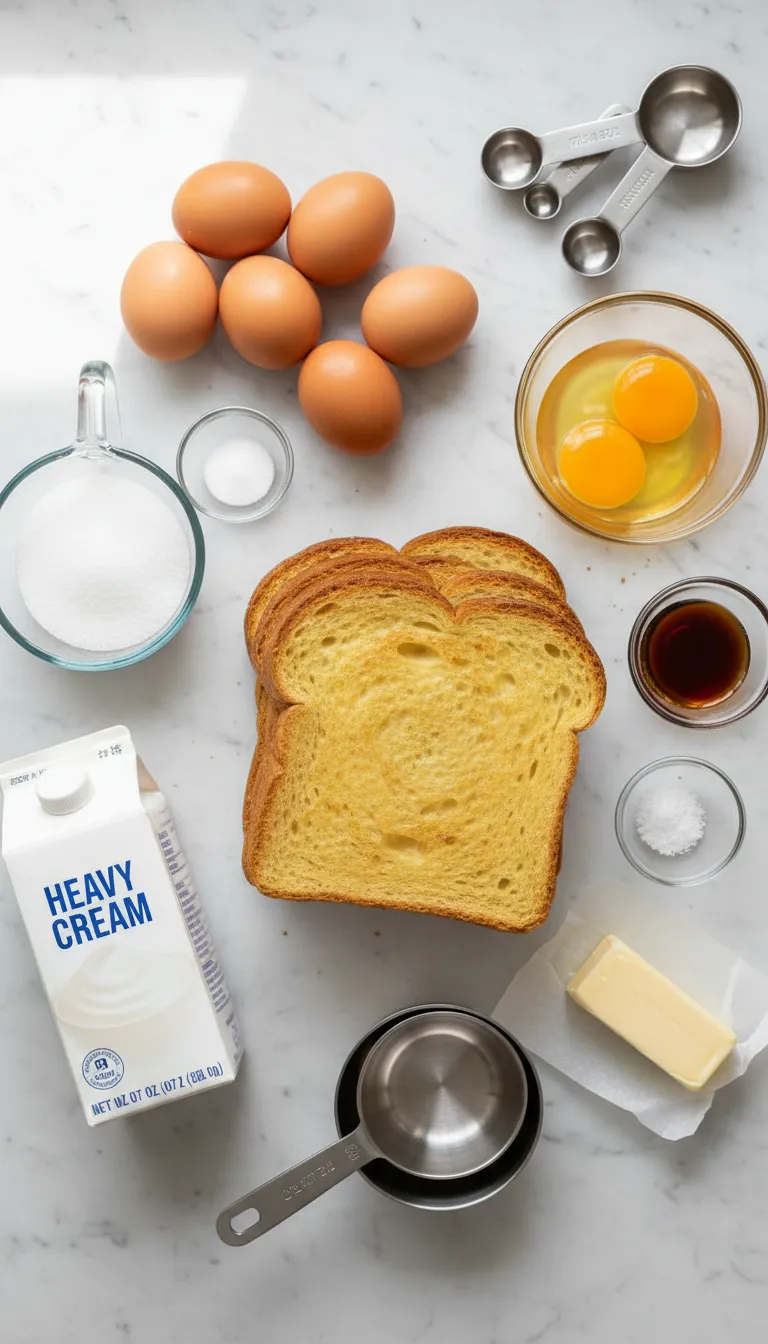
Ingredient Spotlight
Brioche or Challah Bread: These enriched breads contain eggs and butter, creating a tender crumb that absorbs custard beautifully while maintaining structural integrity. Their slightly sweet flavor complements the caramelized sugar topping perfectly.
Extra Egg Yolks: The additional yolks create the signature custard-like texture that distinguishes this recipe from standard French toast. They add richness and help achieve that creamy, crème brûlée-inspired interior.
Heavy Cream: With 36% fat content, heavy cream provides the luxurious mouthfeel and helps create the custard base that penetrates deep into the bread fibers.
Vanilla Extract or Paste: Pure vanilla adds aromatic complexity. Vanilla paste contains vanilla bean specks that create visual appeal and intensify the flavor profile.
Granulated Sugar (dual purpose): Used both in the custard mixture for sweetness and on top for the signature caramelized crust that defines crème brûlée.
Complete Ingredient List
- 6-8 thick slices (1-inch) Brioche, Challah, or Texas Toast
- 4 large eggs
- 2 extra egg yolks
- 1 cup heavy cream
- 1/3 cup granulated sugar (for custard)
- 2 teaspoons vanilla extract or 1 teaspoon vanilla paste
- 1/4 teaspoon salt
- 3 tablespoons unsalted butter
- 1/2 cup granulated sugar (for caramelized topping)
- 2 tablespoons turbinado sugar (optional, for extra crunch)
Substitution Ideas
- Bread alternatives: Thick-cut sourdough, French bread, or even croissants
- Dairy-free option: Coconut cream plus cashew milk
- Lower fat version: Half-and-half instead of heavy cream
- Sugar alternatives: Coconut sugar or maple syrup in the custard
Timing
- Preparation time: 15 minutes
- Soaking time: 30 minutes minimum (or overnight)
- Cooking time: 20 minutes
- Total time: 1 hour 5 minutes (35% faster than traditional overnight methods)
Step-by-Step Instructions for Perfect Creme Brulee French Toast
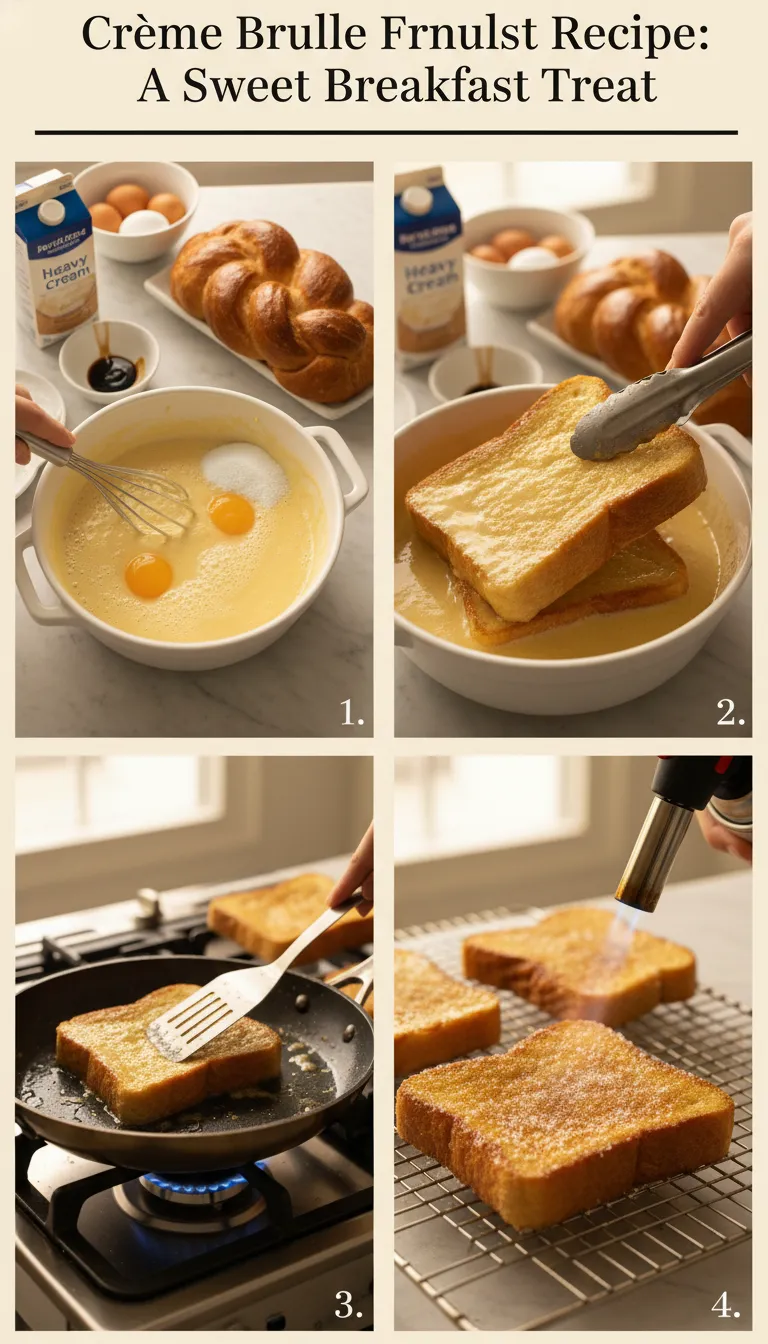
Step 1: Prepare the Bread Foundation
Cut your brioche or challah into thick, approximately 1-inch slices. The thickness is crucial—too thin and the bread won’t absorb enough custard; too thick and the center won’t cook properly. Aim for uniform slices to ensure even cooking.
Step 2: Create the Custard Base
In a wide, shallow dish, whisk together large eggs, extra egg yolks, heavy cream, granulated sugar, vanilla extract, and salt until smooth and slightly pale. The mixture should be completely homogeneous with no streaks of egg white visible. This creates the signature creamy texture.
Step 3: The Soaking Process
Carefully place bread slices into the custard, ensuring each side is fully submerged. Soak for at least 30 minutes at room temperature, flipping halfway through, or refrigerate overnight for maximum flavor absorption. The bread should feel saturated but not falling apart.
Step 4: Cook to Golden Perfection
Heat a large non-stick pan or griddle over medium heat and add unsalted butter. Once melted and foaming subsides, cook soaked bread slices for 3-4 minutes per side until golden brown and cooked through. Don’t rush this step—proper browning develops flavor.
Step 5: Create the Signature Crust
Arrange cooked French toast slices on a baking sheet and sprinkle an even layer of granulated sugar over the top. Use a kitchen torch to caramelize the sugar until it forms a crisp, amber crust, moving in circular motions to prevent burning.
Step 6: Final Presentation
Serve immediately while the caramelized sugar remains crisp. The contrast between the warm, creamy interior and the crackling sugar top creates the authentic crème brûlée experience.
Tips & Tricks for Perfect Creme Brulee French Toast Results
- Temperature Control: Keep heat at medium to prevent burning while ensuring the custard cooks through completely
- Sugar Distribution: Apply sugar in thin, even layers for uniform caramelization without bitter spots
- Torch Technique: Keep the flame moving constantly and maintain 4-6 inches distance from the surface
- Bread Selection: Day-old bread actually works better as it absorbs custard more effectively than fresh bread
- Timing is Everything: Serve immediately after torching to maintain the crispy sugar shell contrast
Recipe Variations & Substitutions
Orange Zest Variation: Add 2 tablespoons fresh orange zest to the custard for a citrusy twist that brightens the rich flavors.
Cinnamon Spice Version: Incorporate 1 teaspoon cinnamon and 1/4 teaspoon nutmeg into the custard mixture for warming spice notes.
Chocolate Indulgence: Drizzle melted dark chocolate over the caramelized surface before serving for an extra decadent experience.
Berry Compote Topping: Serve with a warm mixed berry compote that complements the caramelized sugar beautifully.
Behind the Recipe
This recipe was inspired by a memorable brunch at a Parisian café where the chef combined traditional pain perdu techniques with modern caramelization methods. The goal was to recreate that moment of breaking through the sugar crust to reveal the custardy interior—that satisfying crack that makes crème brûlée so beloved.
The development process involved testing various bread types, custard ratios, and caramelization techniques to achieve the perfect balance between breakfast comfort and dessert elegance. The result honors both French culinary traditions while creating something entirely new.
Pairing Ideas
Beverage Pairings: French press coffee, Earl Grey tea, fresh orange juice, or a rich hot chocolate complement the sweet, creamy flavors beautifully.
Side Dishes: Fresh berries, crispy turkey sausage, or a light fruit salad provide refreshing contrasts to the rich French toast.
Garnish Options: Powdered sugar, fresh mint leaves, candied orange peel, or a dollop of whipped cream enhance the presentation.
Leftover & Reuse Ideas
Leftover French toast can be refrigerated for up to 2 days and reheated in a 350°F oven for 5-7 minutes. The caramelized sugar will soften, but you can re-torch the surface for renewed crispness.
Transform leftovers into a bread pudding by cubing the French toast, layering in a baking dish with additional custard, and baking until set. This creates an entirely new dessert from your breakfast remnants.
Nutritional Information
Per serving (based on 4 servings): Approximately 485 calories, 12g protein, 52g carbohydrates, 26g fat. The recipe provides calcium from dairy ingredients and protein from eggs, making it more nutritionally substantial than standard pancakes or waffles.
Serving Suggestions
Present each slice on warmed plates to maintain temperature. The visual appeal comes from the contrast between the golden-brown toast and the glassy caramelized sugar surface. Arrange fresh berries alongside for color contrast and palate cleansing between bites.
For special occasions, serve on individual cast-iron skillets to maintain heat and create an impressive presentation that mimics restaurant plating techniques.
Common Mistakes to Avoid
Oversaturating the Bread: While thorough soaking is important, bread that’s too saturated will fall apart during cooking and create a soggy texture rather than the desired custard-like interior.
High Heat Cooking: Rushing the cooking process with high heat burns the exterior before the custard interior sets properly, resulting in raw centers and bitter flavors.
Uneven Sugar Application: Thick patches of sugar create bitter, burnt spots while thin areas won’t caramelize properly. Practice even distribution for consistent results.
Delayed Serving: The caramelized sugar begins softening immediately after torching. Serve within 2-3 minutes to maintain the signature textural contrast.
Storage & Reheating Tips
Store cooked French toast in the refrigerator for up to 3 days in an airtight container. For best results, store without the caramelized sugar topping and add fresh sugar before reheating and torching.
Reheat in a 350°F oven for 8-10 minutes until warmed through, then apply fresh sugar and torch for the crispy topping. Avoid microwave reheating as it creates a soggy texture and prevents proper caramelization.
The custard mixture can be prepared up to 24 hours in advance and stored covered in the refrigerator, making morning preparation more efficient.
FAQs
Can I make Creme Brulee French Toast without a kitchen torch?
Yes, use your oven’s broiler setting. Place the sugar-topped French toast 4-6 inches from the broiler element and watch carefully, rotating the pan for even caramelization. This typically takes 1-3 minutes.
How do I prevent the Creme Brulee French Toast from becoming soggy?
Use day-old bread, maintain medium heat during cooking, and ensure the custard is fully set before removing from the pan. The interior should feel firm but yielding when gently pressed.
What’s the best bread for Creme Brulee French Toast Recipe?
Brioche and challah are ideal due to their rich, eggy texture and sturdy structure. These enriched breads absorb custard beautifully while maintaining their shape during cooking.
Can I prepare Creme Brulee French Toast in advance?
The bread can soak in custard overnight for deeper flavor penetration. Cook just before serving and add the caramelized sugar topping at the last moment for optimal texture contrast.
How do I achieve the perfect caramelized sugar crust on my French toast?
Apply sugar in thin, even layers and keep the torch moving constantly. The sugar should bubble and turn amber-colored. Allow it to cool for 30 seconds to achieve the signature crispy texture.
Conclusion
Creme Brulee French Toast Recipe
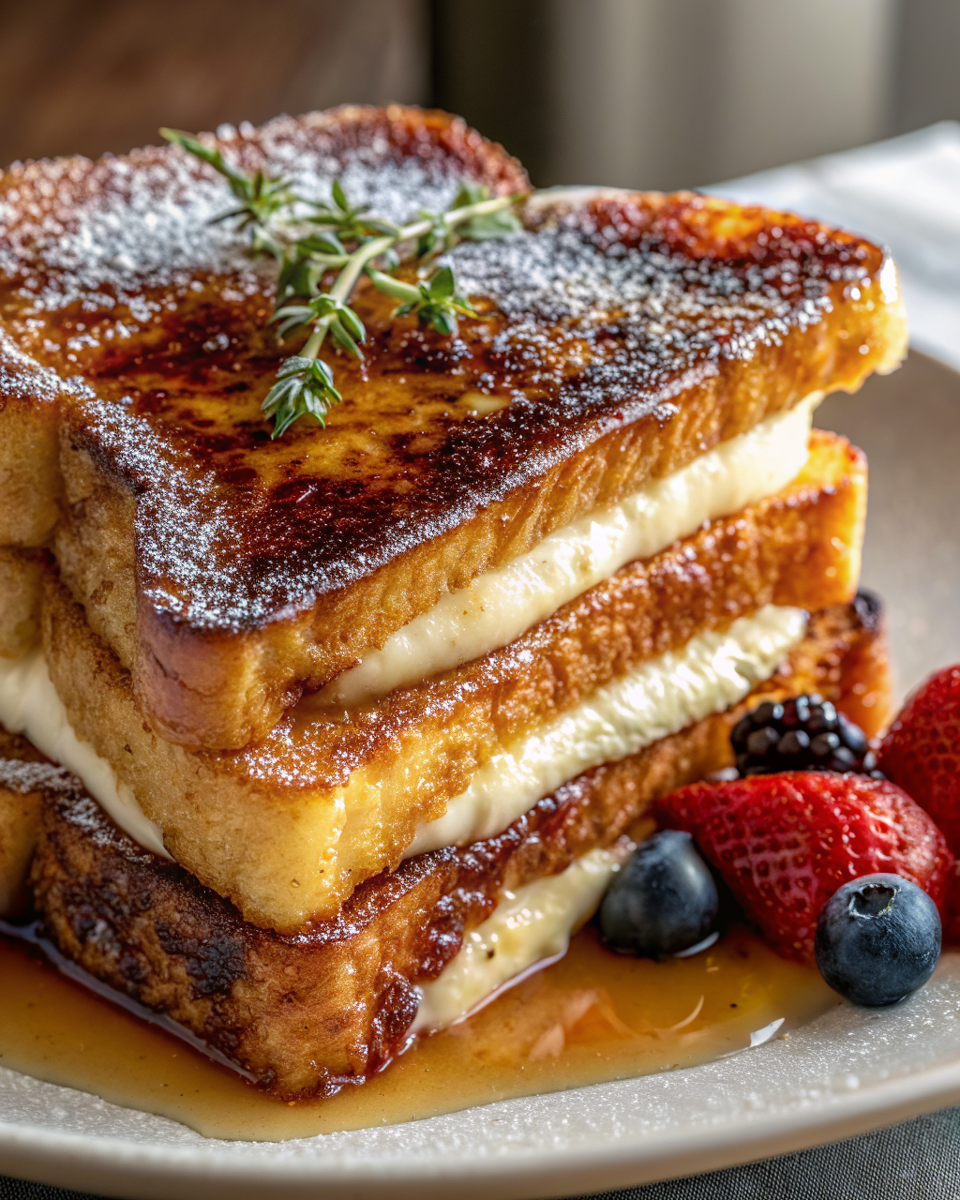
This Creme Brulee French Toast Recipe transforms ordinary breakfast into an extraordinary culinary experience. The combination of rich custard-soaked bread and caramelized sugar creates a perfect balance of textures and flavors that satisfies both comfort food cravings and sophisticated palates.
The technique may seem elaborate, but the results justify every step. Each bite delivers the satisfying crack of caramelized sugar followed by the creamy, vanilla-scented interior that makes this recipe truly special. Whether you’re celebrating a special occasion or simply elevating your weekend brunch routine, this recipe delivers restaurant-quality results in your own kitchen.
Made this recipe? Drop your twist in the comments, rate the recipe, and tag us on Facebook, Instagram with #recipehoney.com we might feature your creation!
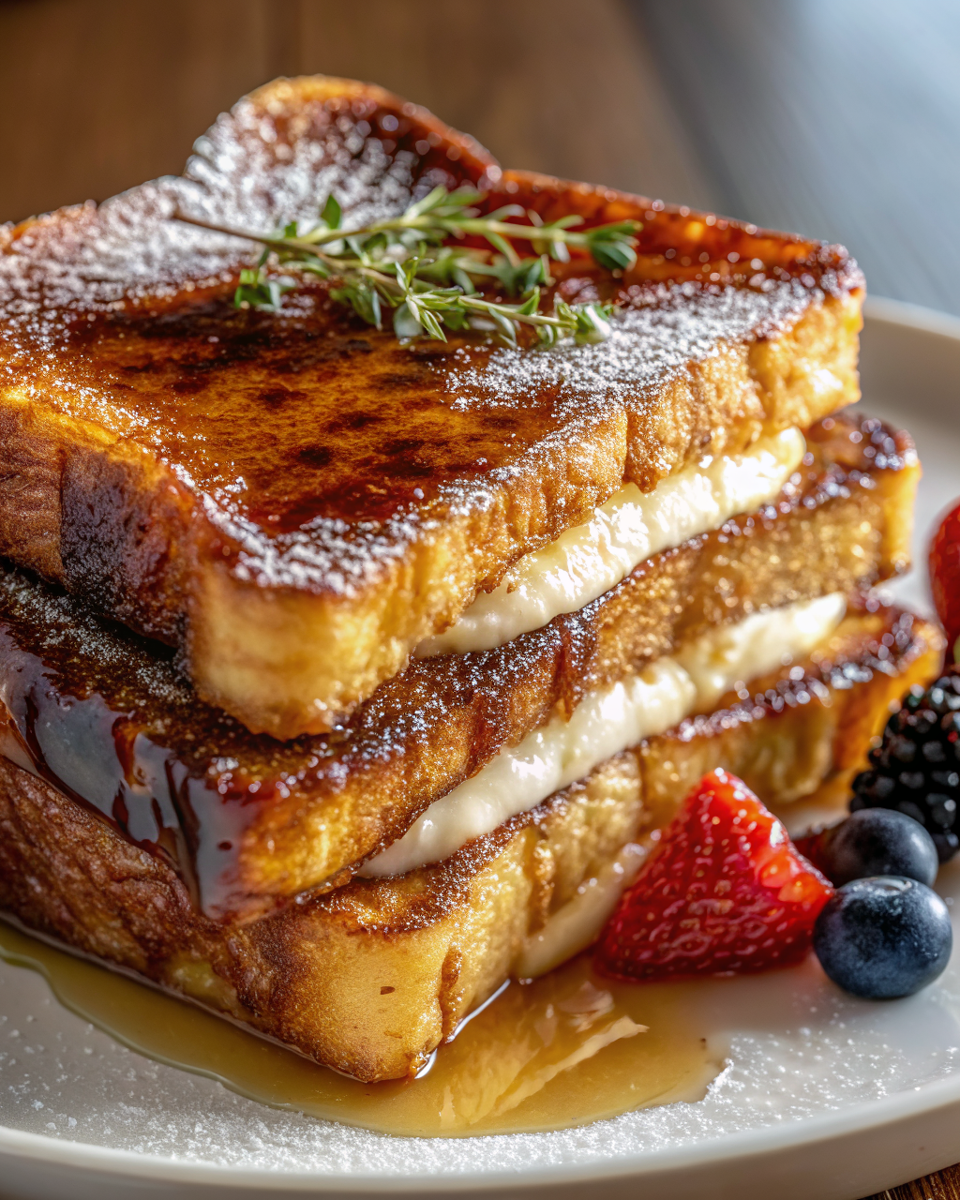
How to Make the Best Creme Brulee French Toast: A Sweet Breakfast Treat
Ingredients
Instructions
- Prepare the Bread: Cut brioche or challah into thick, approximately 1-inch slices.
- Make the Custard: In a wide, shallow dish, whisk together large eggs, extra egg yolks, heavy cream, granulated sugar, vanilla extract (or paste), and a pinch of salt until smooth and slightly pale.
- Soak the Bread: Carefully place the bread slices into the custard, ensuring each side is fully submerged. Soak for at least 30 minutes at room temperature, flipping halfway through, or overnight in the refrigerator for maximum flavor absorption.
- Cook the French Toast: Heat a large non-stick pan or griddle over medium heat and add unsalted butter. Once melted, cook soaked bread slices for about 3-4 minutes per side until golden brown and cooked through.
- Caramelize the Sugar: Arrange cooked French toast slices on a baking sheet and sprinkle a layer of granulated sugar over the top. Use a kitchen torch to caramelize the sugar until it forms a crisp crust, or use the oven's broiler for a similar effect.
- Serve: Serve immediately with a sprinkle of powdered sugar and fresh berries on the side.