
This recipe originated from the Japanese teriyaki tradition, where “teri” means shine and “yaki” means grilled or broiled. The addition of orange brings a Western twist that brightens the traditionally darker, more molasses-heavy teriyaki sauce.
Why Orange Teriyaki Salmon Matters
Understanding the cultural significance of this fusion dish helps us appreciate how modern cooking bridges traditional boundaries. The seared ahi tuna recipe shares similar Asian-inspired techniques, while our pan-fried orange salmon offers an alternative cooking method for citrus-glazed fish. For those interested in perfecting sauce techniques, learning how to use simmer sauce can elevate your cooking game significantly. Additionally, understanding how much Omega-3 farmed salmon contains helps you make informed nutritional choices for your family.
The evolution of teriyaki sauce in Western kitchens has led to countless variations, but the orange version stands out for its ability to cut through the richness of salmon while enhancing its natural flavors. This particular preparation method, combining oven-baking with a final broil, ensures the fish cooks evenly while developing that coveted caramelized exterior.
Traditional Japanese teriyaki was originally a cooking technique rather than a sauce, involving grilling fish or meat while basting it with a sweet soy-based glaze. The addition of citrus fruits like orange represents the global evolution of this technique, adapting to local tastes and available ingredients.
Orange Teriyaki Salmon Ingredients
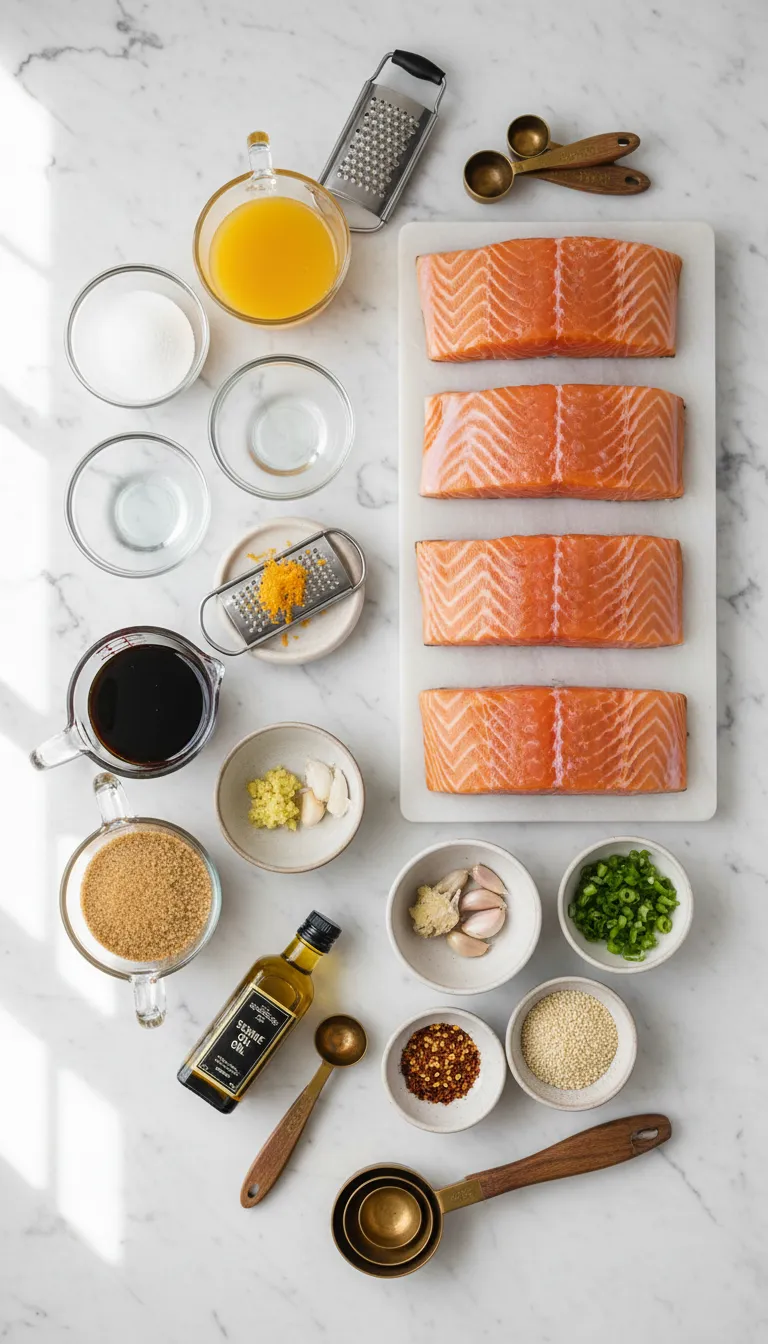
Ingredient Spotlight
Salmon Fillets: The star of our dish provides rich omega-3 fatty acids and a meaty texture that holds up beautifully to the sweet glaze. Choose fillets that are uniform in thickness for even cooking.
Orange Juice and Zest: Fresh orange juice brings natural sweetness and acidity that balances the salty soy sauce, while the zest adds aromatic oils that intensify the citrus flavor without additional liquid.
Cornstarch: This thickening agent transforms our liquid ingredients into a glossy glaze that clings perfectly to the salmon, creating that signature teriyaki shine.
Soy Sauce: Provides the essential umami foundation and saltiness that defines teriyaki flavor profiles.
Brown Sugar: Adds molasses notes and helps with caramelization during the broiling process.
Fresh Ginger and Garlic: These aromatics provide warmth and depth, with ginger adding a subtle heat that complements the citrus beautifully.
Sesame Oil: Just a small amount adds nutty richness and authentic Asian flavor complexity.
Complete Ingredients List
- 4 (6 oz) salmon fillets, skin removed
- 2 teaspoons cornstarch
- 4 teaspoons water
- 2/3 cup fresh orange juice
- 1 teaspoon orange zest
- 1/3 cup low-sodium soy sauce
- 1/4 cup packed brown sugar
- 1 teaspoon minced fresh ginger
- 2 cloves garlic, minced
- 1/2 teaspoon sesame oil
- Optional garnishes: sesame seeds, red pepper flakes, chopped green onions
Substitution Ideas
Salmon alternatives: Arctic char, steelhead trout, or thick cod fillets work wonderfully. Citrus variations: Try blood orange, mandarin, or a combination of orange and lime. Sweetener swaps: Coconut sugar, honey, or maple syrup can replace brown sugar. Gluten-free option: Use tamari instead of soy sauce.
Timing
Preparation time: 10 minutes
Total time: 35 minutes
Servings: 4
This recipe is approximately 20% faster than traditional stovetop teriyaki methods, thanks to the efficient oven-to-broiler technique that eliminates constant stirring and monitoring.
Step-by-Step Orange Teriyaki Salmon Instructions
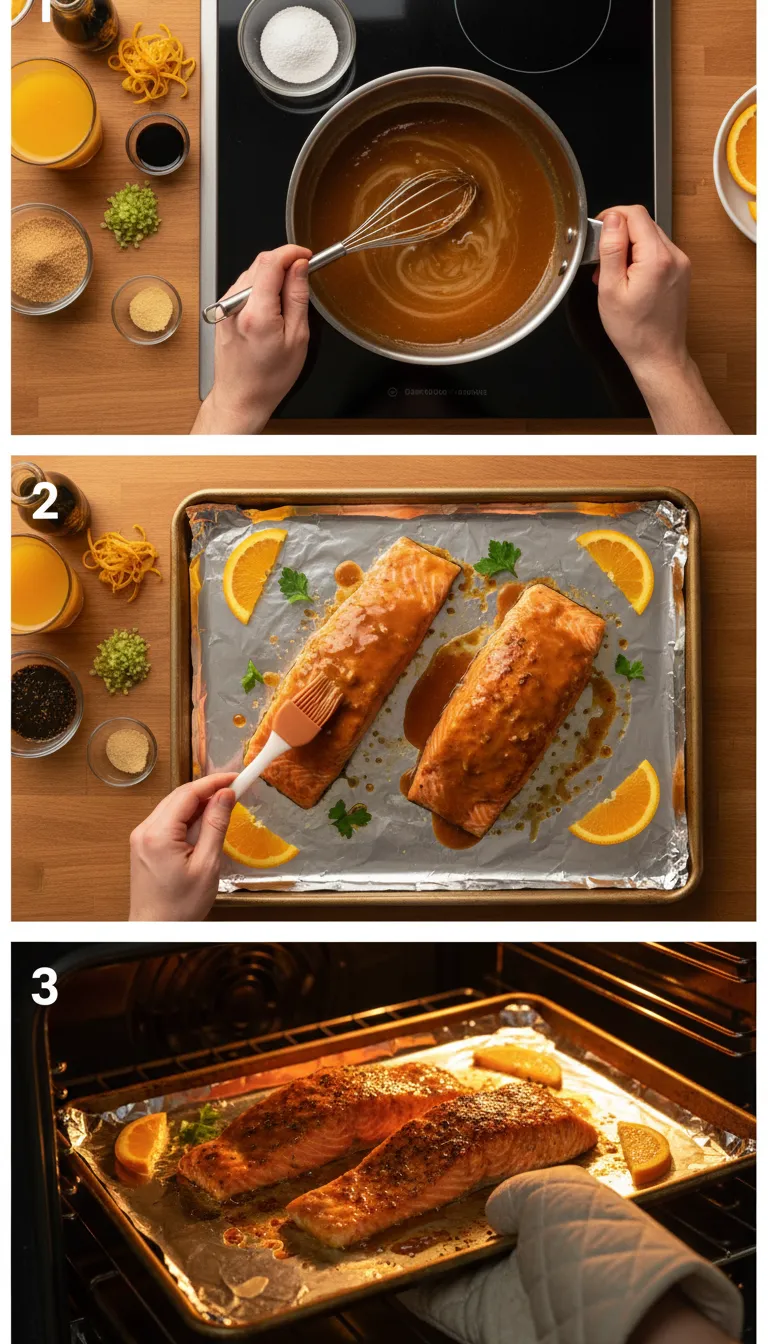
Step 1: Create the Cornstarch Slurry
In a small bowl, whisk together cornstarch and water until completely smooth with no lumps remaining. This slurry will be the key to achieving that glossy, restaurant-quality glaze that clings beautifully to your salmon.
Step 2: Prepare the Teriyaki Sauce
Combine the cornstarch mixture with orange juice, orange zest, soy sauce, brown sugar, minced ginger, garlic, and sesame oil in a small saucepan. Whisk everything together thoroughly to ensure the brown sugar begins to dissolve.
Step 3: Simmer and Thicken
Bring the sauce mixture to a gentle simmer over medium heat, stirring frequently. Cook for 3-5 minutes until the sauce thickens enough to coat the back of a spoon. The sauce should have a glossy appearance and pour in a steady ribbon.
Step 4: Cool the Sauce
Remove the thickened sauce from heat and transfer to a bowl to cool slightly. This prevents the sauce from cooking the salmon too quickly when applied. Reserve half the sauce for basting during cooking.
Step 5: Prepare the Salmon
Preheat your oven to 400°F (200°C). Line a baking sheet with lightly oiled aluminum foil for easy cleanup. Pat salmon fillets completely dry with paper towels and place them on the prepared baking sheet, leaving space between each piece.
Step 6: Initial Basting and Baking
Brush the salmon generously with half of the prepared sauce, ensuring even coverage. Bake for approximately 14 minutes, or until the salmon flakes easily with a fork but still appears slightly translucent in the center.
Step 7: Final Glaze and Broil
Remove salmon from oven and brush with the remaining sauce. Switch your oven to broil setting and return the salmon to the oven for 1-2 minutes, watching carefully to prevent burning. The surface should become golden and lightly caramelized.
Tips & Tricks for Perfect Orange Teriyaki Salmon Results
- Choose uniform fillets: Select salmon pieces of similar thickness to ensure even cooking throughout.
- Don’t skip the zest: Orange zest provides essential oils that intensify flavor without adding extra liquid to the sauce.
- Watch the broiler closely: The sugar in the glaze can go from perfectly caramelized to burnt in seconds under the broiler.
- Let sauce cool slightly: Applying hot sauce directly to raw fish can start cooking it unevenly before it reaches the oven.
- Use a meat thermometer: Salmon is perfectly done when it reaches an internal temperature of 145°F (63°C).
Recipe Variations & Substitutions
Spicy Orange Teriyaki: Add 1-2 teaspoons of sriracha or red pepper flakes to the sauce for heat. Honey Orange Glaze: Replace brown sugar with honey for a different sweetness profile and glossier finish. Asian Fusion Bowl: Serve over cauliflower rice with steamed vegetables for a complete low-carb meal. Grilled Version: Adapt this recipe for the grill by cooking over medium heat and basting frequently to prevent burning.
Behind the Recipe
This Orange Teriyaki Salmon was inspired by a memorable dinner at a small family-run restaurant where the chef combined traditional Japanese techniques with California’s abundant citrus. The way the orange brightened the typically heavy teriyaki sauce while complementing salmon’s rich oils created a perfect balance that I knew had to be recreated at home. After numerous kitchen experiments, this version captures that same bright, glossy perfection that made the original so memorable.
Pairing Ideas
Serve this glazed salmon over steamed jasmine rice or quinoa to absorb the delicious sauce. Pair with roasted asparagus, steamed broccoli, or a crisp cucumber salad for freshness. For beverages, consider iced green tea, sparkling water with lime, or a refreshing orange-ginger mocktail that echoes the salmon’s flavor profile.
Leftover & Reuse Ideas
Flake leftover salmon into grain bowls, add to salads for protein, or use in salmon cakes with a touch of the remaining glaze. The sauce itself can be stored in the refrigerator for up to a week and used as a glaze for chicken, tofu, or vegetables. Cold salmon makes excellent sushi bowls or can be incorporated into pasta salads for lunch.
Nutritional Information
Each serving provides approximately 320 calories, 35g protein, 18g carbohydrates, and 12g healthy fats. Salmon is an excellent source of omega-3 fatty acids, vitamin D, and high-quality protein. The orange adds vitamin C and natural antioxidants, while the minimal added sugars keep the dish relatively light despite its rich flavors.
Serving Suggestions
Present the salmon on warmed plates over a bed of steamed rice, drizzled with any remaining glaze. Garnish with toasted sesame seeds, thinly sliced green onions, and a sprinkle of red pepper flakes for color and texture contrast. A wedge of fresh orange and a small mound of pickled ginger make beautiful accompaniments that enhance both presentation and flavor.
Common Mistakes to Avoid
Overcooking the salmon: Salmon continues cooking from residual heat, so remove it when slightly underdone. Burning the glaze: The high sugar content means the broiler step requires constant attention. Uneven sauce thickness: Make sure your cornstarch slurry is completely smooth before adding to prevent lumps. Skipping the rest period: Let the cooked salmon rest for 2-3 minutes before serving to allow juices to redistribute.
Storage & Reheating Tips
Store leftover salmon in the refrigerator for up to 3 days in an airtight container. To reheat, use a 300°F oven for 8-10 minutes, covering with foil to prevent drying. Avoid microwaving, which can make the fish rubbery. The sauce can be stored separately and gently reheated on the stovetop with a splash of water if needed. For best results, consume within 24 hours of cooking.
FAQs
Can I make Orange Teriyaki Salmon ahead of time? While best served fresh, you can prepare the sauce up to 2 days in advance. Store covered in the refrigerator and bring to room temperature before using.
What’s the best way to tell when Orange Teriyaki Salmon is done? The salmon should flake easily with a fork and reach an internal temperature of 145°F. The flesh should be opaque throughout with just a hint of translucency in the center.
Can I use frozen salmon for this Orange Teriyaki Salmon recipe? Yes, but thaw completely and pat very dry before cooking. Frozen salmon may release more moisture during cooking, which can thin the glaze.
How can I make this Orange Teriyaki Salmon recipe gluten-free? Simply substitute tamari or coconut aminos for the soy sauce. Check that your other ingredients are certified gluten-free if sensitivity is a concern.
What side dishes work best with Orange Teriyaki Salmon? Steamed rice, roasted vegetables, Asian cucumber salad, or stir-fried greens all complement the sweet and savory flavors beautifully.
Conclusion
Orange Teriyaki Salmon
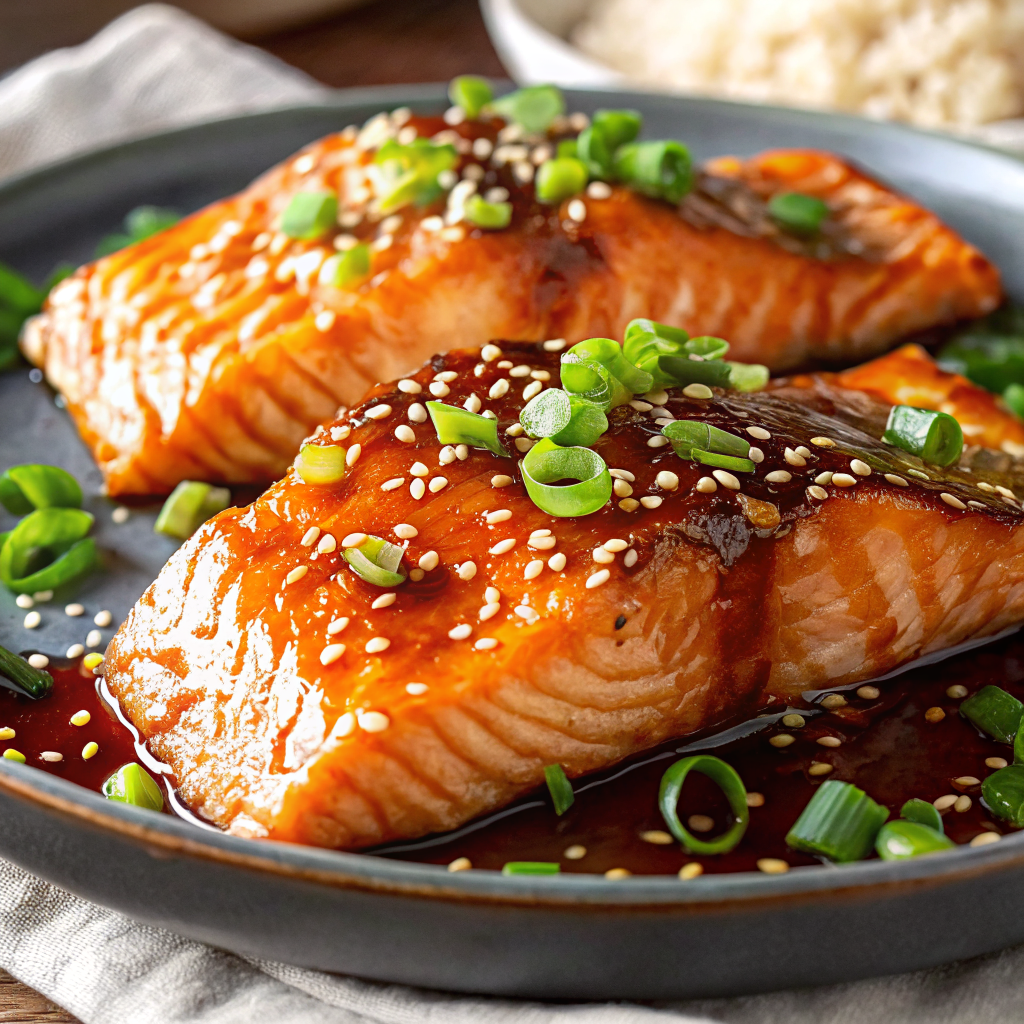
This Orange Teriyaki Salmon delivers restaurant-quality results with simple home cooking techniques. The bright citrus notes elevate traditional teriyaki flavors while the oven-to-broiler method ensures perfectly cooked fish with a gorgeous caramelized glaze. Whether you’re cooking for a special dinner or looking to upgrade your weeknight routine, this recipe provides the perfect balance of familiar comfort and exciting flavor.
Made this recipe? Drop your twist in the comments, rate the recipe, and tag us on Facebook, Instagram with #recipehoney.com we might feature your creation!
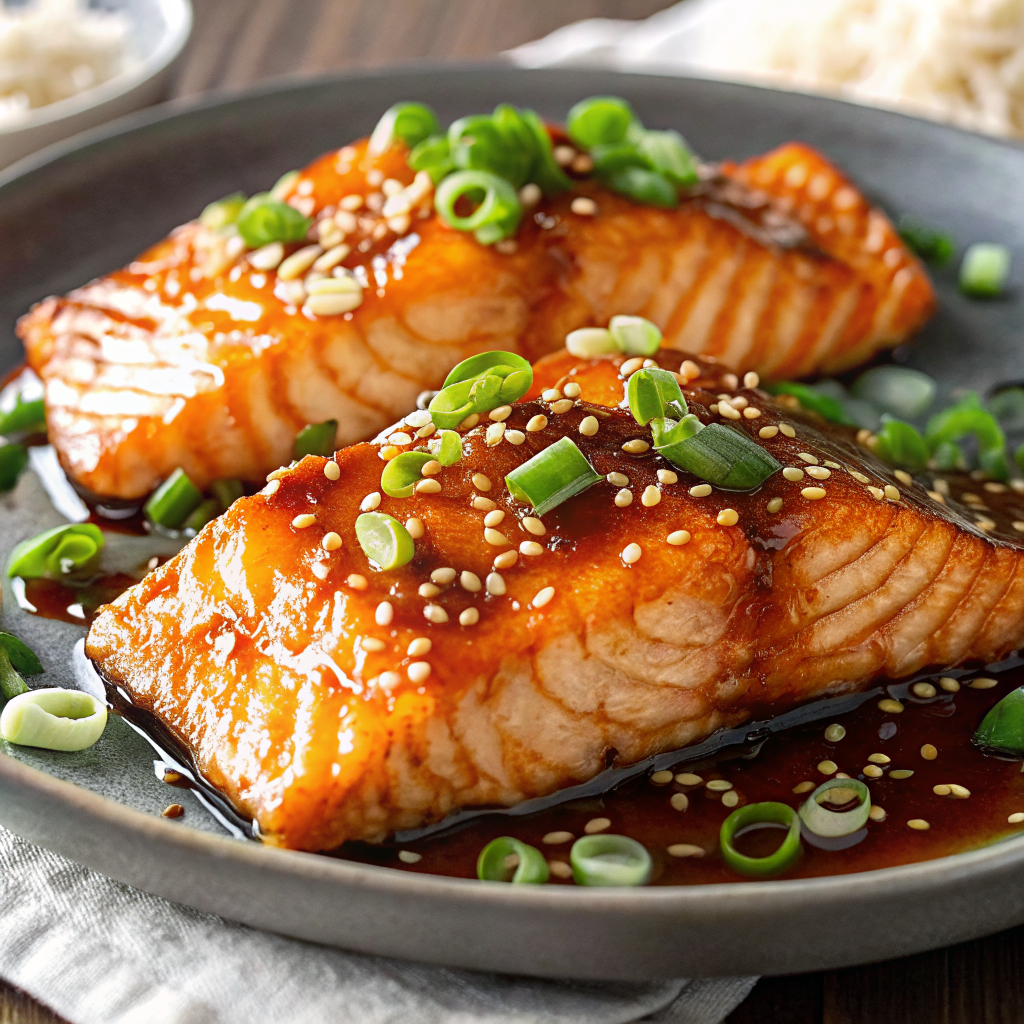
Orange Teriyaki Salmon: Best Easy Recipe for Perfect Flavor
Ingredients
Instructions
- Prepare the sauce: In a small bowl, mix cornstarch and water until smooth. Add all sauce ingredients to a small saucepan, including the cornstarch mixture.
- Simmer the sauce: Bring to a low simmer over medium heat. Cook for about 3-5 minutes until lightly thickened. Remove from heat and transfer to a bowl to cool.
- Preheat the oven: Preheat the oven to 400°F (200°C). Line a baking sheet with lightly oiled foil. Place salmon on the sheet and baste with half of the prepared sauce.
- Bake the salmon: Bake for approximately 14 minutes, checking for flakiness.
- Broil for extra flavor: Remove salmon, baste again with reserved sauce, then broil for about one minute until golden and lightly charred.
- Serve: Serve over steamed rice. Top with red pepper flakes, chopped green onion, and sesame seeds if desired.