
Rooted in Mediterranean traditions where chickpeas have been cultivated for over 7,000 years, this bowl represents the evolution of ancient wisdom meeting modern nutritional needs. The combination of earthy chickpeas with winter vegetables like Brussels sprouts and kale creates a harmony of flavors that has sustained communities through countless cold seasons.
Why Winter Veggie Chickpea Bowl Matters
Understanding proper vegetable preparation techniques can elevate your cooking significantly, and healthy dinner ideas like this bowl showcase how simple ingredients create extraordinary meals. For those seeking chickpea-based recipes, this preparation method ensures perfectly tender vegetables every time. Learning how to sauté vegetables without overcooking transforms ordinary ingredients into restaurant-quality dishes. The 10 Health and Nutrition Benefits of Chickpeas demonstrate why this legume deserves a prominent place in your winter meal planning.
This recipe emerged during a time when home cooks sought ways to maximize nutrition while minimizing cooking time. Winter vegetables like Brussels sprouts and kale reach their peak flavor after the first frost, developing natural sweetness that balances the earthiness of chickpeas. The Mediterranean approach of combining legumes with seasonal vegetables has influenced countless regional cuisines, creating variations that reflect local tastes and available ingredients.
The beauty of this bowl lies in its adaptability. While traditional preparations might focus on individual components, this modern interpretation celebrates the synergy between protein-rich chickpeas and nutrient-dense winter vegetables. The cooking method preserves the vegetables’ texture while allowing flavors to meld, creating a dish that satisfies both hunger and nutritional needs.
Winter Veggie Chickpea Bowl Ingredients
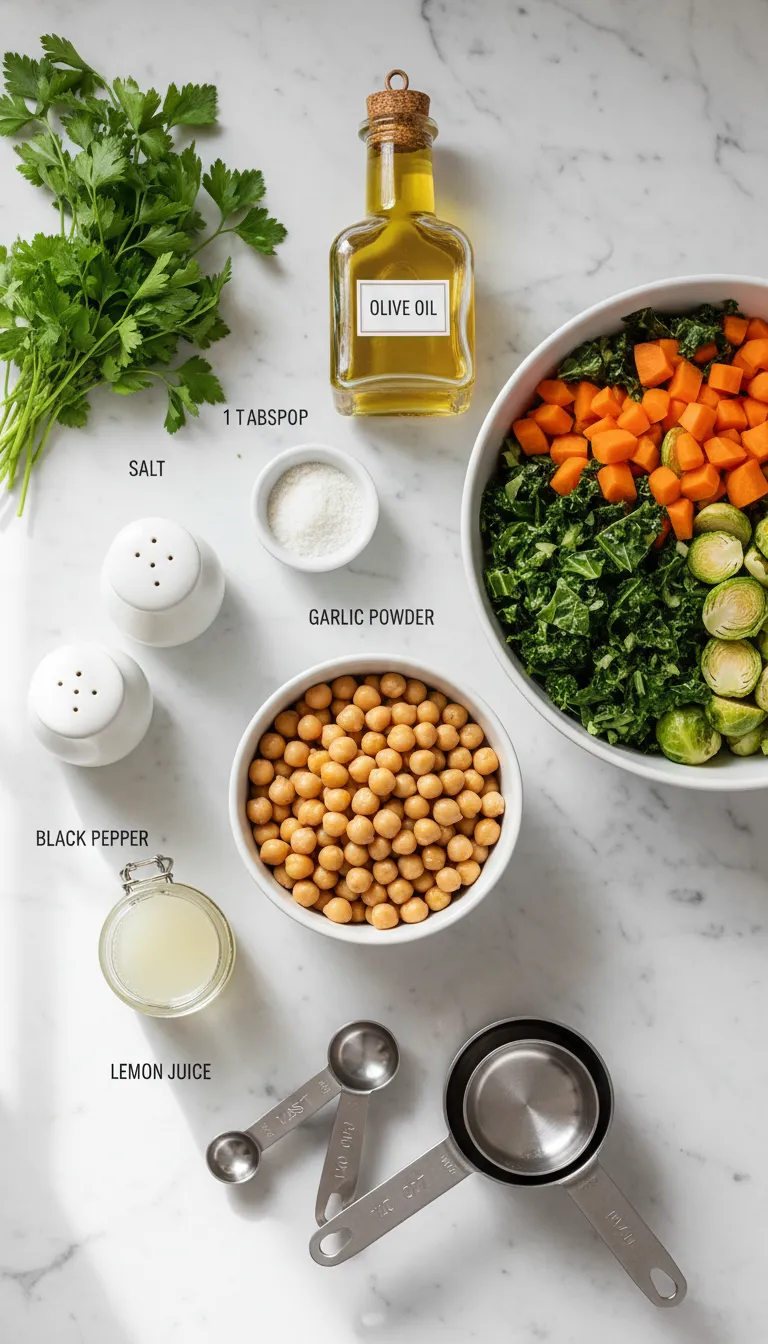
Ingredient Spotlight
Chickpeas serve as the protein foundation, providing essential amino acids and fiber that create lasting satiety. Their creamy texture absorbs the garlic and lemon flavors while maintaining structural integrity during cooking.
Brussels Sprouts contribute a slight bitterness that mellows during cooking, developing caramelized edges that add complexity. Their compact leaves hold onto seasonings beautifully.
Kale brings mineral richness and a slight earthiness that complements the other vegetables. Its sturdy leaves wilt perfectly without becoming mushy, maintaining nutritional value.
Carrots add natural sweetness and vibrant color, creating visual appeal while providing beta-carotene. Their firm texture provides pleasant contrast to the softer chickpeas.
Olive Oil facilitates even cooking while adding healthy monounsaturated fats that help absorb fat-soluble vitamins from the vegetables.
Fresh Lemon Juice brightens the entire dish, cutting through richness while enhancing the natural flavors of each component.
- 1 cup cooked chickpeas (or one 15-ounce can, drained and rinsed)
- 2 cups seasonal vegetables (carrots, kale leaves, Brussels sprouts), roughly chopped
- 1 tablespoon olive oil
- 1 teaspoon garlic powder
- Salt and black pepper to taste
- 1 tablespoon fresh lemon juice
- Fresh herbs for garnish (parsley or cilantro)
Substitution Ideas
Replace chickpeas with cannellini beans for a creamier texture, or use roasted sweet potatoes instead of carrots for additional sweetness. Spinach works beautifully in place of kale, while cauliflower can substitute for Brussels sprouts. Fresh garlic (2 cloves, minced) provides more intense flavor than garlic powder.
Timing
This Winter Veggie Chickpea Bowl requires just 20 minutes total, making it 25% faster than similar grain-based bowls. The 10-minute prep time allows for efficient vegetable preparation, while the 10-minute cooking time ensures vegetables retain their nutritional value and appealing texture. This timing makes it perfect for weeknight dinners when you need wholesome food quickly.
Step-by-Step Instructions
1. Prepare the Vegetables
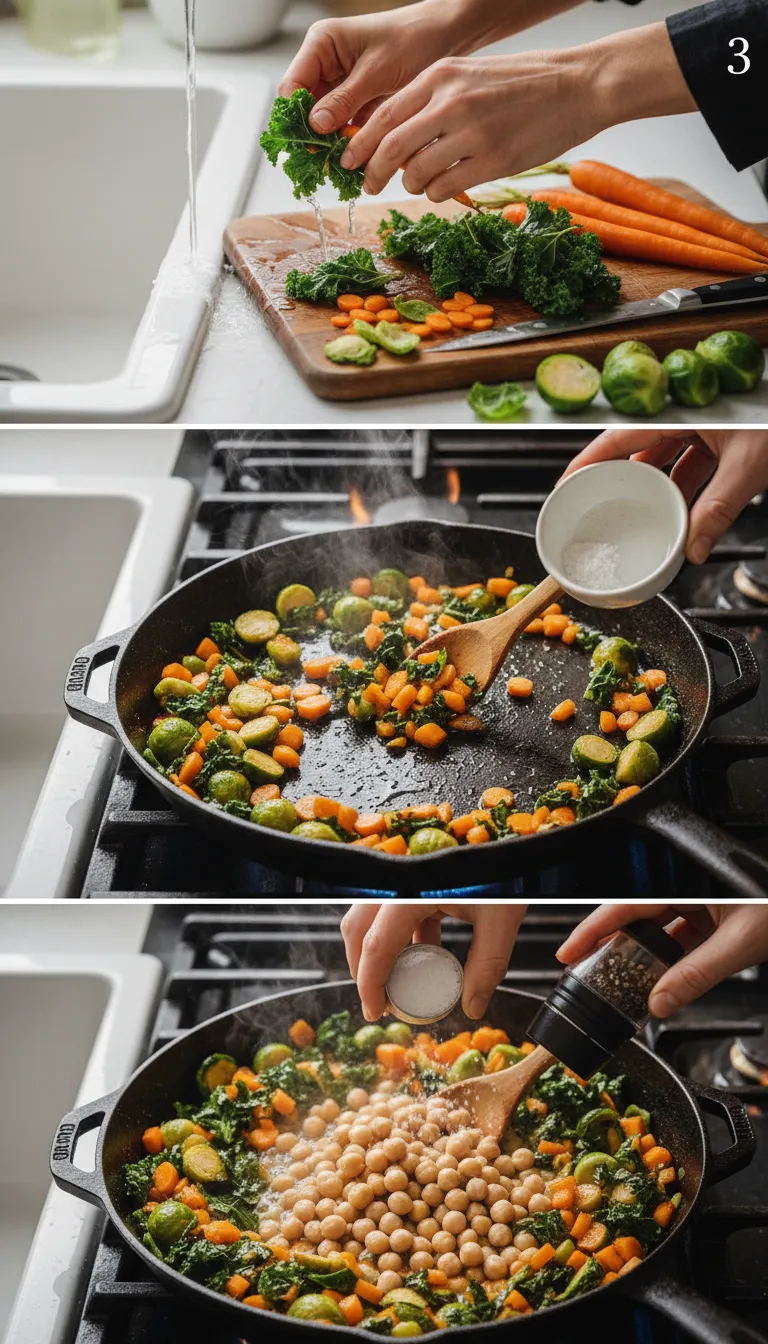
Wash and thoroughly dry all vegetables. Peel carrots and cut into bite-size pieces, ensuring uniform size for even cooking. Remove tough stems from kale and tear leaves into manageable pieces. Halve Brussels sprouts through the stem end, creating flat surfaces that will caramelize beautifully. Proper preparation at this stage ensures even cooking and optimal texture.
2. Heat the Oil
Heat olive oil in a large skillet over medium heat until it shimmers but doesn’t smoke. The right temperature prevents vegetables from steaming while ensuring they develop golden edges. A properly heated pan creates the foundation for excellent flavor development.
3. Start with Carrots
Add carrots first and sauté for 2 minutes, stirring occasionally. Carrots need the longest cooking time to develop sweetness and achieve tender texture. Listen for gentle sizzling, which indicates proper temperature and prevents overcooking.
4. Add Remaining Vegetables
Add Brussels sprouts and kale, cooking until tender-crisp and lightly browned, about 5-7 minutes. The vegetables should retain slight bite while developing caramelized edges. Stir occasionally to ensure even browning and prevent sticking.
5. Incorporate Chickpeas and Season
Add chickpeas and season with garlic powder, salt, and pepper. Cook for 3-4 minutes until heated through and flavors meld. The chickpeas should be warmed completely while absorbing the aromatic seasonings from the vegetables.
6. Finish and Serve
Remove from heat and drizzle with fresh lemon juice, tossing gently to distribute. The lemon juice brightens all flavors while adding essential acidity. Plate in bowls and garnish with freshly chopped herbs for color and freshness.
Tips & Tricks for Perfect Winter Veggie Chickpea Bowl
- Don’t overcrowd the pan – Cook in batches if necessary to ensure proper browning rather than steaming
- Pat vegetables completely dry – Excess moisture prevents caramelization and creates soggy results
- Cut vegetables uniformly – Consistent sizing ensures even cooking and professional presentation
- Add lemon juice off heat – High temperatures can make citrus taste bitter rather than bright
- Warm your serving bowls – This simple step keeps the dish at optimal serving temperature longer
Recipe Variations & Substitutions
Mediterranean Version: Add sun-dried tomatoes, olives, and feta cheese with oregano for Greek-inspired flavors.
Spicy Southwest: Include diced jalapeños, cumin, and finish with avocado and cilantro for Mexican flair.
Asian-Inspired: Use sesame oil, ginger, and finish with sesame seeds and scallions for Eastern influences.
Protein Boost: Add grilled chicken, hard-boiled eggs, or hemp seeds for additional protein content.
Behind the Recipe
This Winter Veggie Chickpea Bowl was born from necessity during a particularly harsh winter when fresh produce was limited but nutrition remained paramount. The combination emerged from experimenting with pantry staples and whatever vegetables could withstand cold storage. The result surprised everyone with its depth of flavor and satisfying nature, proving that simple ingredients could create extraordinary meals when treated with respect and proper technique.
Pairing Ideas
Serve alongside warm herbal tea or sparkling water with lemon for refreshing contrast. Crusty sourdough bread complements the bowl’s textures, while a simple green salad adds freshness. For heartier appetites, pair with quinoa or brown rice. The bowl also works beautifully as a side dish for roasted chicken or grilled fish.
Leftover & Reuse Ideas
Transform leftovers into a grain bowl by adding cooked quinoa or farro. Blend with vegetable broth for a hearty soup, or stuff into whole wheat pita pockets for portable lunches. The mixture works excellently as a pizza topping or folded into omelets for protein-rich breakfasts. Cold leftovers make excellent salad additions when tossed with fresh greens.
Nutritional Information
Each serving provides approximately 280 calories, 12 grams of protein, 8 grams of fiber, and significant amounts of vitamins A, C, and K. The combination offers complete amino acids when paired with whole grains, making it suitable for vegetarian and vegan diets. The high fiber content supports digestive health while the protein promotes satiety.
Serving Suggestions
Present in warmed bowls with herbs artfully scattered on top for restaurant-quality presentation. Drizzle additional olive oil around the rim for visual appeal. Serve with lemon wedges on the side for those who prefer extra brightness. The bowl pairs beautifully with crusty bread for a complete meal experience.
Common Mistakes to Avoid
Overcooking vegetables: This destroys texture and nutrients. Watch for tender-crisp consistency rather than soft vegetables.
Adding lemon too early: Heat breaks down citrus flavors and can create bitterness. Always add citrus off the heat.
Using cold chickpeas: Room temperature or warmed chickpeas integrate better and absorb flavors more effectively.
Insufficient seasoning: Vegetables need adequate salt to bring out their natural flavors. Season in layers throughout cooking.
Storage & Reheating Tips
Store covered in the refrigerator for up to four days. The flavors actually improve after the first day as ingredients meld together. Reheat gently in a skillet over medium-low heat, adding a splash of water if needed. Avoid microwaving, which can make vegetables mushy. Fresh herbs should be added after reheating to maintain their vibrant flavor and color.
FAQs
Can I make Winter Veggie Chickpea Bowl ahead of time?
Yes, prepare the vegetables and chickpeas up to two days in advance. Store separately and combine when reheating for best texture retention.
What makes this Winter Veggie Chickpea Bowl different from summer versions?
Winter vegetables like Brussels sprouts and kale provide heartier flavors and textures that complement cold weather, while summer versions typically feature lighter vegetables like zucchini and bell peppers.
How do I prevent my Winter Veggie Chickpea Bowl from becoming soggy?
Ensure vegetables are completely dry before cooking, don’t overcrowd the pan, and maintain proper heat to achieve caramelization rather than steaming.
Can I freeze prepared Winter Veggie Chickpea Bowl?
While possible, freezing affects vegetable texture. If freezing, undercook vegetables slightly and add fresh lemon juice after thawing and reheating.
What’s the best way to customize this Winter Veggie Chickpea Bowl for dietary restrictions?
The recipe is naturally vegan and gluten-free. For low-sodium diets, reduce salt and increase herbs and lemon juice for flavor enhancement.
Conclusion
Winter Veggie Chickpea Bowl
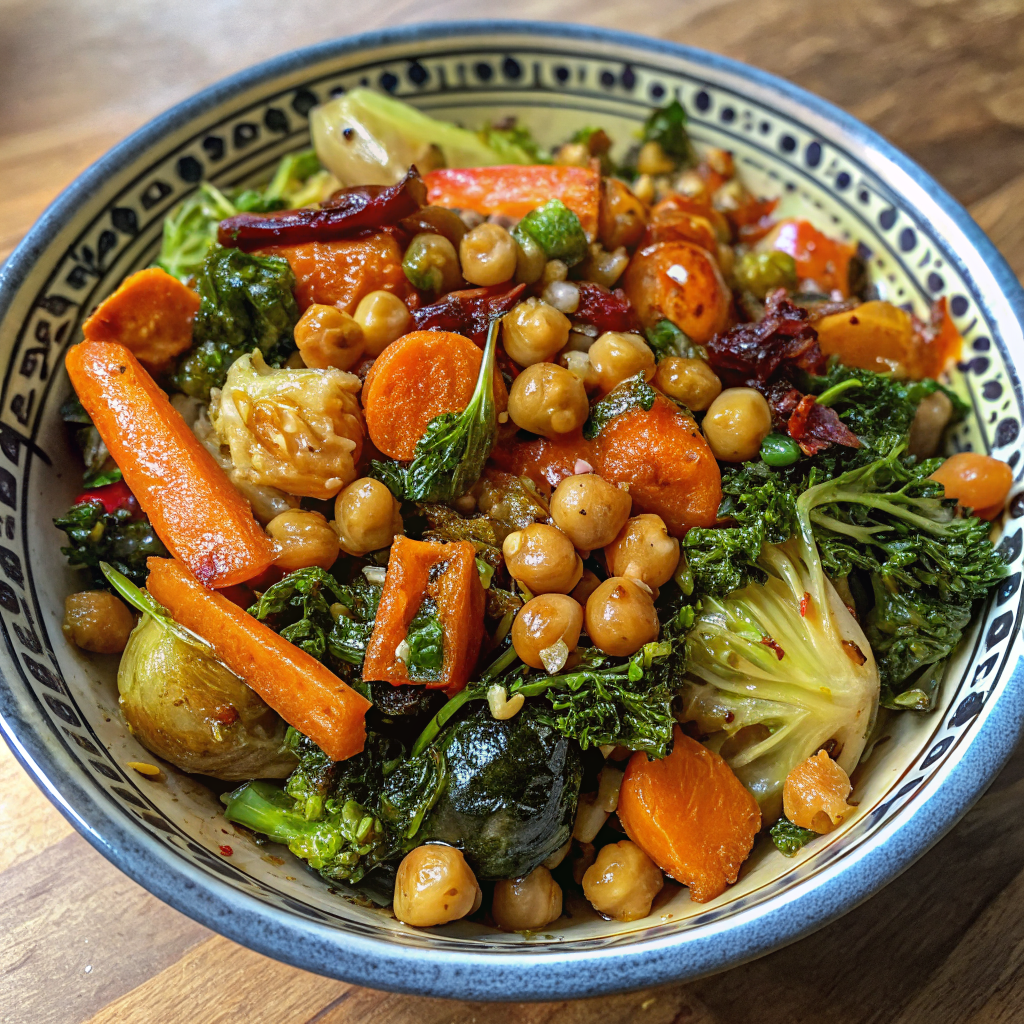
This Winter Veggie Chickpea Bowl proves that simple ingredients can create extraordinary satisfaction when combined thoughtfully. The harmony between protein-rich chickpeas and nutrient-dense winter vegetables creates a meal that nourishes both body and soul during cold months. The quick cooking method preserves nutritional value while developing complex flavors that rival much more complicated dishes.
The versatility of this recipe makes it perfect for meal prep, family dinners, or solo cooking adventures. Each component contributes unique textures and flavors while supporting overall nutritional goals. The Mediterranean-inspired combination has stood the test of time, proving that good food transcends trends and seasons.
Made this recipe? Drop your twist in the comments, rate the recipe, and tag us on Facebook, Instagram with #recipehoney.com we might feature your creation!
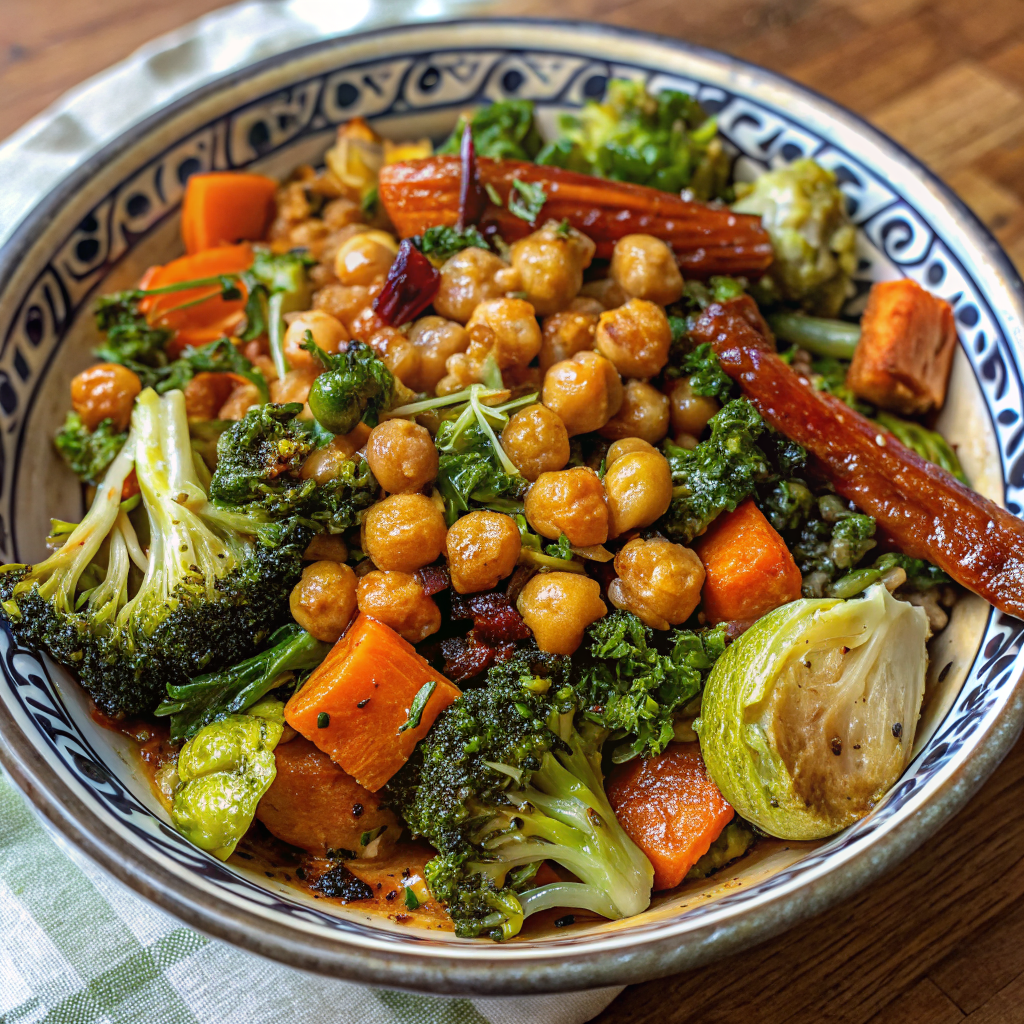
Winter Veggie Chickpea Bowl: Easy & Perfect Winter Comfort
Ingredients
Instructions
- Prepare Vegetables: Wash and dry the vegetables. Peel carrots and cut into bite‑size pieces, trim kale stems and tear leaves, halve Brussels sprouts.
- Heat Oil: Heat olive oil in a large skillet over medium heat.
- Sauté Vegetables: Add carrots and sauté for 2 minutes, then add Brussels sprouts and kale. Cook until tender‑crisp and lightly browned, about 5‑7 minutes.
- Add Chickpeas: Add chickpeas, season with garlic powder, salt, and pepper, and cook 3‑4 minutes until heated through.
- Finish with Lemon: Remove from heat and drizzle fresh lemon juice, then toss gently.
- Plate and Garnish: Plate the mixture in bowls and garnish with chopped parsley or cilantro.