
Growing up in a household where weeknight dinners needed to be both quick and satisfying, I discovered that the secret to memorable meals wasn’t complexity – it was understanding how flavors work together. Teriyaki noodles became my go-to solution when I wanted something that felt indulgent but could be ready in just 30 minutes. The way the homemade teriyaki sauce clings to each strand of ramen, coating the crisp-tender vegetables in that perfect sweet-salty glaze, creates a harmony that’s both comforting and exciting.
Why Teriyaki Noodles Matter in Modern Cooking
If you’re looking to expand your noodle repertoire beyond basic preparations, you’ll find inspiration in our spicy Cajun chicken bowtie pasta for bold flavor combinations, or explore our collection of crockpot recipes for more hands-off cooking methods. For additional Asian-inspired techniques, check out this comprehensive guide to Easy Chicken Stir Fry Recipe, and discover creative plant-based alternatives with these Vegan Garlic Noodles.
Teriyaki noodles represent more than just a quick dinner solution – they embody the Japanese philosophy of umami, that fifth taste that makes food deeply satisfying. The dish evolved from traditional Japanese teriyaki cooking methods, where “teri” means lustrous and “yaki” means grilled or broiled. While authentic teriyaki typically involves grilling proteins with a glaze, this noodle adaptation captures those same flavor principles in a more accessible, vegetable-forward format.
The beauty of this dish lies in its versatility and the way it bridges comfort food with nutritious eating. Unlike heavy cream-based pasta dishes, teriyaki noodles derive their richness from the interplay of soy sauce, sweetener, and aromatics, creating depth without overwhelming heaviness. This makes it an ideal choice for those seeking satisfying meals that don’t leave them feeling sluggish.
Teriyaki Noodles Ingredients
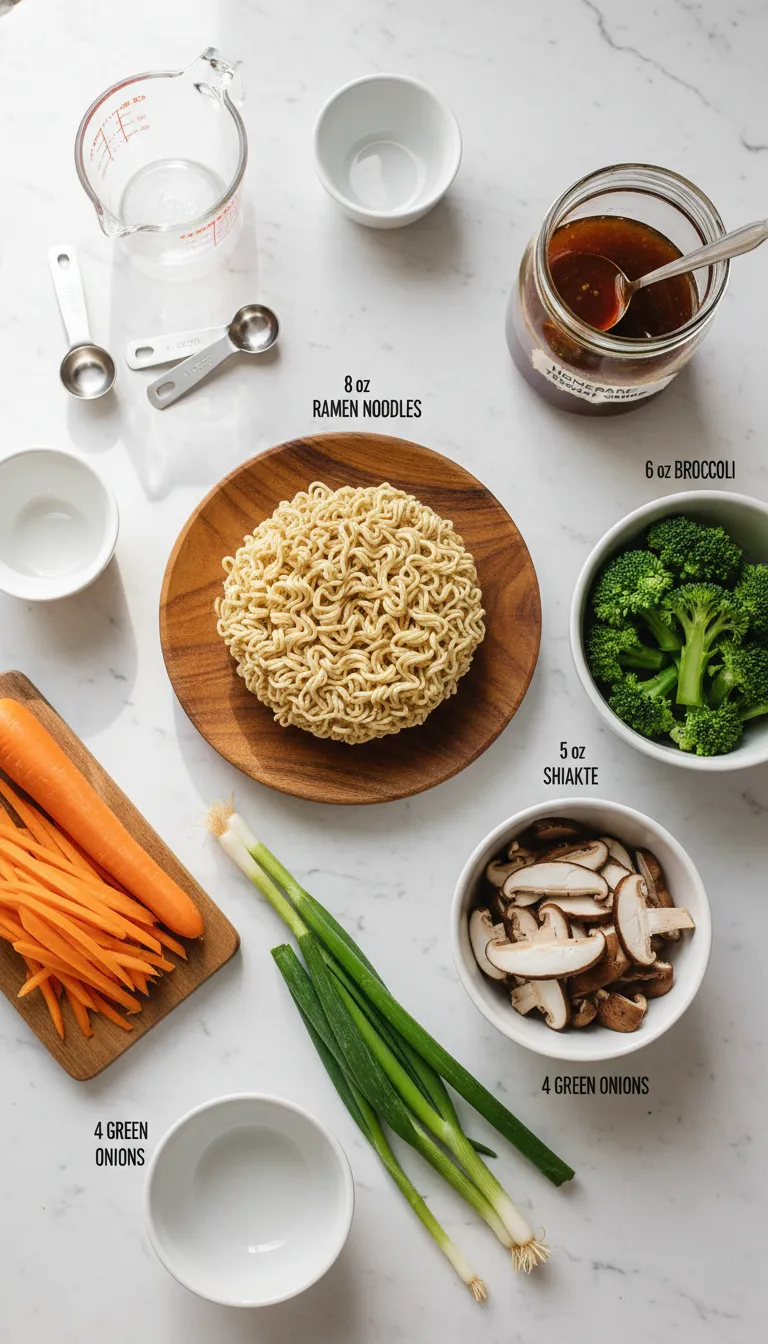
Ingredient Spotlight
Each component in this teriyaki noodles recipe serves a specific purpose in creating the final dish’s texture and flavor profile. The 8 oz ramen noodles provide the perfect canvas – their slightly chewy texture and ability to absorb flavors makes them superior to other noodle varieties for this application. Unlike thin pasta, ramen noodles have the structural integrity to hold up to stir-frying while maintaining their bite.
The 6 oz fresh broccoli florets contribute essential nutrients and a satisfying crunch that contrasts beautifully with the tender noodles. Broccoli’s natural sulfur compounds become mellowed and sweetened when quickly sautéed, while still retaining enough firmness to provide textural interest. The 5 oz shiitake mushrooms are the umami powerhouse of this dish – their meaty texture and earthy flavor intensify when cooked, adding depth that makes the dish feel substantial and satisfying.
The large carrot brings natural sweetness and vibrant color, while its firm texture ensures it maintains some bite even after cooking. When sliced thin, carrots cook quickly and evenly, distributing their subtle sweetness throughout the dish. Green onions serve a dual purpose – their white parts add aromatic depth when cooked, while the green tops provide a fresh, sharp finish when added at the end.
The star of the show is the homemade teriyaki sauce, which creates that signature glossy coating that makes each bite irresistible. A proper teriyaki sauce balances sweet, salty, and tangy elements while providing enough body to coat the noodles without becoming sticky or overwhelming.
Complete Ingredients List
- 8 oz ramen noodles (discard seasoning packets)
- 6 oz fresh broccoli florets, cut into bite-sized pieces
- 5 oz shiitake mushrooms, stems removed and caps sliced
- 1 large carrot, julienned or thinly sliced
- 4 green onions, white and green parts separated
- 1 batch homemade teriyaki sauce (soy sauce, brown sugar, rice vinegar, garlic, ginger, cornstarch)
- 2 tablespoons vegetable oil for cooking
- 1 teaspoon sesame oil for finishing
- Sesame seeds and additional green onions for garnish
Smart Substitutions
For gluten-free versions, substitute rice noodles or certified gluten-free ramen. Button or cremini mushrooms work well if shiitake aren’t available. Bell peppers, snap peas, or zucchini make excellent vegetable alternatives. For a protein boost, add cubed tofu, tempeh, or cooked chicken.
Perfect Timing for Teriyaki Noodles
Preparation Time: 15 minutes
Total Time: 30 minutes
Servings: 3 generous portions
This recipe is approximately 20% faster than traditional stir-fry dishes because the vegetables are cut to cook quickly and the noodles require minimal preparation. The key to success is having all ingredients prepped before you start cooking, as the actual cooking process moves quickly.
Step-by-Step Teriyaki Noodles Instructions
Step 1: Prepare the Teriyaki Sauce
Begin by whisking together your teriyaki sauce ingredients in a small bowl. The sauce should be smooth and glossy. If making from scratch, combine 1/4 cup soy sauce, 2 tablespoons brown sugar, 1 tablespoon rice vinegar, 2 cloves minced garlic, 1 teaspoon grated ginger, and 1 teaspoon cornstarch mixed with 2 tablespoons water. This creates the perfect consistency that will coat the noodles without being too thick or thin.
Step 2: Cook the Noodles
Bring a large pot of water to boil and cook the ramen noodles according to package directions, typically 3-4 minutes. The key is to cook them just until tender but still firm – they’ll continue cooking slightly when tossed with the vegetables. Drain immediately and rinse briefly with cool water to stop the cooking process.
Step 3: Prep Your Vegetables
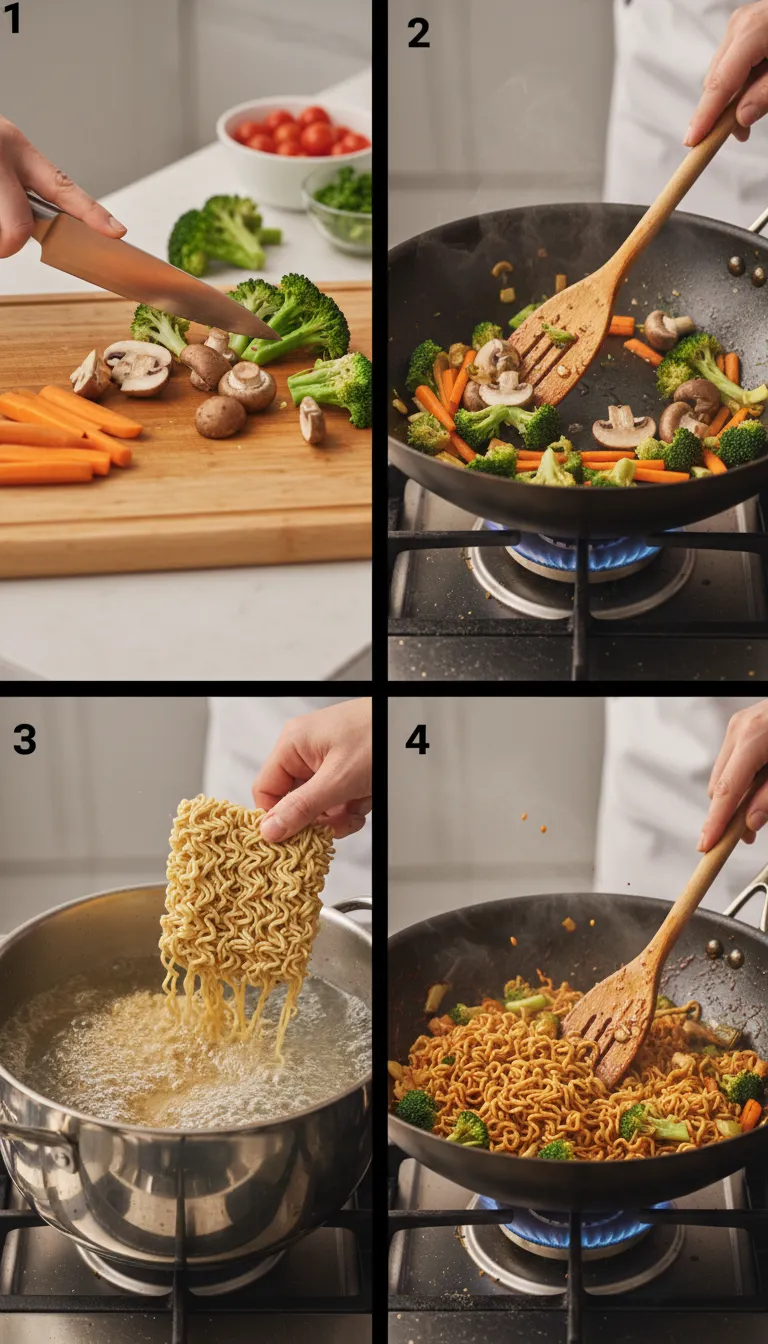
While the noodles cook, prepare your vegetables. Cut broccoli into uniform, bite-sized florets. Slice mushrooms into 1/4-inch thick pieces. Julienne or thinly slice the carrot. Separate the white and green parts of the green onions, chopping both. Having everything ready ensures smooth cooking.
Step 4: Start the Stir-Fry
Heat vegetable oil in a large wok or skillet over medium-high heat. Add the carrot slices first, as they take longest to cook. Stir-fry for 2 minutes until they begin to soften but still have bite. The high heat creates slight caramelization that adds depth to their natural sweetness.
Step 5: Add Remaining Vegetables
Add broccoli florets and mushrooms to the pan. Stir-fry for 3-4 minutes until the broccoli turns bright green and the mushrooms release their moisture and begin to brown. The vegetables should be tender-crisp, maintaining some texture while being fully cooked.
Step 6: Combine and Finish
Add the cooked noodles and white parts of green onions to the pan. Pour the teriyaki sauce over everything and toss vigorously for 2-3 minutes until the sauce evenly coats all ingredients and becomes glossy. Remove from heat, drizzle with sesame oil, and garnish with green onion tops and sesame seeds.
Tips & Tricks for Perfect Teriyaki Noodles
- High heat is essential: Use medium-high to high heat throughout cooking to achieve proper texture and prevent vegetables from becoming soggy.
- Don’t overcrowd the pan: If doubling the recipe, cook in batches to maintain proper heat and achieve the best texture.
- Sauce consistency matters: The teriyaki sauce should coat a spoon lightly – if too thick, add a splash of water; if too thin, cook a bit longer.
- Fresh ginger makes a difference: Use freshly grated ginger rather than powder for the most vibrant flavor in your sauce.
- Timing is everything: Have all ingredients prepped before you start cooking, as the process moves quickly once you begin.
Creative Teriyaki Noodles Variations & Substitutions
Protein-Packed Version: Add cubed firm tofu, tempeh, or pre-cooked chicken during the last few minutes of cooking. Spicy Kick: Include sliced jalapeños or a teaspoon of sriracha in the sauce. Tropical Twist: Add pineapple chunks and red bell peppers for a Hawaiian-inspired variation. Low-Carb Alternative: Replace noodles with spiralized zucchini or shirataki noodles, reducing cooking time accordingly.
Behind the Recipe
This teriyaki noodles recipe was born from my desire to create a satisfying vegetarian meal that could compete with takeout in both flavor and convenience. After countless experiments with sauce ratios and vegetable combinations, I discovered that the secret lies in the layered cooking approach – starting with the firmest vegetables and building flavors gradually. The result is a dish that feels indulgent while being surprisingly nutritious, proving that healthy eating doesn’t require sacrificing satisfaction.
Perfect Pairing Ideas for Teriyaki Noodles
Serve these teriyaki noodles alongside refreshing beverages like iced green tea, sparkling water with lime, or coconut water. For side dishes, consider cucumber salad with rice vinegar, steamed edamame, or crispy vegetable spring rolls. The dish also pairs beautifully with miso soup or a simple seaweed salad for a complete Asian-inspired meal experience.
Creative Leftover & Reuse Ideas
Transform leftover teriyaki noodles into a completely new meal by using them as filling for spring rolls or lettuce wraps. They also make an excellent base for fried rice – simply chop them up and stir-fry with scrambled eggs and additional vegetables. Cold leftovers can be turned into a refreshing noodle salad with the addition of fresh herbs, cucumber, and a splash of rice vinegar.
Nutritional Information
Per serving, this dish provides approximately 320 calories, 12g protein, 58g carbohydrates, and 6g fiber. The vegetables contribute significant amounts of vitamin C, vitamin A, and folate, while the mushrooms provide B vitamins and minerals. The moderate sodium content comes primarily from the soy sauce in the teriyaki glaze.
Beautiful Serving Suggestions
Present these teriyaki noodles in warmed bowls, garnished generously with toasted sesame seeds, sliced green onions, and a sprinkle of red pepper flakes for color contrast. For special occasions, serve in individual cast-iron skillets or on a large platter family-style, allowing diners to help themselves. The glossy sauce and vibrant vegetables create a naturally appealing presentation.
Common Mistakes to Avoid
Overcooking the vegetables: They should retain some crispness for the best texture and nutritional value. Using too much sauce: The noodles should be coated, not swimming – excess sauce makes the dish heavy and overpowering. Skipping the mise en place: Having everything prepped before cooking ensures smooth execution and prevents burning. Using low heat: Proper stir-frying requires high heat to achieve the right texture and prevent soggy vegetables.
Storage & Reheating Tips
Store leftover teriyaki noodles in the refrigerator for up to 3 days in an airtight container. For best results when reheating, use a skillet over medium heat with a splash of water or additional teriyaki sauce to refresh the flavors. Microwave reheating works but may result in softer vegetables. The dish is not recommended for freezing as the vegetables lose their appealing texture when thawed.
Frequently Asked Questions
Can I make teriyaki noodles gluten-free?
Yes, substitute regular ramen with rice noodles or certified gluten-free ramen noodles. Use tamari instead of soy sauce in your teriyaki sauce to ensure the entire dish remains gluten-free.
How do I prevent my teriyaki noodles from becoming mushy?
Cook noodles just until tender, drain immediately, and rinse with cool water. Use high heat when stir-frying and avoid overcooking the vegetables. The key is quick cooking and proper timing.
Can I prepare teriyaki noodles in advance?
While best served fresh, you can prep all vegetables and make the sauce up to a day ahead. Cook the noodles and assemble the dish just before serving for optimal texture and flavor.
What’s the best way to customize teriyaki noodles for different dietary needs?
For vegan diets, ensure your teriyaki sauce contains no honey (use maple syrup instead). For keto diets, replace noodles with shirataki noodles or spiralized vegetables. Add protein like tofu, tempeh, or cooked chicken to increase satiety.
How can I make my homemade teriyaki noodles taste like restaurant quality?
Use fresh ginger and garlic in your sauce, maintain high heat during cooking, and don’t skip the sesame oil finish. The key is balancing sweet, salty, and umami flavors while achieving the proper glossy sauce consistency that coats each noodle perfectly.
Conclusion
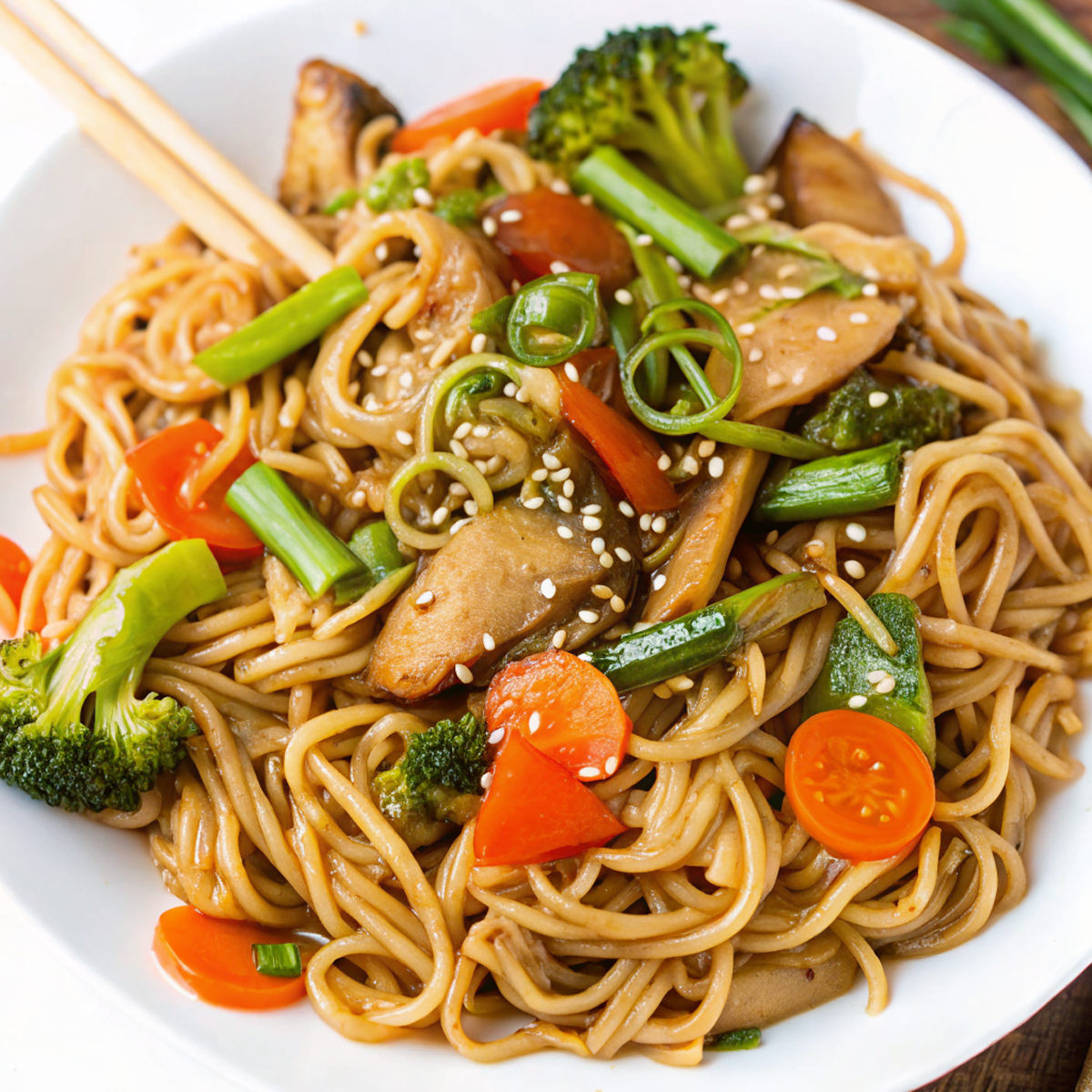
These teriyaki noodles prove that exceptional flavor doesn’t require complicated techniques or exotic ingredients. The combination of perfectly cooked vegetables, tender noodles, and that irresistible glossy teriyaki sauce creates a meal that satisfies on every level. Whether you’re looking for a quick weeknight dinner or an impressive dish for casual entertaining, this recipe delivers consistent results that will have everyone asking for seconds.
The beauty of this dish lies not just in its delicious taste, but in its adaptability to different preferences and dietary needs. From the protein additions to the vegetable variations, you can make this recipe truly your own while maintaining the essential character that makes it so appealing.
Made this recipe? Drop your twist in the comments, rate the recipe, and tag us on Facebook, Instagram with #recipehoney.com we might feature your creation!
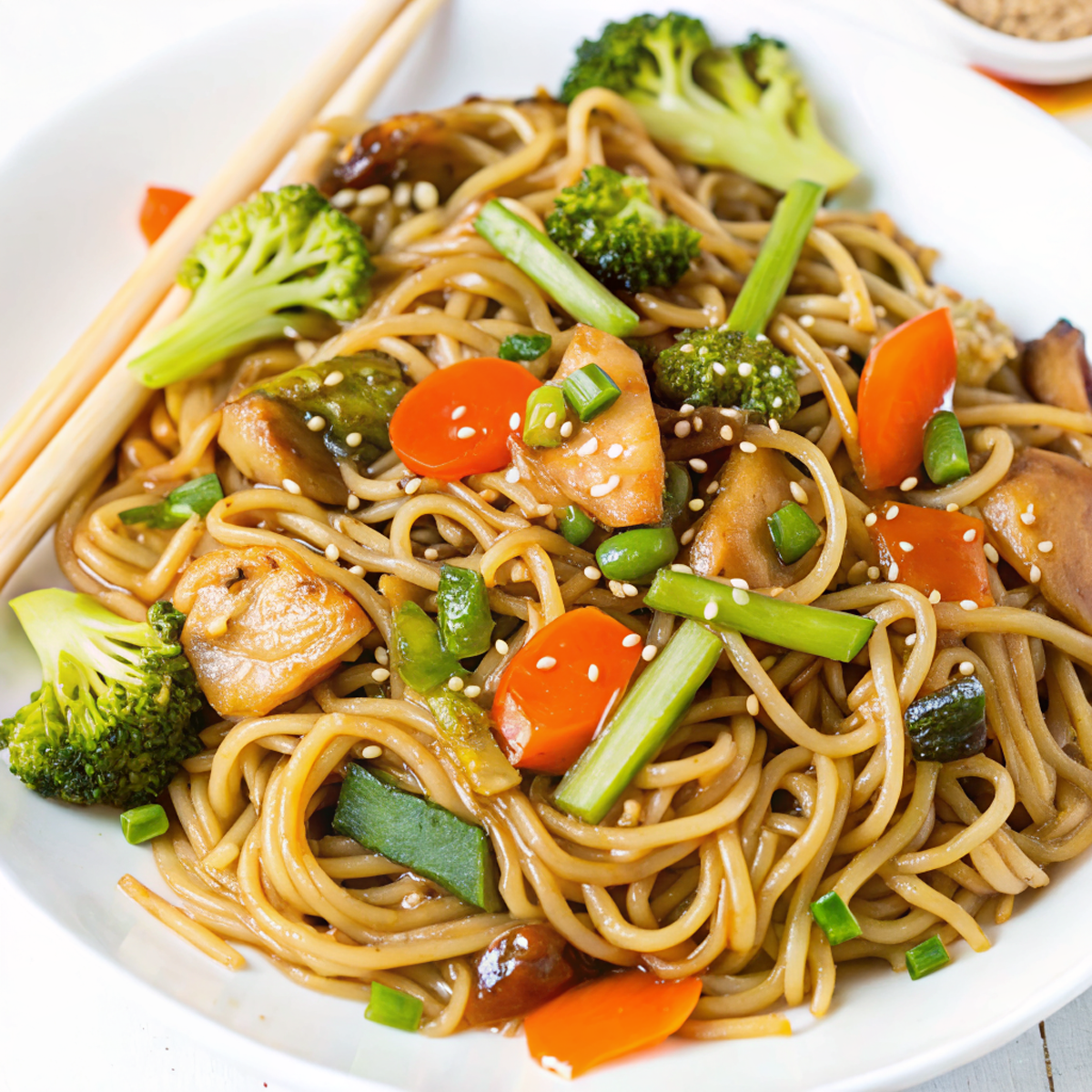
Teriyaki Noodles: Easy Vegan Recipe
Ingredients
Instructions
- Prepare Ingredients: Make the teriyaki sauce, cook noodles, cut broccoli, slice mushrooms and carrot
- Sauté Vegetables: Sauté broccoli, mushrooms, and carrot, then add green onions and teriyaki sauce
- Serve: Serve with desired toppings