
These aren’t just another attempt at recreating meat – they’re a celebration of bold Greek flavors, wholesome ingredients, and the incredible versatility of lentils. Whether you’re embracing Meatless Monday, feeding vegetarian guests, or simply craving something fresh and satisfying, this recipe delivers authentic Mediterranean taste in every bite.
Why Baked Greek Lentil Meatballs with Tzatziki Matter
The Mediterranean diet has long been celebrated for its health benefits and vibrant flavors, and these Baked Greek Lentil Meatballs with tzatziki perfectly embody this culinary tradition. For those looking to expand their vegetarian repertoire, you’ll find inspiration in our savory lentil meatloaf and our collection of healthy clean eating dinner ideas. If you’re interested in exploring more plant-based alternatives, check out this comprehensive guide to 30 Minute Vegetarian Meatballs Recipe for additional inspiration. The Reddit community also shares fantastic ideas in their discussion about favorite lentil recipes that won’t break the budget.
Greek cuisine has been perfecting the art of vegetarian protein for thousands of years, long before plant-based eating became a modern trend. Lentils, known as “fakes” in Greek, have been a cornerstone of Mediterranean cooking since ancient times. These legumes were so valued that they were often used as currency in ancient Greece.
The combination of lentils with fresh herbs like mint, parsley, and dill creates a flavor profile that’s distinctly Greek. Tzatziki, the cooling yogurt sauce that accompanies these meatballs, dates back to the Ottoman Empire and has become synonymous with Greek hospitality. This pairing represents the perfect balance of warm, herb-infused comfort food with a refreshing, probiotic-rich sauce.
Baked Greek Lentil Meatballs with Tzatziki Ingredients
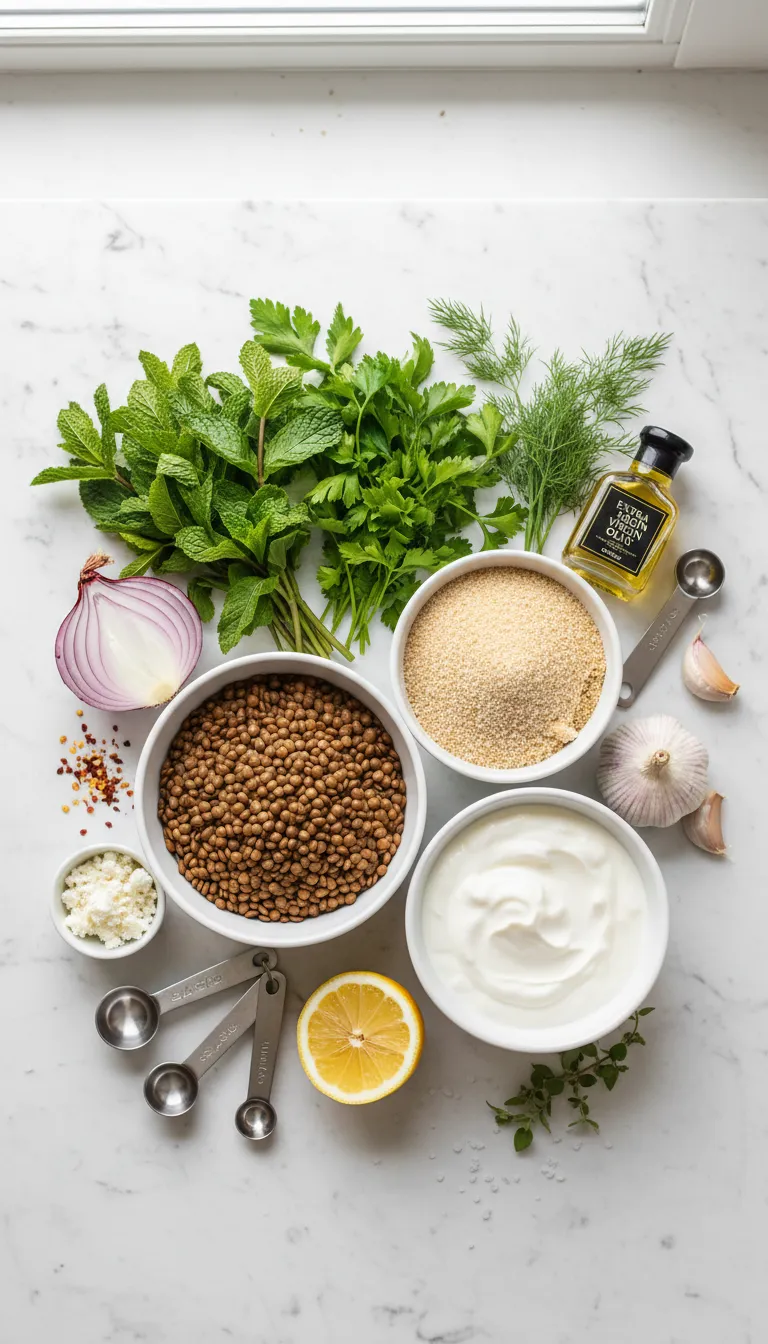
For the Meatballs:
- 1 ½ cups cooked brown lentils
- ½ red onion, finely diced
- ¾ cup bread crumbs
- ¼ cup fresh chopped mint
- ¼ cup fresh chopped parsley
- 2 tablespoons tomato paste
- 1 egg
- ½-1 teaspoon salt
- Black pepper to taste
- ½ teaspoon paprika
- ½ teaspoon oregano
- 1 teaspoon soy sauce
- Juice from ½ lemon
For the Tzatziki:
- ½ cup Greek yogurt
- ¼ cup shredded cucumber, drained
- Juice from ½ lemon
- Pinch of salt
- Pinch of black pepper
- 1 garlic clove, minced
- ¼ cup fresh chopped dill
Ingredient Spotlight
Brown Lentils: The foundation of our meatballs, brown lentils provide substantial protein (about 9 grams per half-cup) and fiber while maintaining their shape when cooked. Their earthy flavor pairs beautifully with Mediterranean herbs.
Fresh Herbs: The trio of mint, parsley, and dill creates the authentic Greek flavor profile. Mint adds brightness, parsley provides freshness, and dill brings that distinctive Mediterranean taste that makes tzatziki so irresistible.
Greek Yogurt: The thick, tangy base of tzatziki offers probiotics and protein while creating a cooling contrast to the warm, seasoned meatballs.
Tomato Paste: This concentrated ingredient adds umami depth and helps bind the meatballs while contributing to their rich, savory flavor.
Substitutions: Use green or red lentils if brown aren’t available, though cooking times may vary. Panko breadcrumbs can replace regular breadcrumbs for extra texture. For a vegan version, substitute the egg with a flax egg and use plant-based yogurt for the tzatziki.
Timing
- Prep Time: 10 minutes
- Cook Time: 35 minutes
- Total Time: 45 minutes
- Servings: 2-3 people
This recipe is approximately 20% faster than traditional meat-based meatballs since there’s no need to worry about internal temperature or lengthy cooking times for food safety.
Step-by-Step Instructions for Perfect Baked Greek Lentil Meatballs
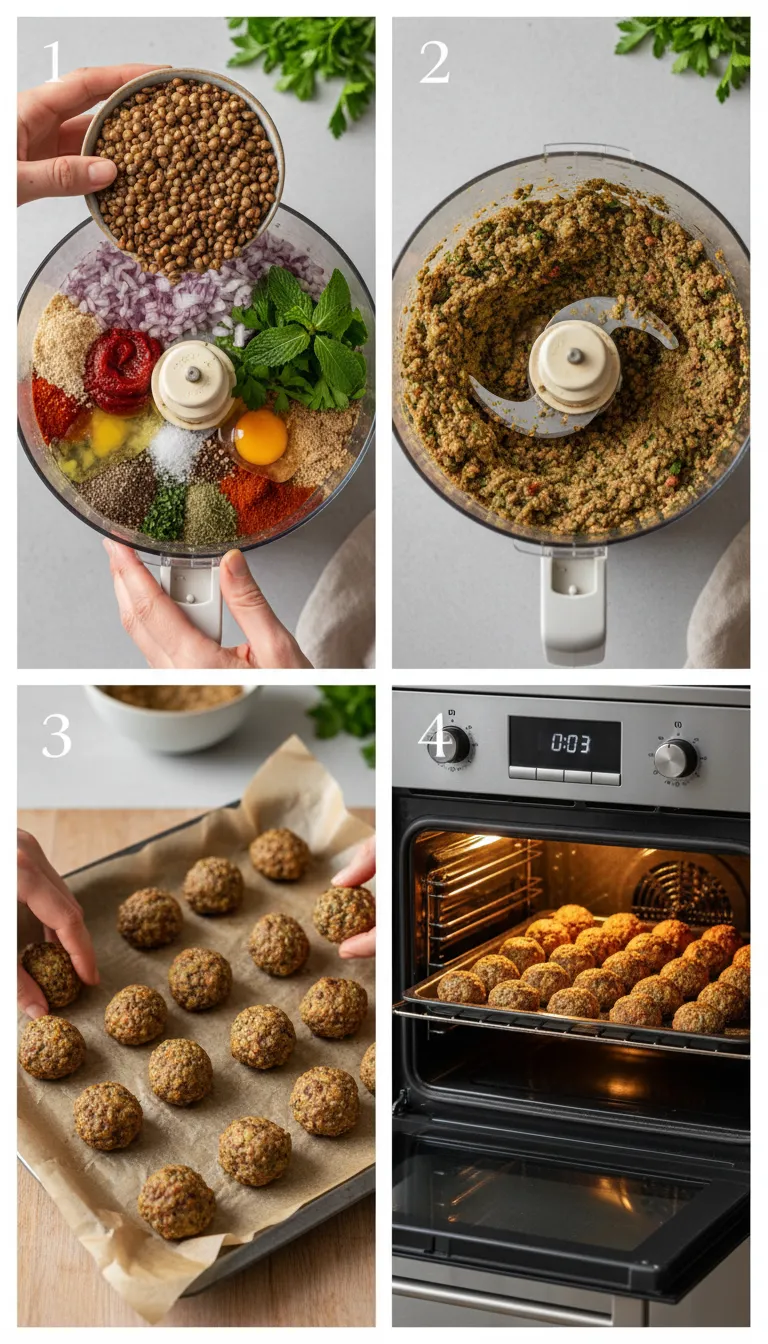
1. Prepare Your Workspace
Preheat your oven to 425°F (220°C). Line a sheet pan with parchment paper – this prevents sticking and makes cleanup effortless. Having everything ready before you start mixing ensures smooth preparation.
2. Process the Meatball Mixture
Add all meatball ingredients to a food processor. Pulse in short bursts rather than continuous blending – you want the mixture partially combined with some texture remaining, not a smooth paste. The mixture should hold together when squeezed but still have visible lentil pieces.
3. Shape the Meatballs
Using damp hands (this prevents sticking), roll the mixture into golf ball-sized portions. Place them evenly spaced on your prepared sheet pan. Don’t pack them too tightly – gentle rolling creates the best texture.
4. Bake to Perfection
Bake for 30-35 minutes until the meatballs are golden brown and firm to the touch. They should hold their shape when gently moved with a spatula.
5. Prepare the Tzatziki
While the meatballs bake, combine all tzatziki ingredients in a bowl. Make sure to drain the shredded cucumber thoroughly by pressing it between paper towels – excess moisture will make your tzatziki watery.
6. Rest and Serve
Let the meatballs cool for 5 minutes before serving. This brief rest helps them maintain their shape and prevents the tzatziki from warming up too quickly.
Tips & Tricks for Perfect Results
- Don’t Over-Process: Leave some texture in your lentils for the best mouthfeel and authentic appearance.
- Drain Your Cucumber: Salting and draining cucumber for 10 minutes before adding to tzatziki prevents watery sauce.
- Chill the Tzatziki: Make it 30 minutes ahead – the flavors meld beautifully and it becomes more refreshing.
- Test Your Seasoning: Cook a small portion of the mixture in a skillet before shaping all the meatballs to adjust salt and spices.
- Keep Hands Moist: Wet hands prevent the mixture from sticking while rolling, creating smoother meatballs.
Recipe Variations & Substitutions
Mediterranean Herb Blend: Add fresh thyme and rosemary for a more complex herb profile.
Spicy Greek Style: Include a pinch of red pepper flakes and a diced jalapeño for heat.
Gluten-Free Version: Replace breadcrumbs with ground oats or almond flour.
Vegan Adaptation: Use a flax egg (1 tablespoon ground flaxseed mixed with 3 tablespoons water) and cashew-based yogurt for the tzatziki.
Behind the Recipe
This recipe was born from a desire to capture the essence of a Greek taverna meal in a vegetarian format. After traveling through the Greek islands and tasting countless variations of lentil dishes, I wanted to create something that honored traditional flavors while being accessible to home cooks. The combination of fresh herbs, quality olive oil, and the cooling contrast of tzatziki represents everything I love about Mediterranean cuisine – it’s healthy, flavorful, and deeply satisfying.
Pairing Ideas
Beverages: Serve with sparkling water infused with lemon and mint, or traditional Greek mountain tea. A refreshing cucumber-mint agua fresca complements the Mediterranean flavors beautifully.
Sides: Pair with warm pita bread, Greek village salad (horiatiki), roasted vegetables, or lemon-herb rice pilaf. The meatballs also work wonderfully over quinoa or in a grain bowl.
Leftover & Reuse Ideas
Transform leftover meatballs into a Mediterranean grain bowl with quinoa, cucumber, tomatoes, and extra tzatziki. They’re also fantastic in pita pockets with fresh vegetables, or crumbled over a Greek salad for added protein. The tzatziki makes an excellent vegetable dip or sandwich spread for up to three days.
Nutritional Information
Per serving (approximately 6 meatballs with tzatziki): 280 calories, 14g protein, 38g carbohydrates, 8g fiber, 6g fat. Rich in plant-based protein, folate, iron, and probiotics from the Greek yogurt.
Serving Suggestions
Present these meatballs on a rustic wooden board with the tzatziki in a small bowl for dipping. Garnish with fresh dill sprigs, lemon wedges, and a drizzle of quality olive oil. For a more formal presentation, serve over a bed of arugula with cherry tomatoes and cucumber ribbons.
Common Mistakes to Avoid
Over-mixing the lentils: This creates a mushy texture. Pulse gently and leave some chunks for better mouthfeel.
Skipping the cucumber draining step: Excess moisture makes watery tzatziki that won’t cling to the meatballs properly.
Rolling meatballs too large: Smaller meatballs cook more evenly and have better texture. Aim for 1.5-inch diameter.
Not preheating the oven: Starting with a hot oven creates better browning and prevents soggy bottoms.
Storage & Reheating Tips
Store cooked meatballs in the refrigerator for up to 4 days in an airtight container. Reheat in a 350°F oven for 10-12 minutes to maintain texture – avoid microwaving as it can make them soggy. The tzatziki should be stored separately and consumed within 3 days. Meatballs can be frozen for up to 3 months; thaw overnight in the refrigerator before reheating.
FAQs
Can I make Baked Greek Lentil Meatballs with tzatziki ahead of time?
Yes! The meatballs can be shaped and refrigerated for up to 24 hours before baking. The tzatziki actually improves in flavor when made a few hours ahead.
What’s the best way to cook lentils for these Greek meatballs?
Use a 3:1 water-to-lentil ratio, bring to a boil, then simmer for 20-25 minutes until tender but not mushy. Drain well and let cool completely before using.
Can I bake these lentil meatballs without eggs?
Absolutely! Replace the egg with 1 tablespoon ground flaxseed mixed with 3 tablespoons water, or use 2 tablespoons aquafaba (chickpea liquid).
How do I prevent my Greek lentil meatballs from falling apart?
Ensure your lentils are well-drained and cooled, don’t over-process the mixture, and let the shaped meatballs rest for 10 minutes before baking to help them set.
What can I substitute for Greek yogurt in tzatziki?
Regular plain yogurt works, though drain it through cheesecloth for 2 hours for thicker consistency. For dairy-free options, use thick coconut yogurt or cashew-based alternatives.
Conclusion

These Baked Greek Lentil Meatballs with tzatziki prove that vegetarian cuisine can be every bit as satisfying and flavorful as traditional meat dishes. The combination of protein-rich lentils, aromatic Mediterranean herbs, and cooling tzatziki creates a meal that’s both nourishing and deeply satisfying. Whether you’re exploring plant-based eating or simply looking to add more variety to your dinner rotation, this recipe delivers authentic Greek flavors that will transport you straight to a sunny taverna overlooking the Aegean Sea.
The beauty of this dish lies in its simplicity and versatility. It’s elegant enough for entertaining yet simple enough for a weeknight dinner. Plus, with the make-ahead potential and excellent leftover possibilities, it’s a practical addition to any cook’s repertoire.
Made this recipe? Drop your twist in the comments, rate the recipe, and tag us on Facebook, Instagram with #recipehoney.com we might feature your creation!

Baked Greek Lentil Meatballs with tzatziki: How to Make Easy
Ingredients
Instructions
- Prepare the Meatballs: Preheat the oven to 425 degrees, add all meatball ingredients to a food processor, partially blend until combined, roll out meatballs onto a sheet pan lined with parchment paper, and bake for 30-35 minutes.
- Prepare the Tzatziki Sauce: Mix together the tzatziki ingredients.
- Serve: Serve the meatballs with the tzatziki sauce and your choice of sides.