
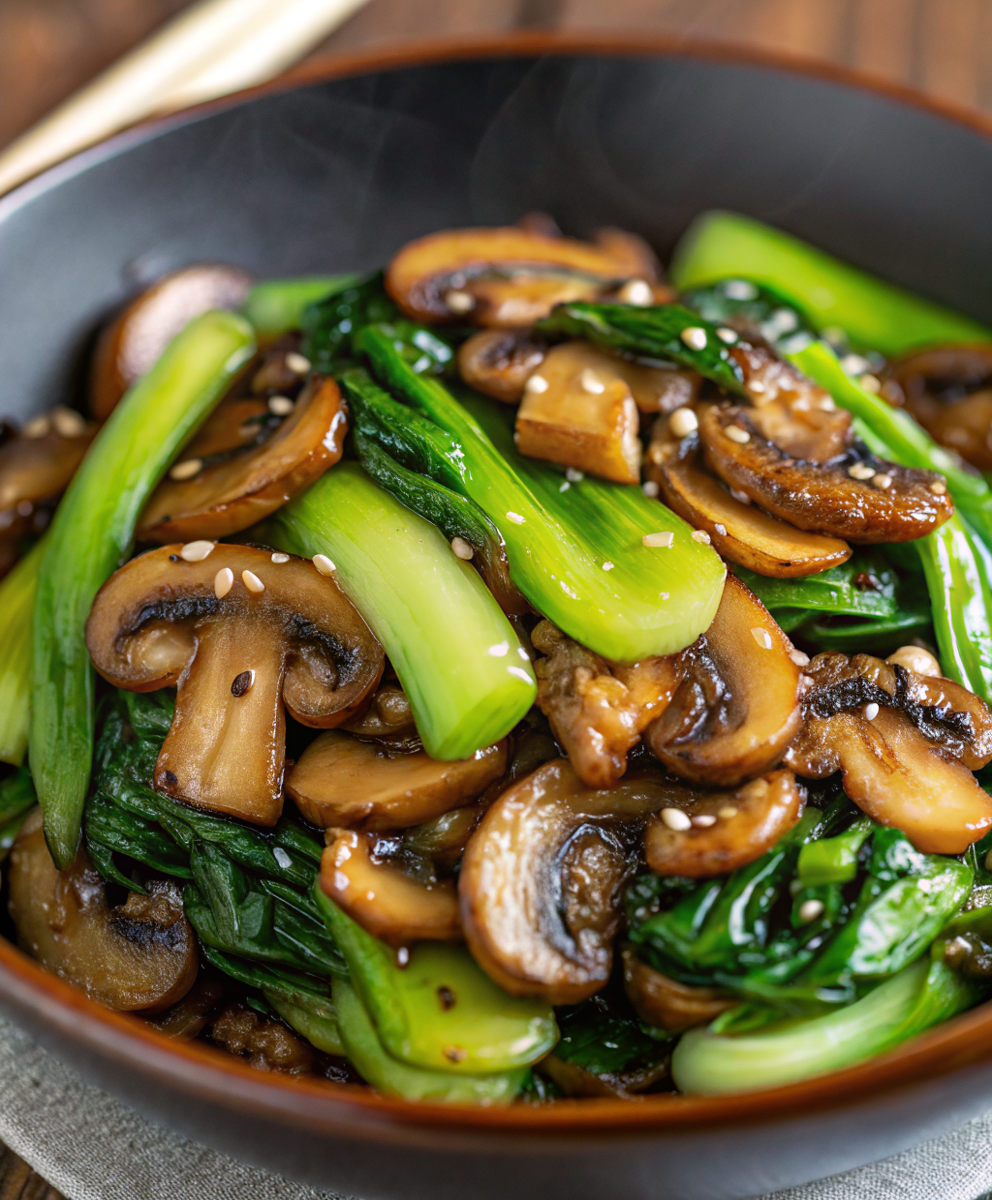
Why This Bok Choy and Mushroom Stir Fry Matters
Understanding the art of stir-frying opens up a world of healthy, quick meal possibilities that have been perfected over centuries. For comprehensive stir-fry techniques and timing guides, check out this helpful chicken and broccoli stir fry recipe that shares similar cooking principles. You’ll also find excellent pairing ideas in our Thai green curry paste guide. For additional nutritional insights about fresh vegetables, the Stir-Fry Cheat Sheet provides valuable cooking tips, while the FDA’s nutrition information for raw vegetables offers detailed nutritional data.
Stir-frying originated in China over 2,000 years ago as a fuel-efficient cooking method that quickly became beloved for its ability to preserve both flavor and nutrition. The technique involves cooking ingredients rapidly over high heat while constantly stirring, which creates the characteristic “wok hei” or breath of the wok that adds a distinctive smoky flavor. Bok choy, also known as pak choi, has been cultivated in China for over 6,000 years and represents one of the most nutritious members of the brassica family.
Bok Choy and Mushroom Stir Fry Ingredients
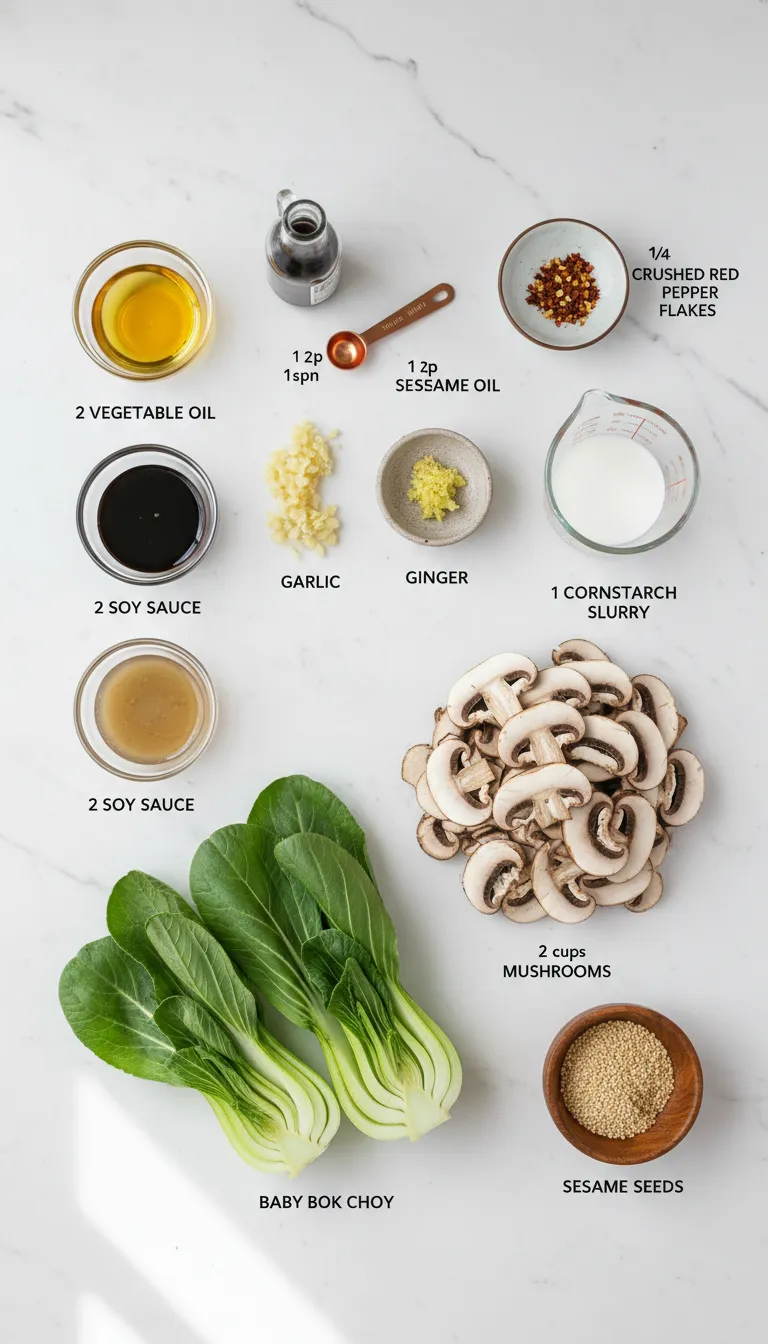
- 2 tablespoons vegetable oil
- 3 cloves garlic, minced
- 1 teaspoon fresh ginger, minced
- 1 pound baby bok choy, halved lengthwise
- 2 cups mushrooms, sliced
- 2 tablespoons soy sauce
- 1 tablespoon oyster sauce (optional)
- 1 teaspoon sesame oil
- 1/4 teaspoon crushed red pepper flakes (optional)
- 1 teaspoon cornstarch mixed with 2 tablespoons water
- Sesame seeds for garnish
Ingredient Spotlight
Baby Bok Choy: This tender Asian green provides a mild, slightly sweet flavor with crisp stalks and delicate leaves. Rich in vitamins A, C, and K, bok choy adds both nutritional value and beautiful color contrast to the dish.
Fresh Mushrooms: Whether you choose shiitake, cremini, or button mushrooms, they contribute an earthy umami depth that complements the bok choy perfectly. Mushrooms also provide selenium and B vitamins while adding meaty texture.
Garlic and Ginger: This aromatic duo forms the flavor foundation of most Asian stir-fries. Fresh ginger adds warmth and subtle heat, while garlic provides pungent depth that permeates throughout the dish.
Sesame Oil: A small amount of toasted sesame oil adds incredible nutty richness and authentic Asian flavor. It’s added at the end to preserve its delicate taste.
Cornstarch Slurry: This mixture creates a glossy, restaurant-style sauce that coats the vegetables beautifully without being heavy or overwhelming.
Substitution Ideas
- Replace bok choy with napa cabbage or Chinese broccoli
- Substitute mushrooms with bell peppers or snap peas
- Use tamari instead of soy sauce for gluten-free option
- Replace oyster sauce with hoisin sauce or additional soy sauce
- Swap vegetable oil for peanut oil or avocado oil
Timing
Preparation Time: 10 minutes
Total Time: 20 minutes
Servings: 4
This recipe cooks 30% faster than traditional braised vegetable dishes while maintaining superior texture and flavor. The quick cooking time makes it perfect for busy weeknight dinners.
Step-by-Step Instructions for Perfect Bok Choy and Mushroom Stir Fry
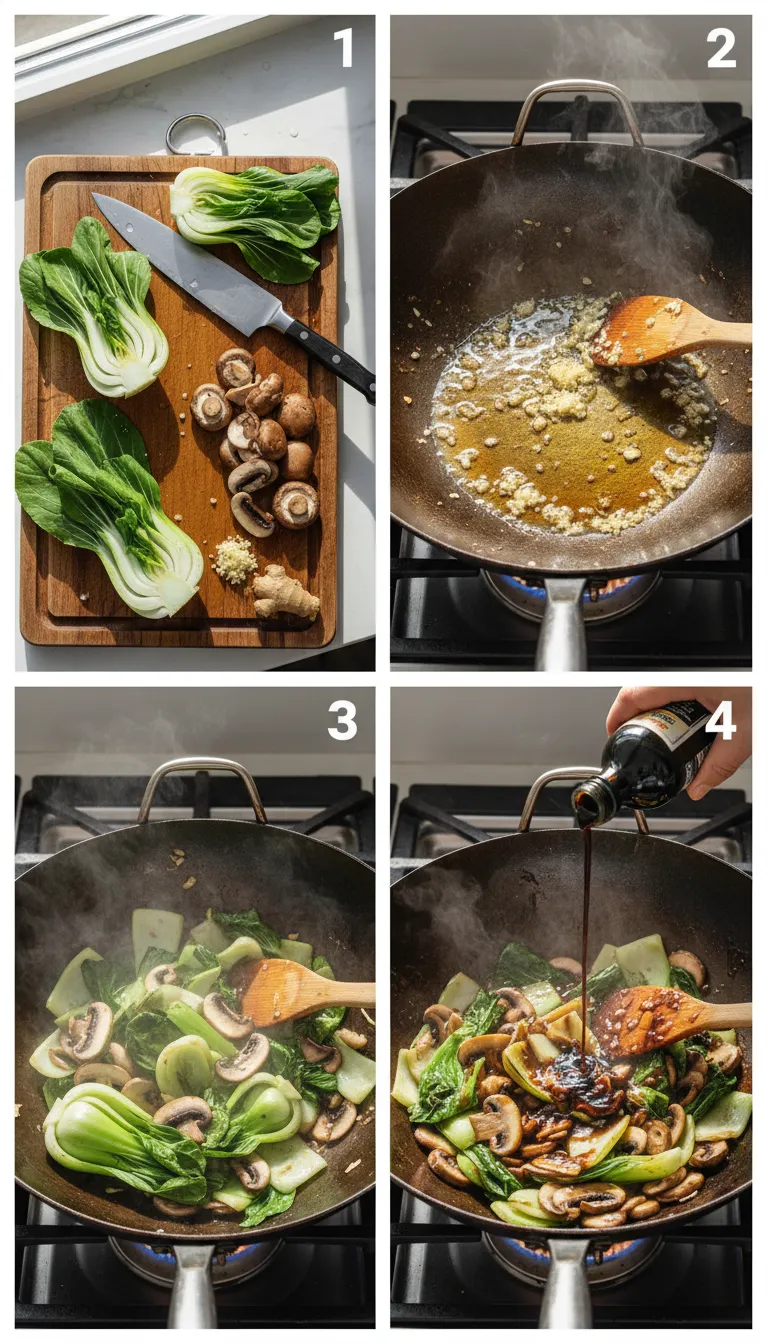
1. Prepare Your Vegetables
Thoroughly wash the bok choy under cold running water, paying special attention to the base where dirt can hide. Pat completely dry and halve lengthwise. Clean mushrooms with a damp paper towel and slice evenly. Having everything prepped before you start cooking is crucial for stir-fry success.
2. Create Your Aromatic Base
Heat vegetable oil in a large skillet or wok over medium-high heat until shimmering. Add minced garlic and ginger, stirring constantly for 30 seconds until fragrant but not browned. This step builds the flavor foundation for your entire dish.
3. Add the Vegetables
Increase heat to high and add bok choy stem-side down first, followed by mushrooms. The sizzling sound indicates your pan is at the perfect temperature. Stir-fry for 2-3 minutes until bok choy begins to wilt and mushrooms start releasing their moisture.
4. Season and Flavor
Pour in soy sauce, oyster sauce (if using), sesame oil, and red pepper flakes. Toss everything together ensuring even coating. The sauce should sizzle and coat the vegetables beautifully, creating that signature stir-fry aroma.
5. Thicken the Sauce
Push vegetables to one side of the pan and pour in the cornstarch slurry. Stir rapidly as it thickens, then toss with the vegetables. This creates a glossy, restaurant-quality sauce that clings perfectly to each piece.
6. Final Touch and Serve
Remove from heat immediately to prevent overcooking. Sprinkle with sesame seeds and serve while hot. The vegetables should retain their vibrant color and slight crispness.
Tips & Tricks for Perfect Results
- High Heat is Key: Use the highest heat setting your stove allows to achieve proper wok hei and prevent vegetables from steaming
- Don’t Overcrowd: Cook in batches if doubling the recipe to maintain high temperature and proper texture
- Prep Everything First: Have all ingredients cut and sauces mixed before you start cooking, as stir-frying happens very quickly
- Dry Vegetables Thoroughly: Excess water creates steam instead of the desired sear and can make your stir-fry soggy
- Add Stems First: Bok choy stems need more cooking time than the tender leaves, so add them to the pan first
Recipe Variations & Substitutions
Protein-Packed Version: Add sliced tofu, tempeh, or cooked edamame for extra plant-based protein. Cook the protein first, remove from pan, then proceed with vegetables and add protein back at the end.
Spicy Garlic Style: Double the garlic and add fresh chilies or increase red pepper flakes for heat lovers. A dash of chili oil at the end adds beautiful color and extra spice.
Ginger-Forward Variation: Triple the fresh ginger and add a tablespoon of rice vinegar for a bright, zingy flavor profile that’s particularly refreshing.
Low-Sodium Option: Replace soy sauce with coconut aminos and use low-sodium vegetable broth instead of oyster sauce for those watching their sodium intake.
Behind the Recipe
This recipe was inspired by countless visits to bustling Asian markets where the sight of fresh, vibrant bok choy always caught my attention. The combination of earthy mushrooms with crisp, sweet bok choy creates a perfect harmony that represents the essence of balanced Asian cooking. What started as an attempt to recreate a simple side dish from my favorite Chinese restaurant evolved into this foolproof recipe that captures authentic flavors while being accessible to home cooks everywhere.
Pairing Ideas
Beverages: Serve with jasmine tea, green tea, or sparkling water with lime. For something more substantial, try coconut water or a light vegetable broth.
Main Dishes: This stir-fry pairs beautifully with steamed brown rice, quinoa, or rice noodles. It also works wonderfully alongside grilled fish or as part of a larger Asian-inspired meal spread.
Complementary Sides: Consider serving with spring rolls, steamed dumplings, or a simple cucumber salad for a complete meal experience.
Leftover & Reuse Ideas
Transform leftover stir-fry into fried rice by chopping it finely and mixing with day-old rice and scrambled eggs. You can also use it as a filling for spring rolls or wraps, or blend it into a quick vegetable soup base. Leftover stir-fry makes an excellent topping for grain bowls or can be incorporated into ramen for added nutrition and flavor.
Nutritional Information
Per serving: Approximately 95 calories, 7g fat, 6g carbohydrates, 3g protein, 2g fiber. This dish is naturally low in calories while being rich in vitamins A, C, and K. The combination provides folate, calcium, and antioxidants while remaining naturally gluten-free when using tamari instead of soy sauce.
Serving Suggestions
Serve immediately in warmed bowls to maintain the ideal temperature and texture. Garnish with additional sesame seeds, sliced green onions, or a sprinkle of toasted sesame oil. For an elegant presentation, arrange the bok choy halves cut-side up and artfully place mushrooms around them. This dish works equally well as a side dish for four people or a light main course for two when served over rice or noodles.
Common Mistakes to Avoid
Overcooking the Vegetables: Bok choy should retain some crispness. Overcooked bok choy becomes mushy and loses its appealing texture contrast.
Using Low Heat: Insufficient heat results in steamed rather than stir-fried vegetables, missing the characteristic wok flavor and proper texture.
Adding Sauce Too Early: Adding soy sauce too early can cause vegetables to release excess water and become soggy rather than maintaining their crisp-tender texture.
Skipping the Cornstarch Slurry: Without thickening, the sauce won’t properly coat the vegetables and may pool at the bottom of the serving dish.
Storage & Reheating Tips
Store leftovers in the refrigerator for up to 3 days in an airtight container. For best results when reheating, use a hot skillet rather than the microwave to restore some of the original texture. Add a splash of water if needed to prevent sticking, and reheat just until warmed through to avoid overcooking. This dish is best enjoyed fresh but can be successfully reheated if stored properly.
FAQs
Can I make this Bok Choy and Mushroom Stir Fry ahead of time?
While best served immediately, you can prep all ingredients up to 4 hours ahead. Store cut vegetables separately in the refrigerator and cook just before serving for optimal texture and flavor.
What’s the best way to clean bok choy for stir fry?
Separate the leaves, rinse each piece under cold water, paying special attention to the base where dirt collects. Pat completely dry with paper towels before cutting to prevent excess moisture in your stir fry.
How do I know when my Bok Choy and Mushroom Stir Fry is perfectly cooked?
The bok choy stems should be tender-crisp and bright green, while mushrooms should be golden and have released their moisture. The entire cooking process should take no more than 5-6 minutes once vegetables hit the pan.
Can I use frozen bok choy in this stir fry recipe?
Fresh bok choy is strongly recommended for best texture and flavor. Frozen bok choy tends to become mushy when stir-fried and won’t provide the characteristic crisp-tender texture that makes this dish special.
What type of mushrooms work best in Bok Choy and Mushroom Stir Fry?
Shiitake mushrooms provide the most authentic flavor, but cremini, button, or oyster mushrooms all work well. Choose mushrooms that are firm and fresh for the best texture and taste in your stir fry.
Conclusion
Bok Choy and Mushroom Stir Fry
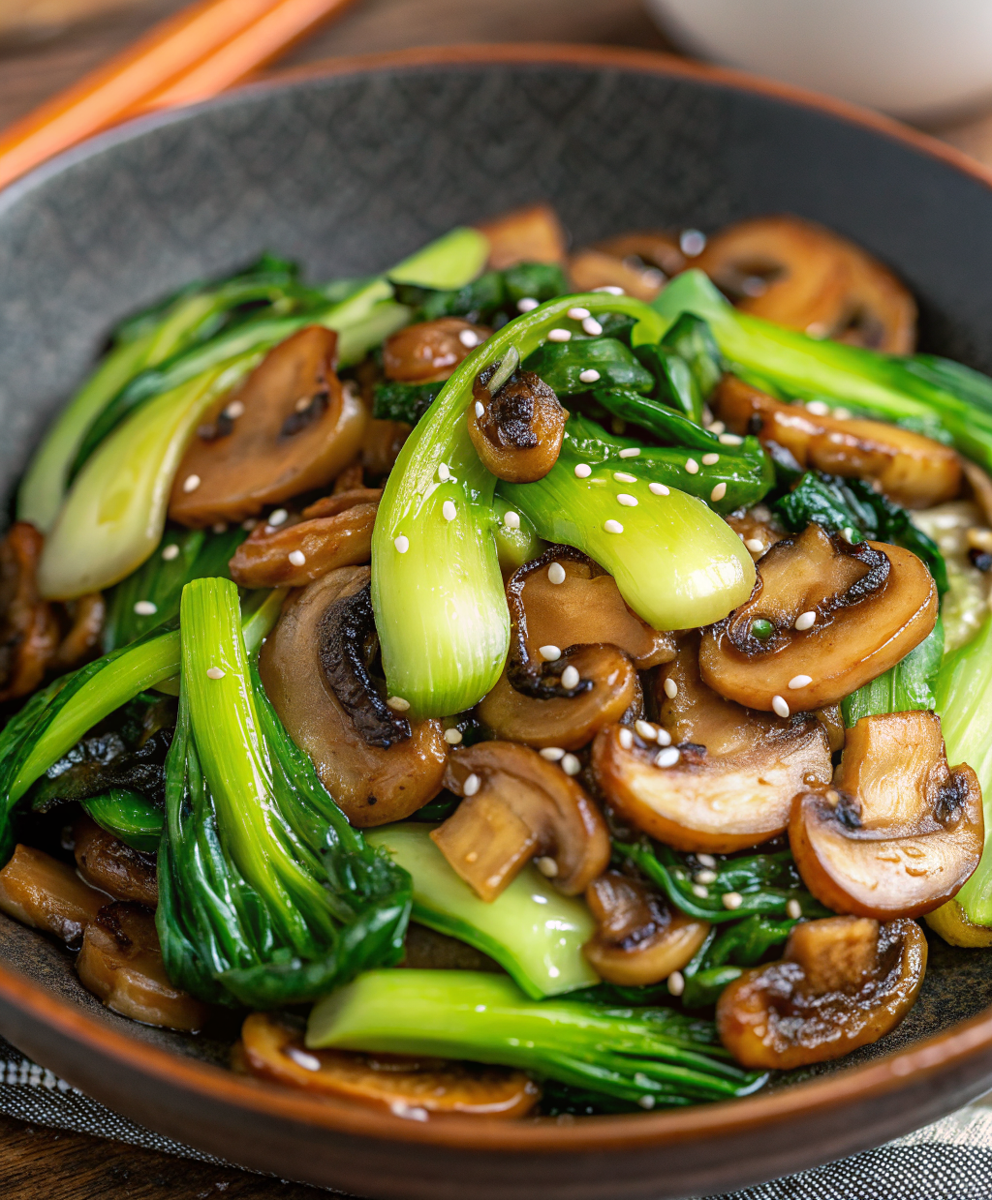
This vibrant Bok Choy and Mushroom Stir Fry proves that simple ingredients can create extraordinary flavors when treated with respect and proper technique. The combination of crisp-tender vegetables, aromatic seasonings, and glossy sauce delivers restaurant-quality results in just 20 minutes. Whether you’re new to Asian cooking or a seasoned stir-fry enthusiast, this recipe offers the perfect balance of nutrition, flavor, and visual appeal that makes it a worthy addition to your regular meal rotation.
Made this recipe? Drop your twist in the comments, rate the recipe, and tag us on Facebook, Instagram with #recipehoney.com we might feature your creation!
Bok Choy and Mushroom Stir Fry: Easy Recipe for Perfect Flavor
Ingredients
Instructions
Nutrition Facts
Nutrition data is currently unavailable for this recipe.