
This silky, cloud-like dessert emerged from Hong Kong’s vibrant culinary scene in the mid-20th century, where Cantonese chefs adapted European pudding-making techniques to showcase the region’s abundant tropical mangoes. The result is a dessert that captures the essence of summer in every spoonful, with its bright golden color and intensely fruity flavor that melts effortlessly on your tongue.
Why Chinese Mango Pudding Matters
When exploring the world of Asian-inspired desserts, you’ll discover fascinating connections to other creative treats like our strawberry pineapple popsicles and heavenly creamy cinnamon rice pudding. For those interested in mastering pudding techniques from scratch, the Homemade Jell-O Style Chocolate Pudding Recipe offers excellent foundational knowledge. Additionally, establishments like Mango Mango Dessert have elevated mango-based desserts to an art form, showcasing the versatility of this tropical fruit in modern dessert applications.
Chinese Mango Pudding holds a special place in Cantonese cuisine, representing the innovative spirit of Hong Kong’s culinary evolution. During the colonial period, local chefs masterfully blended European dessert techniques with abundant Asian ingredients, creating this iconic treat that has since spread throughout Chinese restaurants worldwide. The dessert’s popularity stems from its clean, refreshing finish that perfectly balances rich dim sum meals.
This pudding embodies the Cantonese philosophy of using the finest seasonal ingredients in their purest form. Unlike heavy Western desserts, Chinese Mango Pudding celebrates the natural sweetness and vibrant flavor of ripe mangoes, enhanced rather than masked by complementary ingredients. Its smooth, almost ethereal texture provides a cooling contrast to spicy or savory dishes, making it an ideal palate cleanser.
Chinese Mango Pudding Ingredients
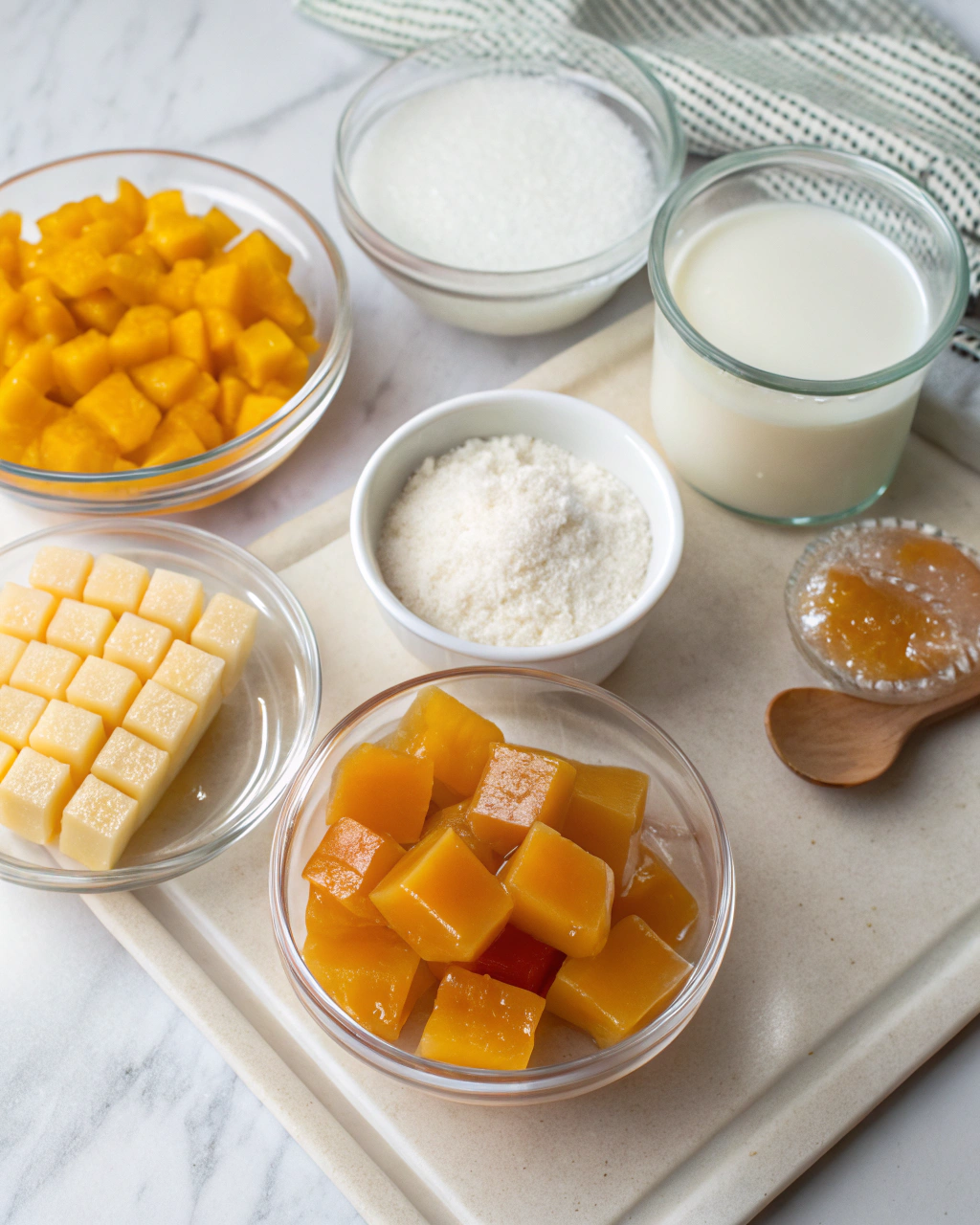
Ingredient Spotlight
Fresh Mango Cubes (2 cups): The star ingredient provides natural sweetness, vibrant color, and that distinctive tropical flavor. Choose mangoes that yield slightly to gentle pressure and emit a sweet aroma at the stem end. The natural enzymes in fresh mango also contribute to the pudding’s silky texture.
Unflavored Gelatin Sheets (15g): These provide the perfect setting power without adding any unwanted flavors. Gelatin sheets dissolve more smoothly than powder, creating that signature wobble without grittiness. They’re essential for achieving the pudding’s characteristic firm yet delicate texture.
Granulated Sugar (1/2 cup): Balances the mango’s natural tartness and helps the gelatin dissolve properly. The amount can be adjusted based on your mango’s ripeness and personal preference for sweetness.
Water (1 cup): Acts as the base liquid for dissolving both sugar and gelatin, creating the foundation of your pudding mixture.
Heavy Cream (100ml): Adds richness and creates that luxurious mouthfeel that distinguishes this pudding from simple fruit jellies. The fat content helps carry flavors and provides satisfying body.
Milk (150ml): Contributes to the creamy texture while lightening the overall richness, creating perfect balance between indulgence and refreshment.
Complete Ingredients List
- 2 cups fresh mango cubes (about 2 large ripe mangoes)
- 3 unflavored gelatin sheets (15g total weight)
- 1/2 cup granulated sugar, or more to taste
- 1 cup clean water
- 100ml heavy cream
- 150ml whole milk
Smart Substitutions
Gelatin alternatives: Use 1 tablespoon powdered gelatin or 2 tablespoons agar powder for vegetarian versions. Dairy-free options: Replace cream and milk with coconut milk for tropical richness. Sweetener swaps: Honey or agave nectar work beautifully, though you may need to adjust quantities.
Timing
Preparation time: 15 minutes
Chilling time: 4 hours
Total time: 4 hours 20 minutes
Servings: 4 generous portions
This Chinese Mango Pudding sets 30% faster than traditional gelatin desserts due to the natural pectin in mangoes, making it perfect for last-minute dinner party preparations.
Step-by-Step Instructions for Perfect Chinese Mango Pudding
Step 1: Prepare the Gelatin Foundation
Submerge gelatin sheets in a bowl of cold water, ensuring they’re completely covered. Let them bloom for 5-10 minutes until they become soft and pliable. This crucial step ensures smooth dissolution and prevents lumps in your final pudding.
Step 2: Create the Sugar Syrup Base
In a small saucepan, combine sugar with 1 cup of water. Heat gently while stirring until the sugar completely dissolves, then warm the mixture to between 50°C to 70°C (122°F to 158°F). Don’t let it boil, as excessive heat can affect the gelatin’s setting properties.
Step 3: Incorporate the Softened Gelatin
Remove the bloomed gelatin sheets from cold water and squeeze out excess moisture. Add them to the warm sugar syrup, stirring continuously until completely dissolved. The mixture should be crystal clear with no visible gelatin pieces.
Step 4: Blend the Mango Magic
Add fresh mango cubes to the gelatin mixture and blend using an immersion blender or regular blender until completely smooth. Strain through a fine-mesh sieve if you prefer an ultra-smooth texture, though some prefer the subtle texture that tiny mango pieces provide.
Step 5: Add Creamy Richness
Gradually whisk in the milk and cream, ensuring everything combines smoothly. Taste and adjust sweetness if needed. The mixture should coat the back of a spoon lightly and have a beautiful golden color.
Step 6: Set and Chill
Divide the mixture evenly among four serving containers or ramekins. Cover with plastic wrap and refrigerate for at least 4 hours or until completely set. The pudding should have a firm but yielding texture when gently shaken.
Tips & Tricks for Perfect Chinese Mango Pudding Results
- Choose the right mango variety: Alphonso, Ataulfo, or Kent mangoes provide the best flavor and texture balance for puddings.
- Temperature control is crucial: Never add gelatin to boiling liquid, as it will lose its setting power and create a grainy texture.
- Strain for silkiness: Pass your mixture through a fine sieve to remove any undissolved gelatin particles or mango fibers.
- Test the set: After 2 hours, gently touch the surface. It should feel firm but still have a slight wobble when moved.
- Serving temperature matters: Remove from refrigerator 10 minutes before serving for optimal texture and flavor release.
Recipe Variations & Substitutions for Chinese Mango Pudding
Coconut Mango Fusion: Replace half the milk with coconut milk and add toasted coconut flakes for tropical depth. Layered Elegance: Create alternating layers of mango pudding and coconut panna cotta for visual drama. Citrus Twist: Add lime zest and a splash of lime juice to brighten the mango flavor profile. Vegan Version: Use agar powder instead of gelatin and substitute plant-based milk and cream alternatives.
Behind the Recipe
This Chinese Mango Pudding recipe originated from my fascination with Hong Kong’s tea house culture, where dim sum meals traditionally end with light, refreshing desserts. After countless attempts to recreate the ethereal texture I remembered from childhood visits to Cantonese restaurants, I discovered that the secret lies in the precise balance between gelatin strength and dairy richness. The technique of blooming gelatin sheets rather than using powder creates that signature smooth mouthfeel that makes this dessert so memorable.
Pairing Ideas
Serve alongside jasmine tea or oolong tea to complement the dessert’s delicate flavors. Fresh mint tea provides a cooling contrast, while lychee juice offers complementary tropical notes. For a more substantial finish, pair with almond cookies or sesame wafers. The pudding also works beautifully as part of a larger dessert platter featuring fresh fruit and light pastries.
Leftover & Reuse Ideas
Transform leftover Chinese Mango Pudding into smoothie bases by blending with additional milk and ice. Chop set pudding into cubes and fold into fruit salads for added richness. Use as a topping for vanilla ice cream or blend into milkshakes for tropical flavor. The pudding can also be layered with granola and fresh fruit for an elegant breakfast parfait.
Nutritional Information
Each serving contains approximately 180 calories, with 12g carbohydrates, 8g fat, and 6g protein. Mangoes provide vitamin C, vitamin A, and dietary fiber, while dairy components contribute calcium and protein. The dessert is naturally gluten-free and can be made dairy-free with appropriate substitutions.
Serving Suggestions
Present in clear glass containers to showcase the pudding’s beautiful golden color. Garnish with fresh mango cubes, a sprig of mint, or a drizzle of passion fruit pulp. For special occasions, unmold onto dessert plates and surround with tropical fruit compote. Serve chilled with decorative spoons and provide additional fresh mango on the side for those who want extra fruit.
Common Mistakes to Avoid
Using overripe mangoes: They can make the pudding too sweet and affect the setting. Choose mangoes that are ripe but still firm. Adding hot liquid to gelatin: This breaks down the gelatin’s structure, resulting in a pudding that won’t set properly. Not straining the mixture: This leaves lumps and fibers that detract from the smooth texture. Rushing the chilling process: Inadequate setting time results in a pudding that’s too soft and won’t hold its shape when served.
Storage & Reheating Tips
Store covered Chinese Mango Pudding in the refrigerator for up to 3 days. The pudding maintains its best texture within the first 48 hours. Avoid freezing, as this breaks down the gelatin structure and creates an unpleasant grainy texture upon thawing. If the surface develops a skin, simply scrape it off before serving. For best presentation, add fresh garnishes just before serving rather than storing with decorations.
FAQs
How do I know when my Chinese Mango Pudding is properly set?
The pudding should have a firm surface that springs back lightly when touched, with a gentle wobble when the container is moved. It typically takes 4-6 hours to achieve the perfect consistency.
Can I make Chinese Mango Pudding without gelatin sheets?
Yes, substitute with 1 tablespoon of unflavored gelatin powder or use agar powder for a vegetarian version. Agar sets more firmly, so use about 2/3 the amount specified for gelatin.
Why didn’t my Chinese Mango Pudding set properly?
Common causes include using water that was too hot when adding gelatin, not allowing enough chilling time, or using overripe mangoes with high enzyme content that can interfere with gelatin setting.
How can I make my Chinese Mango Pudding smoother?
Strain the mixture through a fine-mesh sieve after blending, ensure gelatin is completely dissolved before adding other ingredients, and blend thoroughly to break down all mango fibers.
What’s the best way to unmold Chinese Mango Pudding?
Dip the bottom of the container in warm water for 10-15 seconds, run a thin knife around the edges, then invert onto your serving plate. The pudding should release easily with a gentle shake.
Conclusion
Chinese Mango Pudding
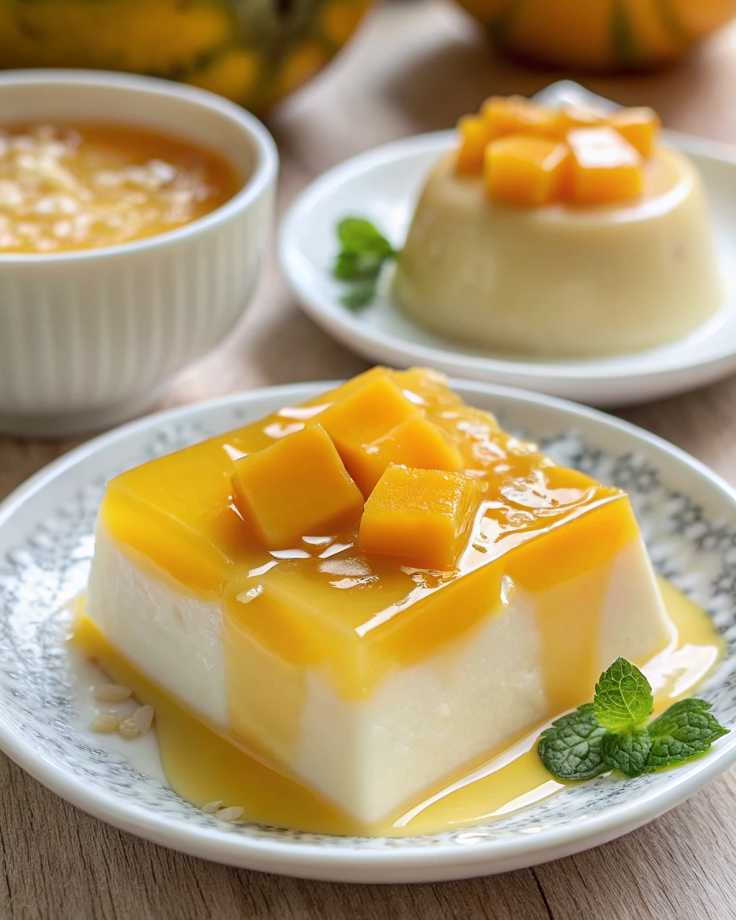
This Chinese Mango Pudding delivers restaurant-quality results with surprisingly simple techniques, proving that the most elegant desserts often rely on perfect execution of basic principles. The combination of fresh mango’s natural sweetness, cream’s richness, and gelatin’s silky texture creates a dessert that’s both sophisticated and comforting. Whether you’re concluding a dim sum feast or seeking a light summer treat, this pudding offers the perfect balance of indulgence and refreshment that makes every spoonful memorable.
Made this recipe? Drop your twist in the comments, rate the recipe, and tag us on Facebook, Instagram with #recipehoney.com we might feature your creation!
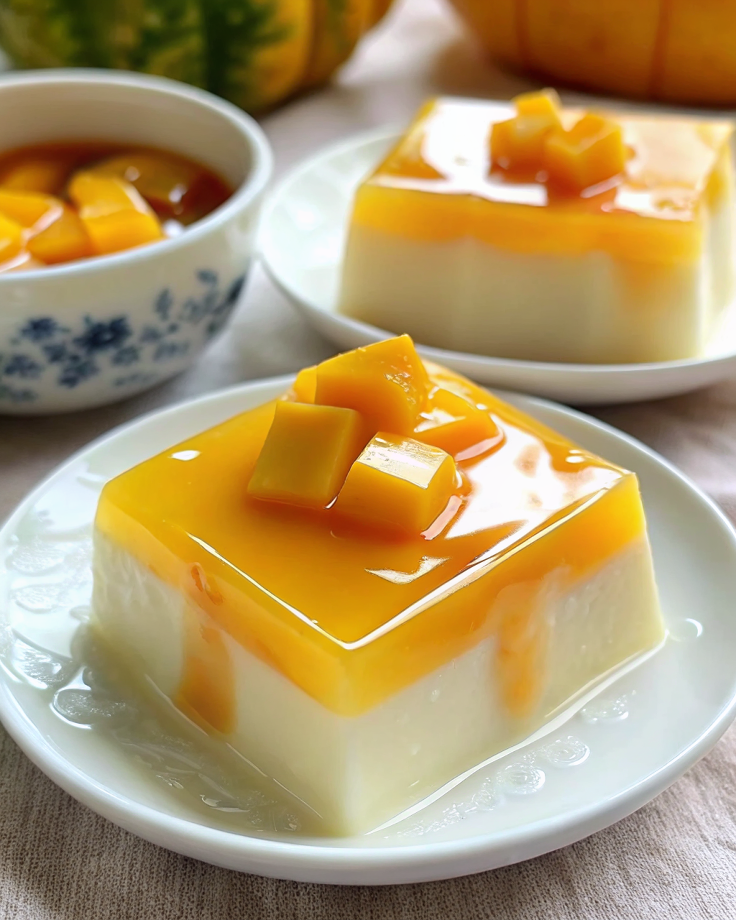
Chinese Mango Pudding: How to Make the Best Creamy Dessert
Ingredients
Instructions
- Soak Gelatin: Soak gelatin sheets in cold water until soft.
- Dissolve Sugar & Gelatin: In a small pot, dissolve sugar in clean water. Then heat the water temperature among 50℃ to 70℃, place gelatin in. Stir until dissolved.
- Blend Mango with Gelatin: Cut fresh mango in half and then dice the fresh mangos out. Blend well with the gelatin liquid.
- Add Dairy: Add milk, cream and mix well.
- Chill: Divide into four containers. Chill until firmed.
- Garnish & Serve: Before eating, decorate the fresh mango dices.