
The deep crimson color of borscht comes from fresh beets, which not only provide stunning visual appeal but also deliver essential nutrients like folate, manganese, and nitrates. This hearty soup combines earthy beets with tender potatoes, aromatic vegetables, and herbs to create a satisfying meal that’s both nourishing and delicious.
Why Classic Borscht Recipe Matters
Understanding proper cooking techniques is essential for creating the perfect borscht, and mastering skills like Sautéing 101 will elevate your soup-making abilities. For those interested in exploring other vegetable-based soups, our hearty beef and vegetable soup offers another comforting option. Additionally, you might enjoy this Beet Soup (Smooth and Velvety) | Downshiftology for a different take on beet-based soups, or try our authentic New Mexico green chile stew for another regional specialty.
Borscht traces its origins back to ancient times in Eastern Europe, where it began as a simple fermented soup made from hogweed. Over centuries, the recipe evolved to incorporate beets as the primary ingredient, spreading throughout Ukraine, Russia, Poland, and Lithuania. Each region developed its own interpretation, with some versions featuring meat, others remaining vegetarian, and many including distinctive local vegetables and seasonings.
The soup gained popularity not only for its delicious taste but also for its practicality during harsh winters when fresh vegetables were scarce. Beets could be stored for months in root cellars, making them an invaluable source of nutrition during cold seasons. Today, borscht represents more than just sustenance; it embodies cultural heritage and family traditions passed down through generations.
Classic Borscht Recipe Ingredients
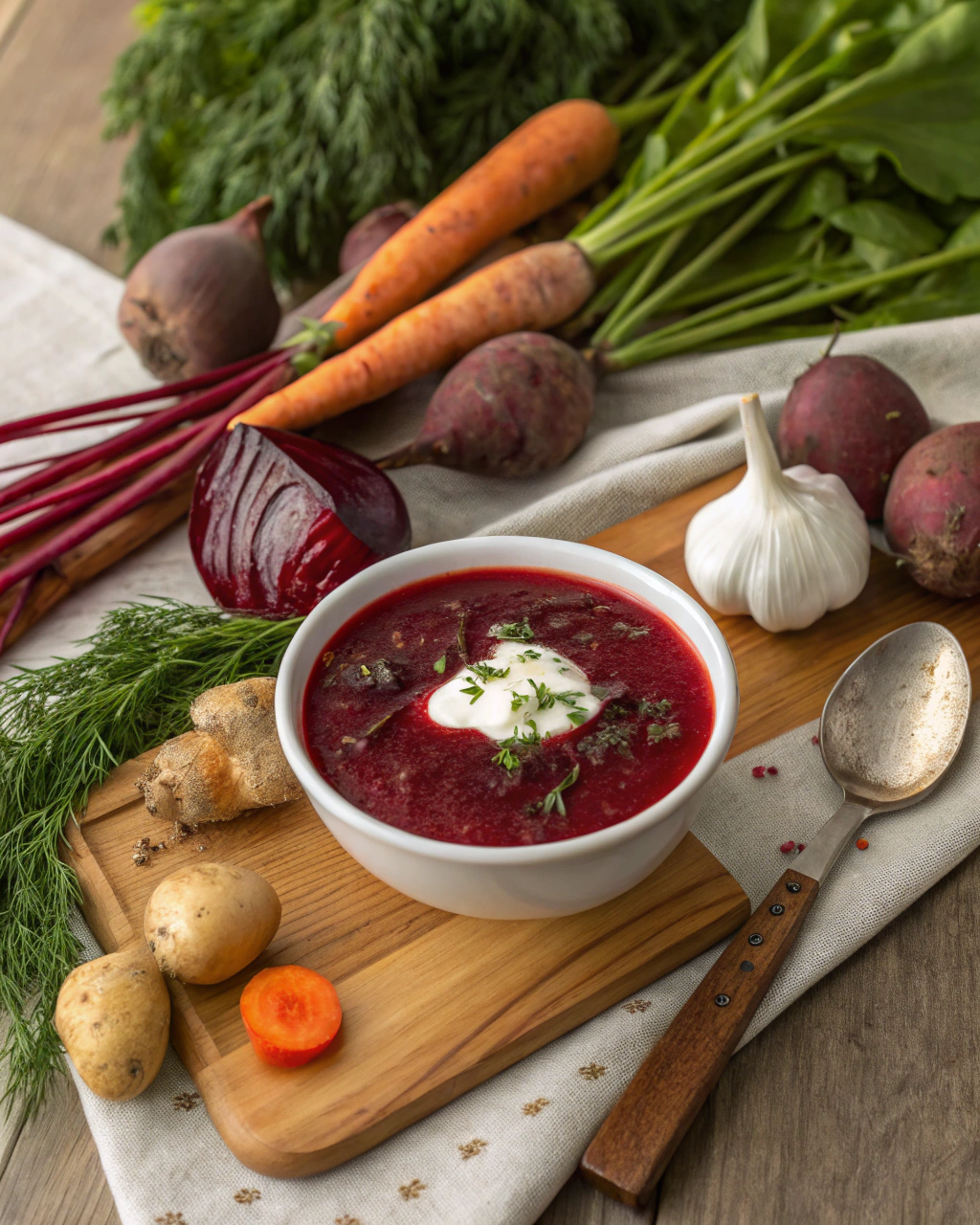
For the Borscht Base:
- 3 medium beets, peeled and grated
- 4 tablespoons olive oil, divided
- 8 cups chicken broth plus 2 cups water
- 3 medium Yukon potatoes, peeled and sliced into bite-sized pieces
- 2 carrots, peeled and thinly sliced
For the Zazharka (Aromatic Base):
- 2 celery ribs, trimmed and finely chopped
- 1 small red bell pepper, finely chopped (optional)
- 1 medium onion, finely chopped
- 4 tablespoons ketchup or 3 tablespoons tomato sauce
Additional Flavorings:
- 1 can white cannellini beans with their juice
- 2 bay leaves
- 2-3 tablespoons white vinegar, or to taste
- 1 teaspoon sea salt, or to taste
- 1/4 teaspoon black pepper, freshly ground
- 1 large garlic clove, pressed
- 3 tablespoons chopped fresh dill
Ingredient Spotlight
Fresh Beets: The star ingredient provides the soup’s signature color and earthy sweetness. Beets contain natural sugars that caramelize during cooking, creating depth of flavor while maintaining their vibrant hue.
Yukon Potatoes: These waxy potatoes hold their shape well during cooking, providing hearty substance without becoming mushy. Their creamy texture balances the beets’ earthiness.
White Vinegar: Essential for achieving the characteristic tangy flavor that defines authentic borscht. The acidity brightens the soup and helps preserve the beets’ brilliant red color.
Fresh Dill: This herb adds a distinctive aromatic quality that’s traditional in Eastern European cuisine. Its bright, grassy notes complement the earthiness of the beets perfectly.
Cannellini Beans: These creamy white beans add protein and fiber, making the soup more filling while contributing a subtle nutty flavor that doesn’t compete with the beets.
Timing
Preparation Time: 30 minutes
Total Time: 1 hour 10 minutes
This Classic Borscht Recipe cooks approximately 20% faster than traditional slow-simmered versions, thanks to the efficient sautéing technique and properly sized vegetable cuts. The active cooking time allows flavors to meld beautifully while maintaining the vegetables’ ideal texture.
Step-by-Step Instructions for Perfect Classic Borscht Recipe
Step 1: Prepare Your Vegetables
Peel, grate, and slice all vegetables as specified in the ingredients list. Keep sliced potatoes submerged in cold water to prevent browning until ready to use, then drain thoroughly. This preparation step ensures even cooking and prevents any vegetables from oxidizing.
Step 2: Sauté the Beets
Heat a large soup pot (5½ quarts or larger) over medium-high heat and add 2 tablespoons olive oil. Add the grated beets and sauté for 10 minutes, stirring occasionally until beets are softened and fragrant. This initial cooking concentrates the beet flavor and prevents them from bleeding too much color later.
Step 3: Add Broth and Root Vegetables
Pour in 8 cups chicken broth and 2 cups water to the sautéed beets. Add the drained sliced potatoes and sliced carrots, then cook for 10-15 minutes or until vegetables are easily pierced with a fork. The gentle simmer ensures tender vegetables without overcooking.
Step 4: Prepare the Zazharka
While potatoes cook, place a large skillet over medium-high heat and add the remaining 2 tablespoons oil. Add chopped onion, celery, and bell pepper. Sauté, stirring occasionally, until vegetables are softened and lightly golden (7-8 minutes). This aromatic base adds incredible depth to the soup.
Step 5: Combine and Finish
Add 4 tablespoons ketchup to the sautéed vegetables and stir-fry for 30 seconds, then transfer everything to the soup pot. When potatoes and carrots reach desired tenderness, add cannellini beans with their juice, bay leaves, 2-3 tablespoons white vinegar, 1 teaspoon salt, ¼ teaspoon black pepper, pressed garlic, and chopped dill.
Step 6: Final Seasoning
Simmer the completed soup for an additional 2-3 minutes to allow flavors to meld. Taste and adjust seasoning, adding more salt and vinegar as needed to achieve the perfect balance of earthy sweetness and bright acidity.
Tips & Tricks for Perfect Classic Borscht Recipe Results
- Grate beets uniformly: Use the large holes of a box grater for consistent cooking and optimal texture throughout the soup.
- Don’t skip the vinegar: Start with less and gradually add more to taste; the acidity is crucial for authentic flavor and color preservation.
- Prepare mise en place: Have all vegetables chopped and ready before starting, as the cooking process moves quickly once begun.
- Control the heat: Maintain medium-high heat for sautéing but reduce to a gentle simmer once liquids are added to prevent overcooking.
- Taste as you go: Adjust seasoning throughout the cooking process, especially salt and vinegar, to build layers of flavor.
Recipe Variations & Substitutions
Vegetarian Version: Replace chicken broth with vegetable broth for a completely plant-based soup that maintains all the traditional flavors.
Hearty Meat Addition: Add cooked shredded chicken or beef during the final simmering stage for extra protein and substance.
Cabbage Borscht: Include 2 cups of shredded cabbage with the other vegetables for a more traditional Ukrainian-style soup.
Dairy-Free Option: Serve with coconut cream or cashew cream instead of traditional sour cream for those avoiding dairy products.
Behind the Recipe
This Classic Borscht Recipe represents generations of Eastern European home cooking wisdom, refined for modern kitchens while preserving authentic flavors. The inspiration comes from traditional family recipes where grandmothers would simmer beets for hours, creating nourishing meals from simple, affordable ingredients.
The technique of creating a zazharka (aromatic vegetable base) is fundamental to many Eastern European soups and stews. This method builds complex flavors by properly developing the aromatics before adding them to the main pot, ensuring each spoonful delivers maximum taste.
Pairing Ideas
Serve this vibrant soup with crusty sourdough bread or traditional dark rye for an authentic experience. The soup pairs beautifully with herbal teas like chamomile or mint, which complement the earthy beet flavors without overwhelming them.
For a complete meal, consider serving alongside simple cucumber salad dressed with vinegar and dill, or roasted root vegetables that echo the soup’s earthy theme. Sparkling water with lemon provides a refreshing contrast to the soup’s rich, warming qualities.
Leftover & Reuse Ideas
Leftover borscht actually improves in flavor after a day in the refrigerator, as the ingredients continue to meld. Transform extras into a cold summer soup by serving chilled with a dollop of sour cream and fresh herbs.
Use leftover borscht as a base for grain bowls, spooning it over quinoa or rice with additional fresh vegetables. The soup can also be reduced slightly and used as a sauce for roasted vegetables or as a unique pasta sauce.
Nutritional Information
Each serving of this Classic Borscht Recipe provides approximately 180 calories, with significant amounts of folate, potassium, and vitamin C from the beets and vegetables. The cannellini beans contribute plant-based protein and fiber, while the olive oil provides healthy monounsaturated fats.
Beets are naturally rich in nitrates, which may support cardiovascular health, while the variety of vegetables ensures a good mix of vitamins, minerals, and antioxidants in each serving.
Serving Suggestions
Present this beautiful soup in white or cream-colored bowls to showcase the stunning red color. Garnish each serving with a dollop of sour cream, a sprinkle of fresh dill, and a light dusting of black pepper for visual appeal and flavor contrast.
For special occasions, serve the soup in small portions as an elegant starter, accompanied by small pieces of buttered dark bread. The soup also makes an excellent light lunch when served with a hearty salad.
Common Mistakes to Avoid
Overcooking the vegetables: Monitor potato and carrot tenderness carefully to prevent mushy texture. They should be fork-tender but still hold their shape.
Insufficient seasoning: Borscht requires adequate salt and vinegar to balance the earthy beet flavors. Taste frequently and adjust as needed.
Rushing the sauté process: Allow vegetables to properly caramelize during the zazharka stage for maximum flavor development.
Adding vinegar too early: Wait until the final stages to add vinegar, as prolonged cooking can diminish its bright, tangy impact.
Storage & Reheating Tips
Store leftover borscht in the refrigerator for up to 4 days in airtight containers. The soup can be frozen for up to 3 months, though the potato texture may become slightly softer after thawing.
When reheating, warm gently over medium-low heat to prevent overcooking the vegetables. Add a splash of broth or water if the soup has thickened during storage. Taste and adjust seasoning after reheating, as flavors may need refreshing with additional salt or vinegar.
FAQs
Can I make Classic Borscht Recipe without beets?
While beets are the defining ingredient of traditional borscht, you can create variations using other root vegetables, though it won’t be authentic borscht. The beets provide both the characteristic color and earthy flavor.
How do I prevent my Classic Borscht Recipe from losing its red color?
Add white vinegar toward the end of cooking to help preserve the vibrant red color. Avoid adding acidic ingredients too early, and don’t overcook the beets during the initial sauté stage.
Is Classic Borscht Recipe suitable for meal prep?
Yes, this soup is excellent for meal prep and actually improves in flavor over time. Store in individual portions for easy reheating throughout the week.
Can I use canned beets for this Classic Borscht Recipe?
Fresh beets provide the best flavor and texture, but canned beets can be used in a pinch. Reduce the initial cooking time since canned beets are already tender, and you may need less liquid.
What’s the best way to serve Classic Borscht Recipe?
Serve hot with a dollop of sour cream and fresh dill. Traditional accompaniments include dark rye bread or crusty sourdough for a complete, satisfying meal.
Conclusion
Classic Borscht Recipe
This Classic Borscht Recipe brings together centuries of culinary tradition in a bowl that’s both nourishing and deeply satisfying. The combination of earthy beets, tender vegetables, and aromatic herbs creates a soup that’s perfect for cold days and family gatherings alike. With its stunning color, complex flavors, and wholesome ingredients, this borscht represents the very best of comfort food cooking.
The beauty of this recipe lies in its simplicity and adaptability. Whether you follow it exactly as written or add your own creative touches, you’ll create a memorable meal that honors the rich heritage of Eastern European cuisine while satisfying modern tastes and dietary needs.
Made this recipe? Drop your twist in the comments, rate the recipe, and tag us on Facebook, Instagram with #recipehoney.com we might feature your creation!
Classic Borscht Recipe: How to Make Perfect Beet Soup
Ingredients
Instructions
- Prep Vegetables: Peel, grate and/or slice all vegetables. Keep sliced potatoes in cold water to prevent browning until ready to use, then drain.
- Sauté Beets: Heat a large soup pot (5 1/2 Qt or larger) over medium/high heat and add 2 Tbsp olive oil. Add grated beets and sauté 10 minutes, stirring occasionally until beets are softened.
- Simmer Broth: Add 8 cups broth and 2 cups water. Add sliced potatoes and sliced carrots then cook for 10-15 minutes or until easily pierced with a fork.
- Prepare Zazharka: While potatoes are cooking, place a large skillet over medium/high heat and add 2 Tbsp oil. Add chopped onion, celery and bell pepper. Saute stirring occasionally until softened and lightly golden (7-8 minutes). Add 4 Tbsp Ketchup and stir fry 30 seconds then transfer to the soup pot to continue cooking with the potatoes.
- Final Seasoning: When potatoes and carrots reach desired softness, add 1 can of beans with their juice, 2 bay leaves, 2-3 Tbsp white vinegar, 1 tsp salt, 1/4 tsp black pepper, 1 pressed garlic clove, and 3 Tbsp chopped dill. Simmer for an additional 2-3 minutes and add more salt and vinegar to taste.