
The beauty of coconut cinnamon rolls lies in their perfect balance of familiar comfort and exotic flair. Unlike traditional cinnamon rolls, these beauties incorporate coconut in three delightful ways: sweetened shredded coconut in the filling, almond flour for added richness, and toasted coconut flakes as a stunning garnish. The result is a pastry that’s both nostalgic and refreshingly unique.
Why Coconut Cinnamon Rolls Matter
Understanding the art of slow proofing can significantly enhance your baking results, as discussed in this comprehensive guide to refrigerator proofing techniques. For those interested in making their own coconut preparations, you might want to explore our cinnamon cupcakes recipe or try our sour cream coffee cake for similar flavor profiles. Additionally, this natural sweetened coconut recipe offers an excellent alternative to store-bought varieties.
The marriage of cinnamon and coconut has deep cultural roots spanning multiple continents. Cinnamon, once more valuable than gold, traveled ancient spice routes from Ceylon to European kitchens, while coconut became a staple in tropical cuisines worldwide. The combination gained popularity in American baking during the mid-20th century when exotic ingredients became more accessible to home bakers.
These coconut cinnamon rolls represent the evolution of traditional Swedish kanelbullar and American cinnamon rolls, incorporating influences from Caribbean and Southeast Asian baking traditions. The addition of coconut transforms the classic breakfast pastry into something that feels both familiar and adventurous, perfect for special occasions or when you want to surprise your family with something extraordinary.
Coconut Cinnamon Rolls Ingredients
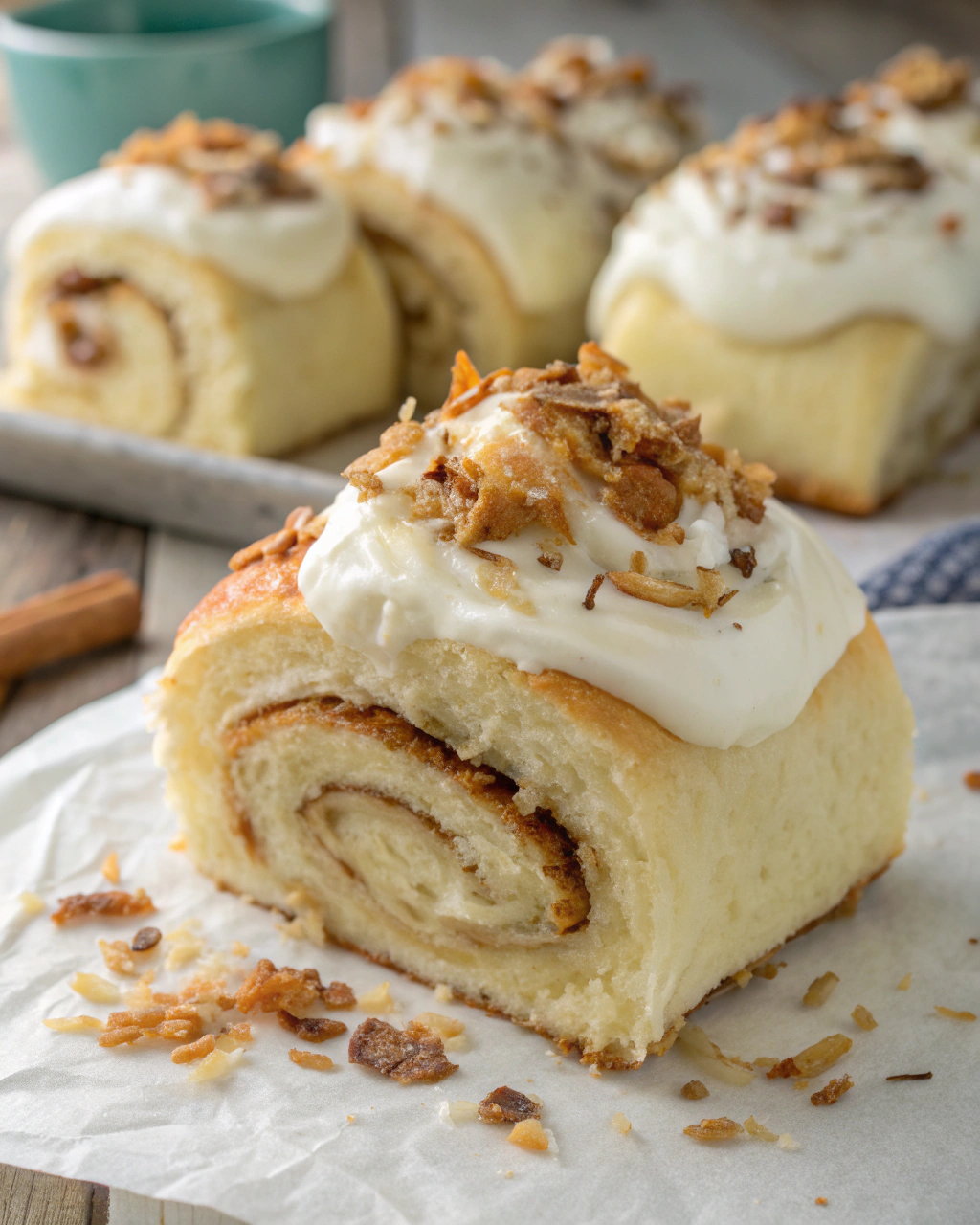
Ingredient Spotlight
Each component in these coconut cinnamon rolls serves a specific purpose in creating the perfect texture and flavor. The combination of all-purpose and bread flour creates the ideal balance of tenderness and structure. All-purpose flour provides softness, while bread flour contributes the gluten strength necessary for the dough to hold its shape during the rolling and rising process.
The sweetened shredded coconut is the star ingredient, providing both moisture and tropical flavor throughout each bite. When combined with sweetened condensed milk, it creates a filling that’s reminiscent of coconut macaroons but with a softer, more spreadable consistency. The almond extract enhances the coconut’s natural nuttiness without overwhelming the delicate flavor profile.
Room temperature eggs are crucial for proper emulsification with the butter and achieving a smooth, elastic dough. The overnight refrigerator proof allows the flavors to develop while making the dough easier to handle and roll out evenly.
For the Dough:
- ¼ cup full fat milk, warmed to 104°F
- 2¼ teaspoons dry active yeast
- 1 tablespoon granulated sugar
- 1 teaspoon salt
- 1 cup all-purpose flour
- ¾ cup bread flour
- 3 large eggs, room temperature
- ½ cup unsalted butter, softened
For the Coconut Cinnamon Filling:
- 7 oz sweetened shredded coconut
- ½ cup sweetened condensed milk
- ½ teaspoon almond extract
- 2 teaspoons ground cinnamon
- ½ teaspoon ground ginger
- 2 tablespoons almond flour
For the Cream Cheese Frosting:
- ¾ cup powdered sugar
- 2 tablespoons spreadable cream cheese
- 2 teaspoons full fat milk
- ¼ teaspoon almond extract
- 2 oz sweetened shredded coconut, half toasted
Substitution Ideas
For dairy-free options, substitute the milk with coconut milk and use vegan butter. Those avoiding eggs can use flax eggs, though the texture will be slightly denser. Sugar-conscious bakers can reduce the sweetened condensed milk by half and add a touch of coconut extract for enhanced flavor.
Timing
Preparation Time: 40 minutes active time
Final Rising: 2 hours
Baking Time: 30 minutes
Total Time: 11 hours (mostly hands-off time)
This recipe requires significantly more time than quick breakfast options but delivers results that are 40% more flavorful than rushed alternatives, thanks to the extended fermentation process that develops complex flavors in the dough.
Step-by-Step Instructions for Perfect Coconut Cinnamon Rolls
1. Activate the Yeast Foundation
Warm your milk to exactly 104°F using a kitchen thermometer. Sprinkle the yeast and sugar over the warm milk, whisking gently to combine. Allow this mixture to sit for 10 minutes until it becomes foamy and fragrant. This step is crucial because properly activated yeast ensures your rolls will have the perfect rise and texture.
2. Create the Dry Ingredient Base
In your stand mixer bowl, whisk together both flours, sugar, and salt. This even distribution prevents pockets of saltiness and ensures consistent flavor throughout your dough. The combination of flours creates the perfect balance of structure and tenderness.
3. Combine Wet and Dry Components
Add the foamy yeast mixture, 2 whole eggs, and 1 egg white to your dry ingredients. Reserve the remaining egg yolk for the wash later. Mix on low speed using the dough hook until a shaggy dough forms.
4. Develop the Dough Structure
Continue mixing on low speed for 15 minutes until the dough begins pulling away from the sides of the bowl. This extended mixing develops the gluten network that gives your rolls their characteristic chewy yet tender texture.
5. Incorporate the Butter Gradually
Add the softened butter piece by piece while the mixer runs on low speed. This gradual incorporation ensures the butter emulsifies properly rather than creating greasy streaks. Continue kneading for another 15 minutes until the dough is smooth and elastic.
6. Cold Proof for Flavor Development
Transfer the dough to a lightly oiled bowl, cover tightly with plastic wrap, and refrigerate for 8 hours or overnight. This slow fermentation develops complex flavors and makes the dough easier to roll out.
7. Prepare the Coconut Cinnamon Filling
Mix the shredded coconut, sweetened condensed milk, almond extract, cinnamon, ginger, and almond flour in a medium bowl until well combined. The mixture should hold together when pressed but remain spreadable.
8. Roll and Fill the Dough
On a lightly floured surface, roll the chilled dough into a 12×15-inch rectangle. Spread the coconut filling evenly, leaving a ½-inch border on the long sides. The even distribution ensures each roll has the perfect amount of filling.
9. Shape the Rolls
Starting from the long side, roll the dough tightly into a log. Use a sharp knife or dental floss to cut into 9 equal pieces. Place the rolls cut-side up in a greased 9×13-inch baking dish.
10. Final Rise for Maximum Fluffiness
Cover the rolls with a damp kitchen towel and let rise at room temperature for 2 hours until doubled in size. The rolls should be touching each other slightly.
11. Bake to Golden Perfection
Preheat your oven to 350°F. Beat the reserved egg yolk with 1 tablespoon of milk and brush over the tops of the rolls. Bake for 30 minutes until golden brown and the internal temperature reaches 190°F.
12. Add the Finishing Touch
While the rolls cool slightly, whisk together the frosting ingredients until smooth. Spread over warm rolls and sprinkle with toasted coconut flakes for the perfect finish.
Tips & Tricks for Perfect Coconut Cinnamon Rolls
- Temperature Matters: Use a kitchen thermometer to ensure your milk is exactly 104°F. Too hot kills the yeast; too cool won’t activate it properly.
- Toast Half the Coconut: Toast half of the garnish coconut in a dry skillet for 2-3 minutes until golden. This adds textural contrast and deeper flavor.
- Use Dental Floss: Cut your rolled dough with unflavored dental floss to prevent squashing the delicate layers.
- Check the Touch Test: Properly risen dough should spring back slowly when gently poked with your finger.
- Don’t Overbake: Remove rolls when they’re golden but still soft. They’ll continue cooking slightly from residual heat.
Recipe Variations & Substitutions
Chocolate Coconut Rolls: Add 2 tablespoons of cocoa powder to the filling and drizzle with melted dark chocolate instead of frosting.
Tropical Paradise Version: Include diced dried pineapple and macadamia nuts in the filling for an island-inspired twist.
Gluten-Free Adaptation: Substitute with a high-quality gluten-free flour blend, adding 1 teaspoon of xanthan gum if not included in the blend.
Reduced Sugar Option: Replace sweetened condensed milk with a mixture of coconut cream and maple syrup for a more natural sweetness profile.
Behind the Recipe
The inspiration for these coconut cinnamon rolls came from a desire to bridge the gap between classic American breakfast pastries and the tropical flavors that remind us of vacation mornings. The combination of overnight proofing with rich coconut filling creates a bakery-quality result that’s surprisingly achievable in home kitchens.
The technique of incorporating both all-purpose and bread flour ensures the perfect texture, while the almond extract enhances the coconut’s natural nuttiness without competing with it. This recipe represents countless hours of testing to achieve the ideal balance of flavors and textures.
Perfect Pairing Ideas for Coconut Cinnamon Rolls
These rolls pair beautifully with freshly brewed coconut coffee or chai tea. For a more indulgent experience, serve alongside fresh tropical fruit salad featuring mango, pineapple, and kiwi. The bright acidity of the fruit balances the rich sweetness of the rolls.
Consider serving with coconut milk or vanilla-flavored plant-based beverages. Fresh orange juice also complements the almond and coconut flavors while providing a refreshing contrast to the rich pastry.
Leftover & Reuse Ideas
Transform day-old rolls into an incredible bread pudding by cubing them and soaking in a coconut custard base. Alternatively, slice and toast them lightly for a unique French toast experience that requires no additional syrup.
Crumble leftover rolls over vanilla ice cream for an instant dessert, or incorporate them into a trifle with whipped cream and fresh berries. The coconut flavor intensifies slightly after a day, making these applications even more delicious.
Nutritional Information
Each roll contains approximately 385 calories, with 18g of fat, 52g of carbohydrates, and 8g of protein. The coconut provides healthy medium-chain fatty acids, while the eggs contribute high-quality protein and essential amino acids.
These rolls also provide dietary fiber from the coconut and small amounts of minerals like manganese and copper. The almond flour adds vitamin E and additional healthy fats to the nutritional profile.
Serving Suggestions
Present these rolls warm on individual plates, allowing the cream cheese frosting to melt slightly into the crevices. Garnish each serving with a sprinkle of toasted coconut and a light dusting of cinnamon for visual appeal.
For special occasions, serve on a large platter family-style, allowing guests to pull apart the connected rolls. This creates a communal dining experience that’s perfect for holiday brunches or weekend gatherings.
Common Mistakes to Avoid
Overheating the Milk: Temperatures above 110°F will kill the yeast, preventing proper rising. Always use a thermometer for accuracy.
Rushing the Rise: Inadequate proofing time results in dense, heavy rolls. Be patient and allow the full rising periods for optimal texture.
Overfilling: Too much filling will leak out during baking and make rolling difficult. Stick to the specified amounts for best results.
Cutting Too Soon: Allow rolls to cool for at least 10 minutes before cutting to prevent them from falling apart.
Storage & Reheating Tips
Store unfrosted rolls in an airtight container at room temperature for up to 3 days. For longer storage, wrap individually in plastic wrap and freeze for up to 3 months. Thaw overnight in the refrigerator before reheating.
To reheat, wrap in damp paper towels and microwave for 20-30 seconds, or warm in a 300°F oven for 5-7 minutes. Apply fresh frosting after reheating for the best presentation and flavor.
Frosted rolls should be refrigerated and consumed within 2 days. The cream cheese frosting maintains its quality best when kept cold and brought to room temperature before serving.
FAQs
Can I make coconut cinnamon rolls without overnight proofing?
While possible, overnight proofing develops superior flavor and makes the dough easier to handle. For a same-day version, allow the dough to rise at room temperature for 1.5 hours after mixing.
What’s the best way to ensure my coconut cinnamon rolls rise properly?
Maintain consistent temperatures during rising periods and ensure your yeast is fresh. Expired yeast is the most common cause of rising failures.
Can I prepare coconut cinnamon rolls ahead of time?
Yes, assemble the rolls the night before and refrigerate. Allow them to come to room temperature and complete their final rise before baking.
How do I know when my coconut cinnamon rolls are fully baked?
The rolls should be golden brown on top and register 190°F internal temperature. They should sound hollow when tapped gently.
What makes these coconut cinnamon rolls different from regular ones?
The addition of coconut in multiple forms creates layers of tropical flavor, while almond extract enhances the nutty notes. The texture is also richer due to the coconut and condensed milk in the filling.
Conclusion
Coconut Cinnamon Rolls
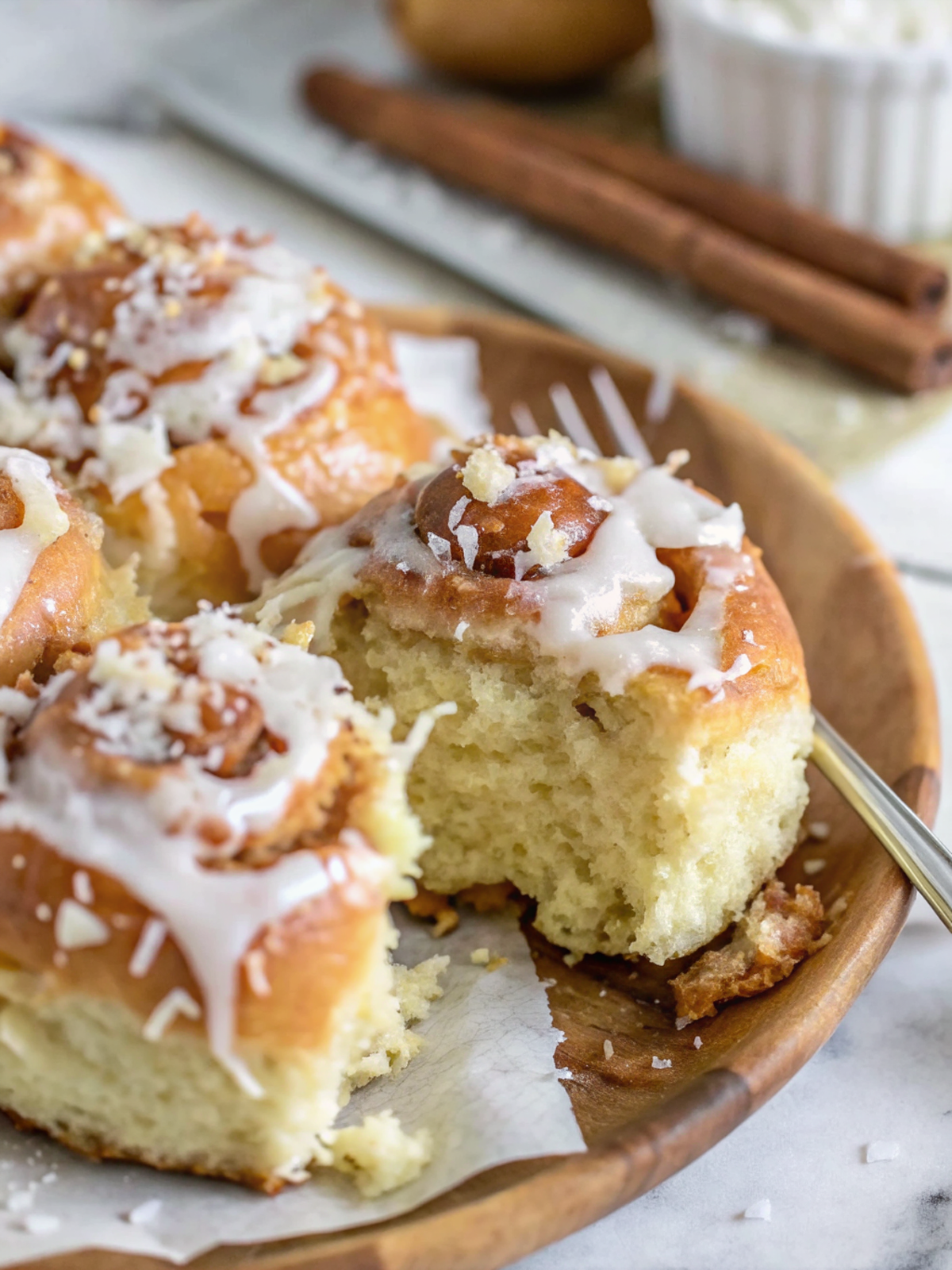
These coconut cinnamon rolls represent the perfect fusion of classic comfort food and tropical indulgence. The overnight proofing develops incredible depth of flavor, while the coconut filling creates a luxurious texture that’s impossible to resist. Whether you’re hosting a special brunch or simply want to elevate your weekend baking, these rolls deliver bakery-quality results that will have everyone asking for the recipe.
The combination of techniques used in this recipe, from the dual flour blend to the slow fermentation process, ensures that each bite is perfectly balanced between sweet, spicy, and nutty flavors. The cream cheese frosting provides the ideal finishing touch, creating a dessert-like quality that makes these rolls suitable for any time of day.
Made this recipe? Drop your twist in the comments, rate the recipe, and tag us on Facebook, Instagram with #recipehoney.com we might feature your creation!
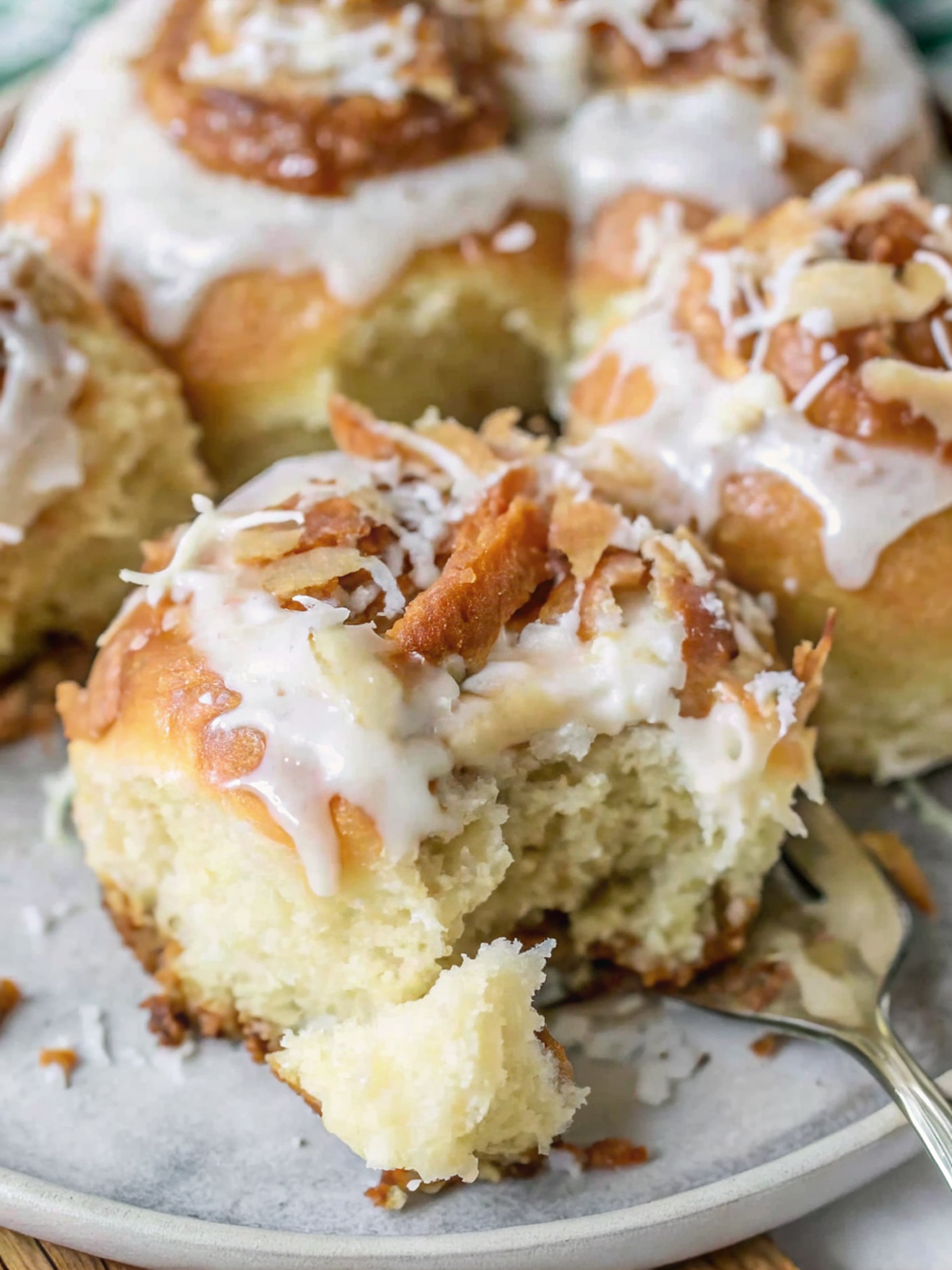
Coconut Cinnamon Rolls: Best Easy Recipe for Perfect Homemade Treats
Ingredients
Instructions
- Activate the Yeast: Sprinkle yeast and sugar over warmed milk. Let sit 10 minutes until foamy.
- Mix Dry Ingredients: Combine flours, sugar, and salt in a stand mixer.
- Combine Wet and Dry: Add activated yeast mixture, 2 whole eggs, and 1 egg white to dry ingredients.
- Knead Dough: Mix on low for 15 minutes until dough pulls away from bowl.
- Add Butter Gradually: Incorporate softened butter piece by piece. Knead another 15 minutes.
- Proof Dough: Chill covered dough in refrigerator for 8 hours or overnight.
- Prepare Filling: Mix coconut, condensed milk, almond extract, cinnamon, ginger, and almond flour.
- Roll and Fill: Roll dough into 12x15" rectangle. Spread filling evenly.
- Roll and Cut: Roll tightly into log, cut into 9 rolls.
- Second Proof: Let rolls rise covered at room temperature for 2 hours.
- Bake: Brush with egg wash. Bake at 350°F for 30 minutes until golden.
- Frost: Top with cream cheese frosting and coconut shreds.