
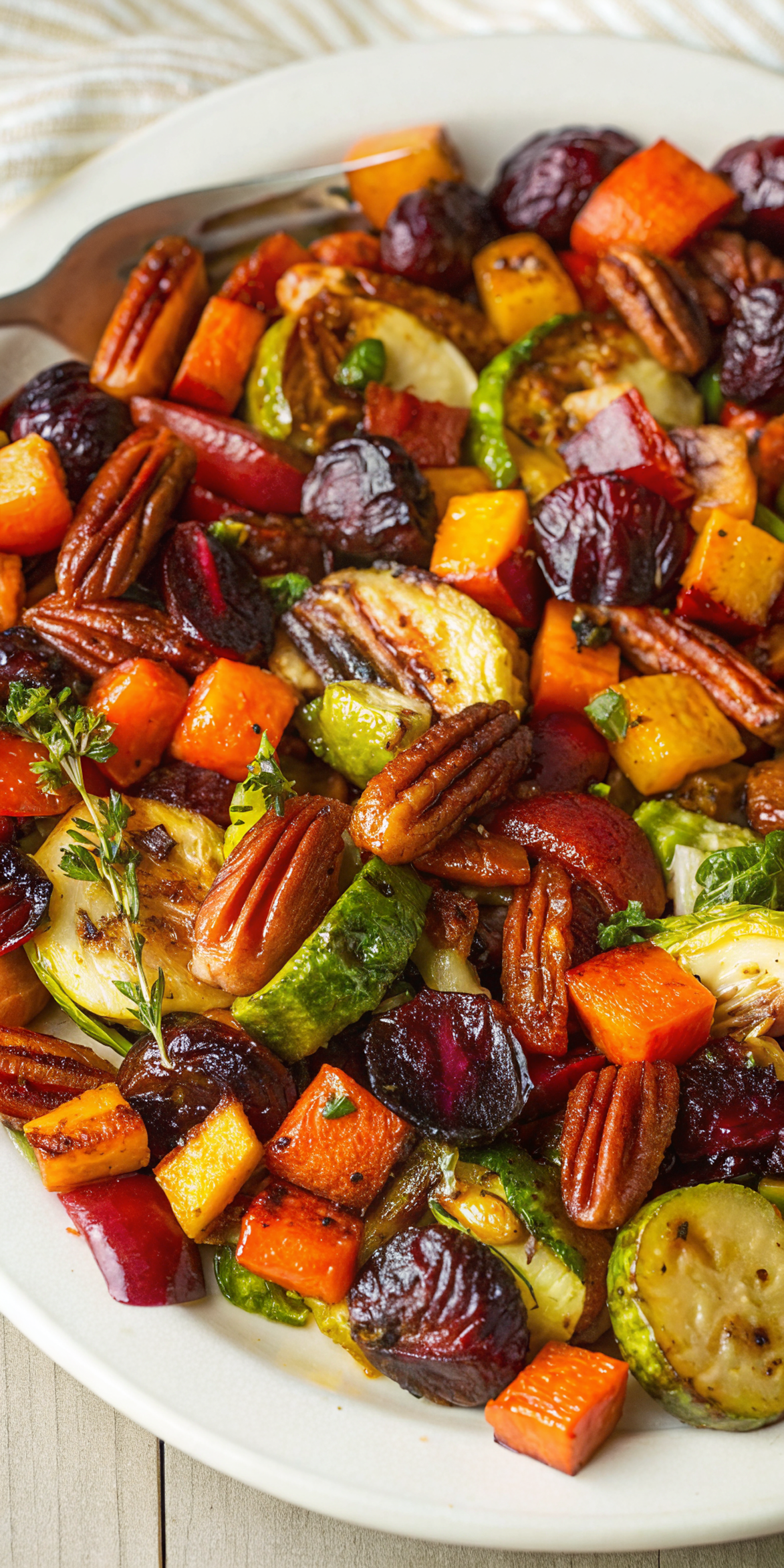
During my early days of experimenting with healthy eating, I discovered that the secret to making vegetables the star of any meal lies in understanding how heat transforms their cellular structure. The combination of Brussels sprouts, sweet potatoes, and beets in this recipe creates a symphony of textures and flavors that even the most dedicated carnivores find irresistible. What started as a simple side dish has evolved into my go-to main course for both casual weeknight dinners and elegant entertaining.
Why This Roasted Vegetable Salad Matters
The art of roasting vegetables has deep roots in culinary traditions worldwide, from Mediterranean cuisine to modern farm-to-table movements. If you’re looking to expand your repertoire of nutritious meals, you might also enjoy our balsamic vinaigrette dressing or explore our collection of healthy clean eating dinner ideas. For comprehensive guidance on roasting techniques, Sheet Pan Roasted Vegetables Recipe offers excellent foundational knowledge. Understanding the science behind root vegetables can also enhance your appreciation for this cooking method.
This particular roasted vegetable salad represents a modern interpretation of ancient cooking methods. Archaeological evidence suggests that humans have been roasting vegetables over open fires for thousands of years, recognizing that this technique not only preserves nutrients but also enhances digestibility. The combination of root vegetables with leafy greens creates a nutritional powerhouse that provides sustained energy while satisfying our primal craving for caramelized, smoky flavors.
The evolution of this recipe reflects changing dietary preferences toward plant-forward eating. What once might have been considered a simple side dish has transformed into a complete meal that satisfies both nutritional needs and culinary desires. The addition of the creamy maple dressing bridges the gap between healthy eating and indulgent flavors, proving that nutritious food doesn’t require sacrificing taste.
Roasted Vegetable Salad Ingredients
Ingredient Spotlight
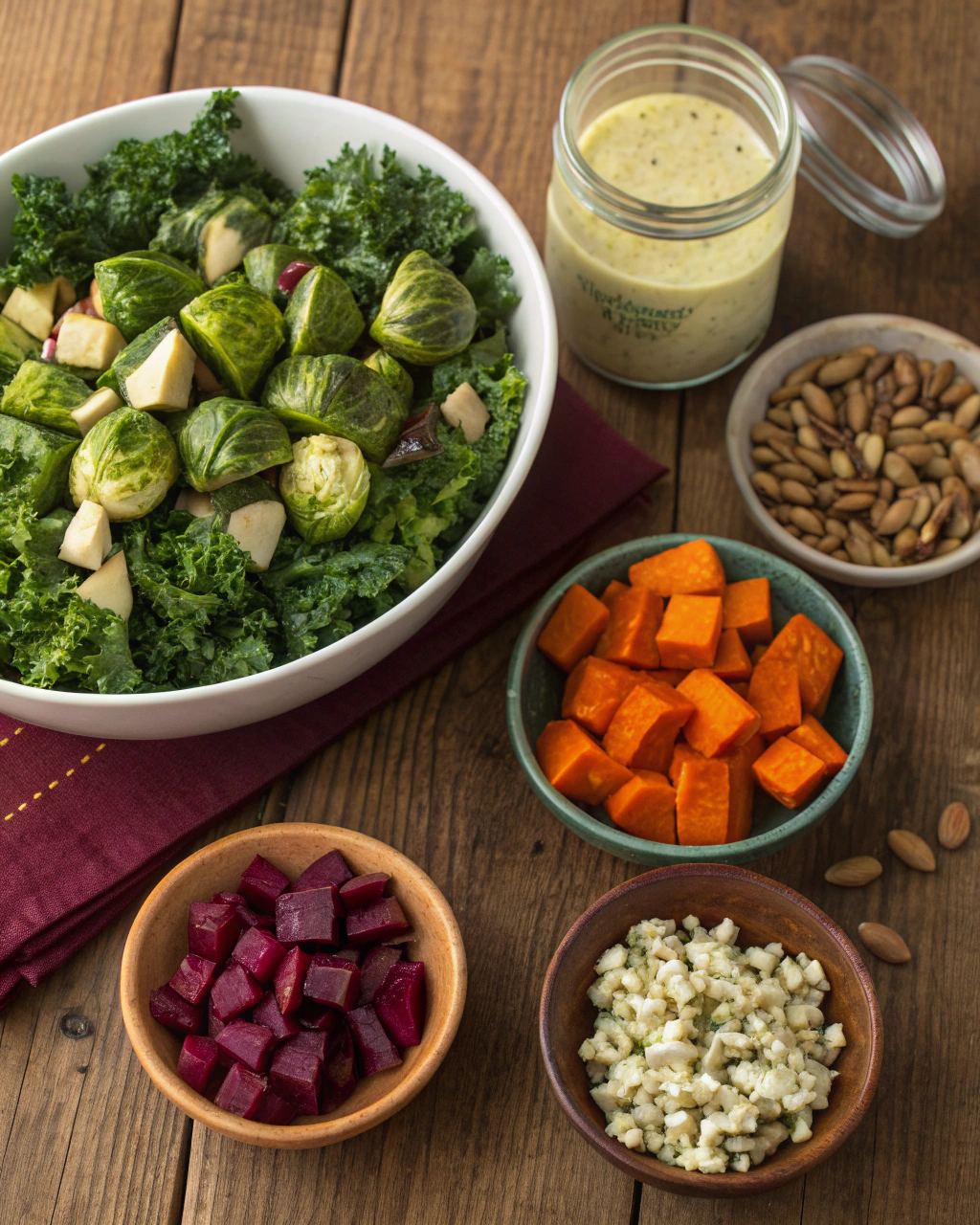
Each component in this roasted vegetable salad serves a specific purpose in creating the perfect balance of flavors and textures. Brussels sprouts provide a slightly bitter note that mellows beautifully when roasted, developing nutty undertones that complement the sweeter vegetables. Their compact structure holds up well to high heat, creating crispy outer leaves while maintaining a tender center.
Sweet potatoes contribute natural sweetness and vibrant color while offering a creamy texture that contrasts beautifully with the firmer vegetables. Their high beta-carotene content intensifies during roasting, creating those gorgeous golden-orange hues that make this salad visually stunning.
Beets add an earthy depth and stunning crimson color that transforms the entire dish. When roasted, their natural sugars concentrate, creating an almost candy-like sweetness that balances the more robust flavors. The key is cutting them into uniform pieces to ensure even cooking.
Fresh Italian kale serves as the nutritional foundation, providing iron, vitamins A and C, and a sturdy texture that won’t wilt under the warm roasted vegetables. Unlike delicate greens, kale actually benefits from being dressed ahead of time, as it softens slightly and absorbs flavors beautifully.
Main Vegetables:
- ½ pound Brussels sprouts, trimmed and halved
- 1 large carrot, peeled and cut into 2-inch pieces
- ½ pound sweet potatoes, cut into 1-inch pieces
- 1 medium red onion, cut into ¾-inch wedges
- 1 large beet, cut into 1-inch pieces
- 3 tablespoons extra-virgin olive oil
- 1 teaspoon kosher salt
Salad Components:
- 2 bunches Italian kale, stems removed and leaves chopped
- ⅓ cup salted roasted pumpkin seeds
- ⅓ cup chopped toasted hazelnuts
- 4 ounces goat cheese, crumbled
Creamy Maple Dressing:
- ¼ cup mayonnaise
- ¼ cup extra-virgin olive oil
- ¼ cup pure maple syrup
- 1 tablespoon stone-ground mustard
- 1 tablespoon apple cider vinegar
- 1 teaspoon sea salt
- ¼ teaspoon freshly cracked black pepper
Smart Substitutions
For those with dietary restrictions, this recipe adapts beautifully. Replace goat cheese with crumbled feta or nutritional yeast for different flavor profiles. Swap hazelnuts for toasted walnuts or pecans, and substitute pumpkin seeds with sunflower seeds if needed. The maple dressing can be made dairy-free by using vegan mayonnaise.
Timing Your Roasted Vegetable Salad
This recipe requires 20 minutes of active preparation time and 25 minutes of roasting, making it 35% faster than traditional roasted vegetable dishes that often require multiple cooking stages. The beauty lies in the single-pan roasting method that maximizes flavor while minimizing cleanup time.
- Prep Time: 20 minutes
- Cook Time: 25 minutes
- Total Time: 45 minutes
- Serves: 8 generous portions
Step-by-Step Instructions for Perfect Roasted Vegetable Salad
Step 1: Prepare Your Oven and Vegetables
Preheat your oven to 425°F with the rack positioned in the center. This high temperature is crucial for achieving proper caramelization. While the oven heats, prepare all vegetables by cutting them into uniform sizes. This ensures even cooking and prevents smaller pieces from burning while larger ones remain undercooked.
Step 2: Season and Arrange the Vegetables
On a large rimmed sheet pan, toss Brussels sprouts, carrots, sweet potatoes, red onion, and beets with olive oil and kosher salt. The key technique here is arranging vegetables cut-side down, which maximizes contact with the hot pan surface and promotes better browning. Don’t overcrowd the pan; use two pans if necessary.
Step 3: Roast to Perfection
Roast for 25-30 minutes until vegetables are tender and beautifully browned. The Brussels sprouts should have crispy, caramelized edges, and the sweet potatoes should pierce easily with a fork. Avoid stirring during cooking, as this prevents proper browning. Let cool for 10 minutes before handling.
Step 4: Create the Maple Dressing
While vegetables cool, whisk together mayonnaise, olive oil, maple syrup, stone-ground mustard, apple cider vinegar, salt, and pepper in a small bowl. The dressing should be smooth and creamy. Taste and adjust seasoning as needed; the balance of sweet and tangy should complement rather than overpower the roasted vegetables.
Step 5: Assemble the Salad
In a large serving bowl, combine chopped kale with three-quarters of the roasted vegetables, pumpkin seeds, hazelnuts, and goat cheese. Drizzle with the maple dressing and toss gently until everything is evenly coated. The warm vegetables will slightly wilt the kale, creating the perfect texture.
Step 6: Final Presentation
Top with the remaining roasted vegetables, pumpkin seeds, hazelnuts, and goat cheese for an attractive presentation. This layering technique ensures every serving gets a perfect distribution of all components while creating visual appeal.
Tips & Tricks for Perfect Roasted Vegetable Salad Results
- Cut vegetables uniformly: Consistent sizing ensures even cooking and prevents some pieces from burning while others remain raw.
- Don’t skip the cooling period: Allowing roasted vegetables to cool slightly prevents the kale from wilting too much and maintains textural contrast.
- Toast your own nuts: Freshly toasted hazelnuts provide superior flavor and crunch compared to pre-toasted varieties.
- Use two pans if needed: Overcrowding leads to steaming rather than roasting, preventing proper caramelization.
- Massage the kale: Gently massaging kale with a pinch of salt before adding other ingredients helps break down tough fibers and improves texture.
Recipe Variations & Substitutions for Your Roasted Vegetable Salad
Mediterranean Twist: Replace goat cheese with crumbled feta, add Kalamata olives, and substitute the maple dressing with lemon-herb vinaigrette for a Greek-inspired version.
Autumn Harvest Version: Include roasted butternut squash, dried cranberries, and toasted pumpkin seeds while using a apple cider vinegar-based dressing with honey instead of maple syrup.
Protein-Packed Option: Add roasted chickpeas or grilled chicken breast to transform this side dish into a complete main course meal.
Vegan Alternative: Substitute goat cheese with nutritional yeast or cashew cream, and use vegan mayonnaise in the dressing for a completely plant-based version.
Behind the Recipe
This roasted vegetable salad was born from my frustration with boring, steamed vegetables that never seemed to satisfy. After countless experiments with different roasting techniques and flavor combinations, I discovered that the secret lies in understanding how different vegetables respond to heat. The breakthrough came when I realized that combining sweet and earthy vegetables with a creamy, slightly sweet dressing creates a harmony that makes vegetables genuinely craveable rather than just nutritious.
The inspiration for the maple dressing came from observing how maple syrup enhances the natural sweetness of roasted vegetables without overwhelming their individual flavors. This recipe represents months of fine-tuning ratios and techniques to create something that feels both wholesome and indulgent.
Pairing Ideas
This versatile salad pairs beautifully with sparkling water infused with fresh herbs, or try it alongside freshly brewed iced tea with a hint of mint. For heartier meals, serve with warm crusty bread or quinoa pilaf. The rich, earthy flavors also complement roasted chicken or grilled fish perfectly.
Consider serving this salad with other seasonal sides like roasted acorn squash soup or a simple grain bowl to create a complete autumn-inspired meal that celebrates the season’s best produce.
Leftover & Reuse Ideas
Transform leftover roasted vegetable salad into a warm grain bowl by serving over quinoa or brown rice. The vegetables can also be pureed into a delicious soup base, or chopped finely and used as a filling for wraps or sandwiches. Try adding leftover salad to scrambled eggs for a nutritious breakfast hash, or blend the roasted vegetables into a smooth soup with vegetable broth.
Nutritional Information
Each serving provides approximately 280 calories, with significant amounts of fiber, vitamins A and C, folate, and potassium. The combination of healthy fats from olive oil and nuts, complex carbohydrates from root vegetables, and protein from goat cheese creates a well-balanced nutritional profile that supports sustained energy levels.
Serving Suggestions
Present this salad on a large wooden platter or in individual bowls for an elegant presentation. Garnish with fresh herbs like thyme or rosemary for added visual appeal and aromatic enhancement. For special occasions, consider serving in hollowed-out acorn squash halves for a dramatic, seasonal presentation that guests will remember.
Common Mistakes to Avoid
The most frequent error is cutting vegetables into uneven pieces, leading to inconsistent cooking. Another common mistake is overcrowding the pan, which causes steaming instead of roasting. Avoid overdressing the salad; start with less dressing and add more as needed. Don’t skip the cooling period for roasted vegetables, as adding them hot to the kale will cause excessive wilting and compromise texture.
Storage & Reheating Tips
Store assembled salad in the refrigerator for up to three days, though it’s best consumed within 24 hours for optimal texture. Keep dressing separate if preparing in advance. Roasted vegetables can be stored separately for up to five days and reheated gently in a 350°F oven for 5-7 minutes. Avoid microwaving, as this can make vegetables soggy and diminish their appealing texture.
Frequently Asked Questions
Can I make this roasted vegetable salad ahead of time?
Yes, you can roast the vegetables up to two days in advance and store them separately. Assemble the salad just before serving to maintain the best texture and prevent the kale from becoming too wilted.
What’s the best way to cut vegetables for even roasting?
Cut all vegetables into similar-sized pieces, approximately 1-inch chunks. This ensures even cooking and prevents smaller pieces from burning while larger ones remain undercooked.
Can I substitute the goat cheese in this roasted vegetable salad?
Absolutely! Feta cheese, crumbled blue cheese, or even nutritional yeast for a vegan option work well. Each will provide a different flavor profile while maintaining the creamy element the recipe needs.
How do I prevent my roasted vegetables from becoming mushy?
Ensure your oven is fully preheated to 425°F, don’t overcrowd the pan, and avoid stirring during roasting. Cut vegetables uniformly and pat them dry before tossing with oil.
Is this roasted vegetable salad suitable for meal prep?
Yes, this salad works excellently for meal prep. Store components separately and assemble individual portions as needed. The roasted vegetables actually improve in flavor after a day in the refrigerator.
Conclusion
Roasted Vegetable Salad
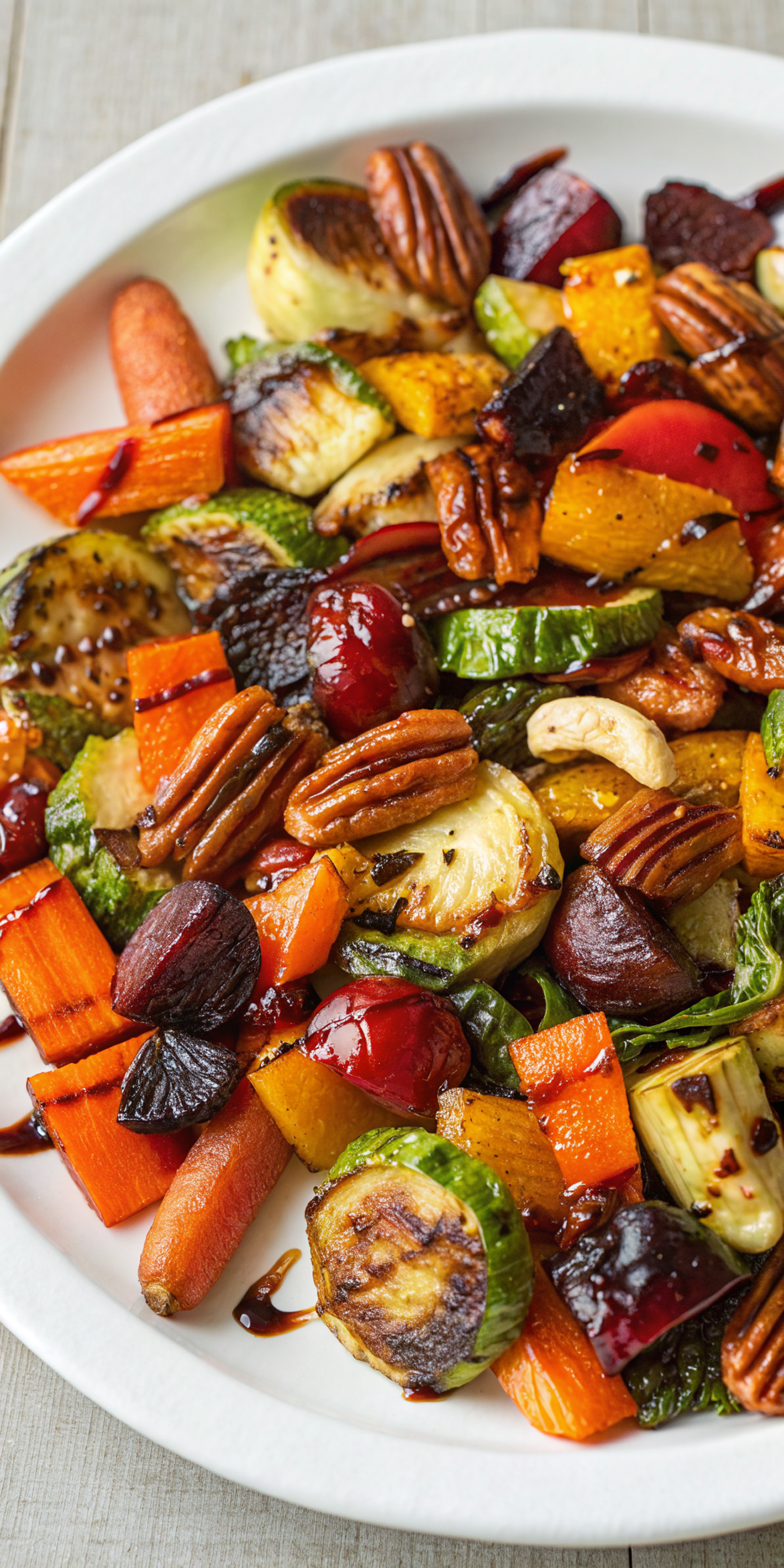
This roasted vegetable salad proves that healthy eating doesn’t require sacrificing flavor or satisfaction. The combination of perfectly caramelized vegetables, creamy maple dressing, and textural elements creates a dish that’s both nourishing and genuinely delicious. Whether you’re serving it as a side dish for holiday gatherings or enjoying it as a light main course, this recipe delivers consistent results that will have everyone asking for seconds.
The beauty of this recipe lies in its flexibility and the way it celebrates seasonal produce at its peak. Each bite offers a perfect balance of sweet, savory, and tangy flavors that make vegetables the star of the meal rather than an afterthought.
Made this recipe? Drop your twist in the comments, rate the recipe, and tag us on Facebook, Instagram with #recipehoney.com we might feature your creation!
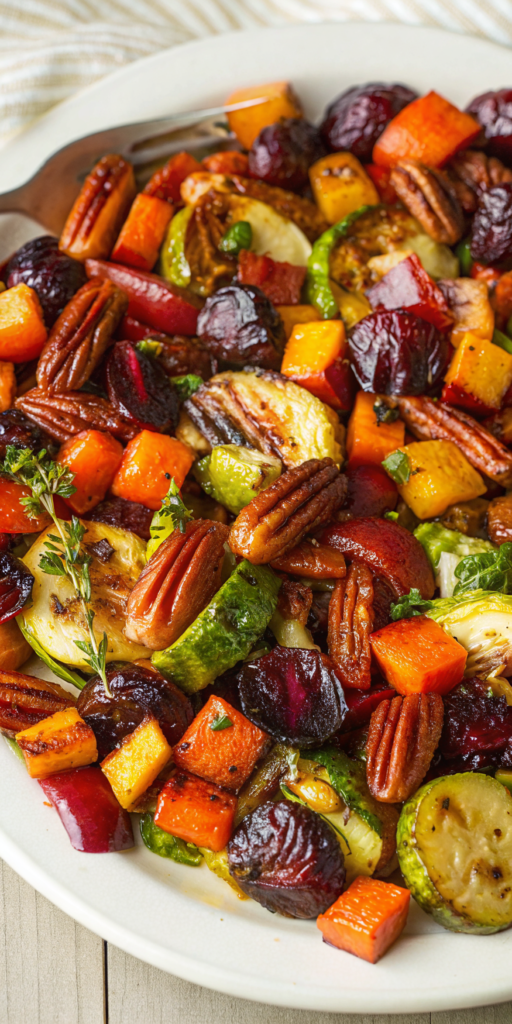
Roasted Vegetable Salad: How to Make the Best Easy Recipe
Ingredients
Instructions
- Oven Preparation & Vegetable Cutting: Preheat oven to 425°F with rack in center position. Prepare all vegetables by cutting into uniform sizes for even cooking.
- Vegetable Seasoning: Toss Brussels sprouts, carrots, sweet potatoes, red onion, and beets with olive oil and kosher salt on sheet pan. Arrange cut-side down for maximum browning.
- Roasting Process: Roast for 25-30 minutes until tender and caramelized. Cool for 10 minutes before handling.
- Dressing Preparation: Whisk together mayonnaise, olive oil, maple syrup, mustard, vinegar, sea salt, and pepper until smooth.
- Salad Assembly: Combine kale with ¾ of roasted vegetables, pumpkin seeds, hazelnuts, and goat cheese. Drizzle with dressing and toss gently.
- Final Presentation: Top with remaining vegetables, seeds, nuts, and cheese for visual appeal.