
Originating from the Greek islands, particularly Crete, Boureki represents the beautiful simplicity of Mediterranean cuisine where fresh, local ingredients are transformed into something extraordinary through traditional cooking methods.
Why Boureki Matters in Mediterranean Cooking
When exploring the world of Mediterranean comfort food, you’ll discover incredible variety in traditional casseroles. For those interested in expanding their repertoire, our collection of crockpot recipes offers modern convenience for classic dishes. Similarly, our guide to low-carb zucchini preparations showcases the versatility of this key Boureki ingredient. Mediterranean cooking enthusiasts often turn to resources like favorite casserole recipes on Reddit for inspiration, while the Mediterranean Diet guidelines from Cleveland Clinic highlight the health benefits of dishes like Boureki.
Boureki holds a special place in Greek culinary tradition as more than just a vegetable casserole. This dish emerged from the practical need to use abundant summer vegetables, particularly during harvest season when zucchini and fresh herbs were plentiful. The combination of potatoes and zucchini creates a perfect balance of textures, while the generous use of olive oil and fresh herbs reflects the Greek philosophy that simple ingredients, when treated with respect, can create extraordinary flavors.
The evolution of Boureki varies across Greek regions, with some versions incorporating different vegetables or cheese combinations. However, the Cretan version remains the most celebrated, featuring the classic trio of potatoes, zucchini, and feta cheese that creates the dish’s signature creamy yet structured texture.
Boureki Ingredients
Ingredient Spotlight
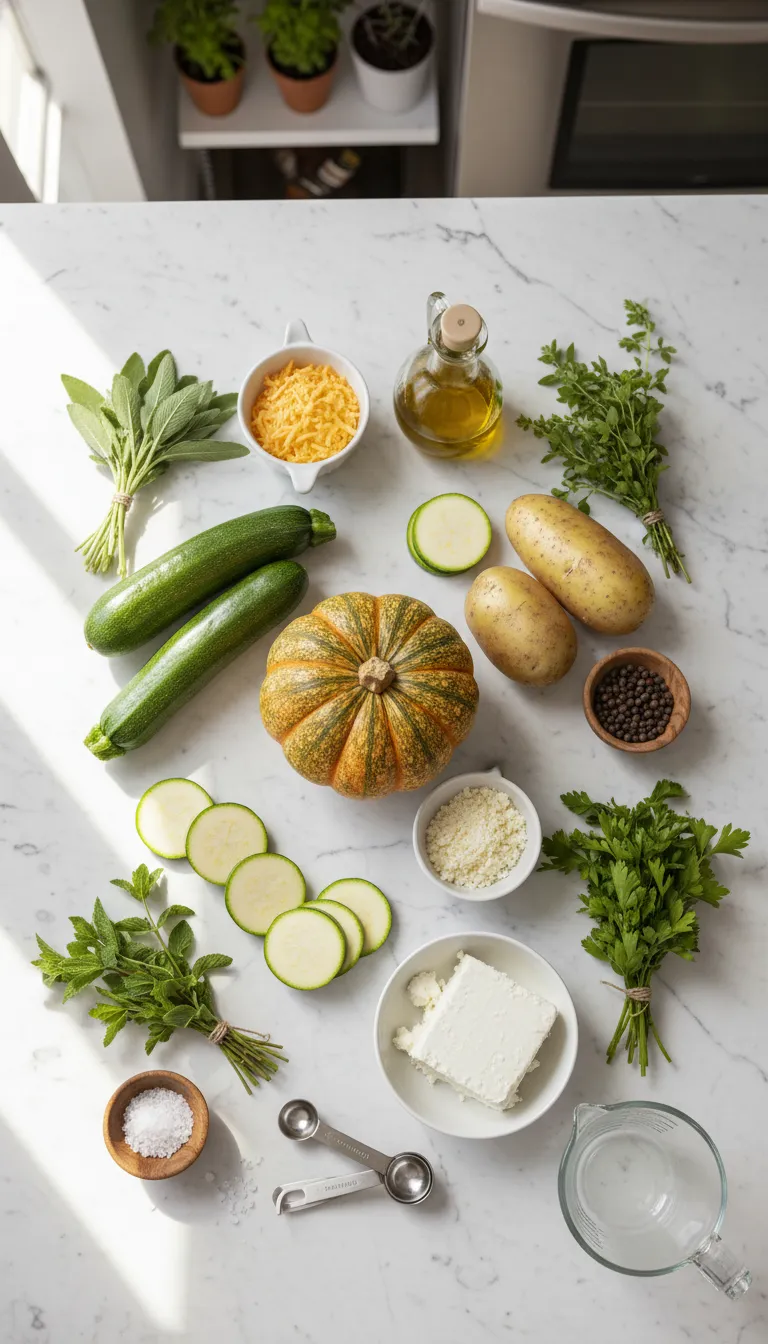
Each ingredient in this Boureki recipe serves a specific purpose in creating the perfect Mediterranean casserole. The acorn squash adds natural sweetness and a creamy texture that complements the earthier flavors of potatoes and zucchini. When roasted, it develops caramelized edges that contribute depth to the overall dish.
Extra virgin olive oil is the foundation of authentic Greek cooking, providing richness and helping to create the golden, crispy top layer that makes Boureki so appealing. The quality of olive oil directly impacts the final flavor, so choose the best you can find.
The cheese combination is crucial: feta cheese provides the characteristic tangy, salty flavor that defines Greek cuisine, while cheddar and Parmesan add creaminess and depth. This blend creates layers of flavor that develop beautifully during the long, slow baking process.
Fresh herbs are non-negotiable in authentic Boureki. Oregano, mint, and parsley each contribute unique aromatic qualities, while fresh sage adds an earthy sophistication that elevates the entire dish.
Complete Ingredient List
- 1 acorn squash, peeled and sliced
- 2-3 large zucchinis, sliced into rounds
- 3 large potatoes, peeled and sliced thin
- 1/2 cup extra virgin olive oil
- 4 ounces cheddar cheese, grated
- 1/4 cup Parmesan cheese, grated
- 4-6 fresh sage leaves, chopped
- 12 ounces block feta cheese, crumbled
- 1/3 cup fresh oregano, chopped
- 1/3 cup fresh mint, chopped
- 1/4 cup fresh parsley, chopped
- Salt and black pepper to taste
Smart Substitutions
For dietary modifications, butternut squash works beautifully in place of acorn squash, while yellow summer squash can substitute for zucchini. Vegetarian alternatives include using cashew cheese or nutritional yeast instead of dairy cheeses, and dried herbs can replace fresh ones using a 1:3 ratio.
Timing Your Perfect Boureki
This traditional Boureki requires patience but rewards you with incredible flavors. Total preparation time is 30 minutes, while cooking takes 1 hour and 30 minutes, making it about 20% faster than traditional moussaka while delivering equally satisfying results. The extended baking time allows the vegetables to become tender while the top develops that coveted golden-brown crust.
Step-by-Step Instructions
1. Prepare the Squash Foundation
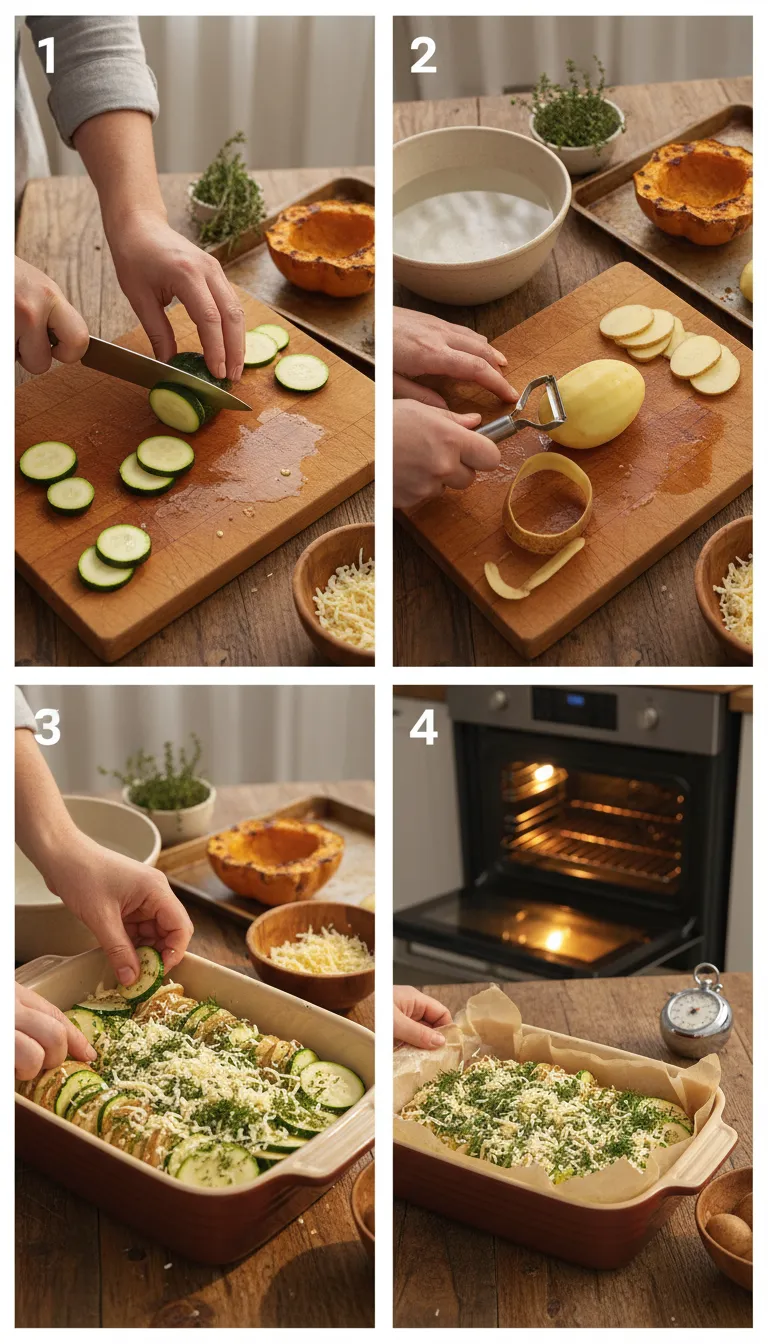
Begin by preheating your oven to 375°F. Cut the acorn squash in half, remove seeds, and slice into half-moon shapes about 1/4-inch thick. The squash provides natural sweetness that balances the salty feta perfectly.
2. Create Uniform Vegetable Slices
Slice zucchinis into rounds approximately 1/4-inch thick for even cooking. Peel potatoes and slice them slightly thinner than the zucchini to ensure they cook through completely. Consistent sizing is key to achieving that perfect tender texture throughout.
3. Build Your Flavor Foundation
Generously coat the bottom of a 9×13-inch baking dish with olive oil. This creates the base that will help develop the golden bottom crust while preventing sticking.
4. Layer with Purpose
Start with a layer of potatoes, slightly overlapping each slice. Season with salt, pepper, and a portion of the mixed fresh herbs. Add a layer of zucchini, then squash, sprinkling feta and other cheeses between each layer.
5. Repeat and Crown
Continue layering vegetables, herbs, and cheese until all ingredients are used, finishing with a generous top layer of cheese. The final layer should be mostly cheese to create that beautiful golden crust.
6. The Covered Bake
Cover tightly with parchment paper or foil and bake for 1 hour and 15 minutes. This steaming process ensures the vegetables cook through completely while maintaining moisture.
7. The Golden Finish
Remove the covering and bake for an additional 15 minutes until the top is golden brown and bubbling. This final step creates the textural contrast that makes Boureki irresistible.
Tips & Tricks for Perfect Boureki Results
- Salt the zucchini: Sprinkle sliced zucchini with salt and let drain for 15 minutes to remove excess moisture, preventing a watery casserole.
- Use a mandoline: Uniform slices cook evenly and create beautiful presentation layers.
- Don’t skimp on olive oil: It’s essential for authentic flavor and proper browning.
- Rest before serving: Allow the casserole to cool for 10-15 minutes to set properly for clean slicing.
- Fresh herb timing: Add half the herbs between layers and reserve half to sprinkle on top before the final baking phase.
Recipe Variations & Substitutions for Boureki
Mediterranean Boureki: Add layers of roasted red peppers and substitute goat cheese for half the feta for a tangier flavor profile.
Protein-Rich Version: Layer in cooked ground lamb or turkey between vegetable layers for a heartier main dish.
Vegan Boureki: Replace all cheeses with cashew cream mixed with nutritional yeast and use coconut oil instead of some olive oil.
Root Vegetable Boureki: Substitute sweet potatoes and parsnips for a fall-inspired version that’s equally delicious.
Behind the Recipe
This Boureki recipe comes from my time learning traditional Greek cooking from a family in Crete who had been making this dish for generations. What struck me most was how they treated each ingredient with such respect, taking time to slice everything by hand and carefully layering each component. The grandmother insisted that the secret wasn’t in exotic ingredients but in the quality of what you use and the love you put into the preparation. Her version always included a whispered blessing over the herbs, something I’ve carried forward in my own cooking.
Perfect Pairing Ideas
Boureki pairs beautifully with crisp, refreshing beverages that complement its rich, cheesy nature. Serve with sparkling water infused with lemon and mint, or traditional Greek mountain tea. For sides, consider a simple Greek village salad with tomatoes, cucumbers, and olives, or warm pita bread with tzatziki. The dish also pairs wonderfully with a glass of fresh lemonade or iced herbal tea with honey.
Leftover & Reuse Ideas
Leftover Boureki transforms beautifully into new meals. Cut into smaller squares and serve as an elegant appetizer at your next gathering. Crumble it over mixed greens for a warm, substantial salad, or use it as a filling for omelets or breakfast wraps. The flavors actually improve overnight, making day-two servings even more delicious than the original.
Nutritional Information
Each serving of this Boureki provides approximately 320 calories, with 18g of protein from the cheese combination, 28g of carbohydrates from the vegetables, and 18g of healthy fats from the olive oil and cheese. The dish is rich in potassium, calcium, and vitamins A and C from the colorful vegetables.
Serving Suggestions
Present your Boureki family-style in the baking dish, allowing guests to serve themselves generous squares. Garnish with fresh herb sprigs and a drizzle of your finest olive oil. For individual servings, plate with a small Greek salad alongside and perhaps some warm, crusty bread for a complete Mediterranean meal experience.
Common Mistakes to Avoid
Overcrowding layers: Too many vegetables in one layer prevents proper cooking. Keep layers thin and even for best results.
Insufficient seasoning: Each layer needs seasoning. Don’t rely on just the final seasoning to flavor the entire dish.
Skipping the rest period: Cutting immediately after baking results in a messy presentation. The 15-minute rest allows everything to set properly.
Wrong baking temperature: Higher temperatures can burn the top before the vegetables cook through, while lower temperatures won’t develop proper browning.
Storage & Reheating Tips
Store leftover Boureki covered in the refrigerator for up to 4 days. The flavors actually meld and improve over time. For reheating, cover with foil and warm in a 325°F oven for 15-20 minutes, or microwave individual portions for 1-2 minutes. Avoid reheating multiple times, as this can make the vegetables mushy. For best results, bring to room temperature before reheating for more even warming.
FAQs
Can I make Boureki ahead of time? Yes, assemble the entire casserole up to 24 hours in advance, cover tightly, and refrigerate. Add an extra 15-20 minutes to the covered baking time when cooking from cold.
What’s the best way to slice vegetables for Boureki? Use a sharp knife or mandoline to create uniform 1/4-inch slices. Consistent thickness ensures even cooking throughout the casserole.
Can I freeze Boureki for later? While possible, freezing changes the texture of the vegetables. If you must freeze, do so before baking, and thaw completely before cooking.
How do I know when my Boureki is perfectly done? The top should be golden brown and bubbling, and a knife should easily pierce through all layers without resistance.
What cheese substitutions work best in Boureki? Ricotta mixed with Parmesan can replace feta for a milder flavor, while goat cheese adds tanginess. Always include at least one aged cheese for depth.
Conclusion
Boureki
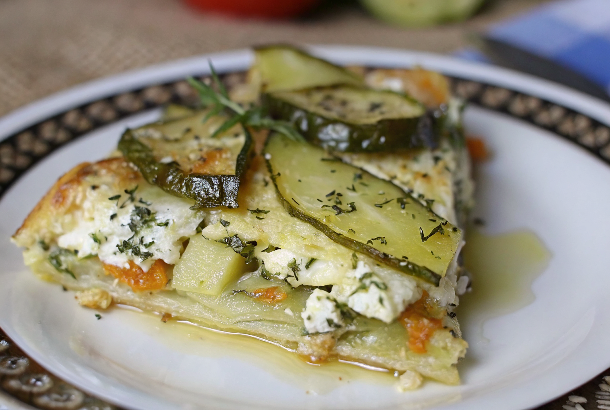
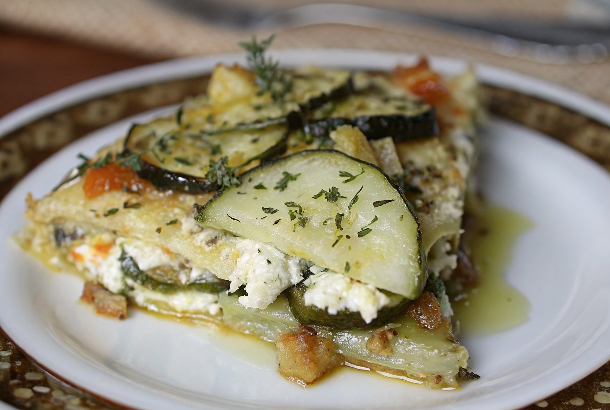
This authentic Boureki recipe brings the warmth and tradition of Greek family cooking to your table, combining simple ingredients into something truly special. The layers of tender vegetables, creamy cheeses, and aromatic herbs create a dish that’s both comforting and sophisticated, perfect for family dinners or entertaining guests. The beauty of Boureki lies in its versatility and the way it celebrates the natural flavors of Mediterranean vegetables.
Made this recipe? Drop your twist in the comments, rate the recipe, and tag us on Facebook, Instagram with #recipehoney.com we might feature your creation!
Boureki: How to Make Best Easy Cheesy Potato
Ingredients
Instructions
- Prepare Ingredients: Roast the squash, slice zucchinis, peel and slice potatoes
- Assemble Casserole: Cover the bottom of the baking dish with olive oil, add layers of potatoes, zucchinis, cheese, and herbs
- Bake Casserole: Bake at 375 degrees F for 1 hour with a lid or parchment, remove the parchment for the last 15 minutes or until the top layer is browned