
Why This Thai Peanut Sweet Potato Buddha Bowl Matters
Buddha bowls represent more than just a trendy meal format; they embody a philosophy of balanced nutrition and mindful eating. If you’re looking to expand your healthy meal repertoire, you might also enjoy our healthy clean eating dinner ideas or explore our collection of Thai green curry paste recipes for authentic flavors. For additional guidance on roasting techniques, How To Roast Any Vegetable by The Kitchn provides excellent foundational knowledge, while Healthline’s comprehensive guide to sweet potato nutrition and health benefits offers valuable insights into this superfood’s nutritional profile.
The concept of Buddha bowls traces back to ancient Buddhist eating practices, where monks would collect food donations in a single bowl called an “oryoki.” This practice emphasized gratitude, mindfulness, and simplicity. Modern Buddha bowls have evolved to celebrate abundance while maintaining the core principles of balance and nourishment. The Thai influence in this particular variation brings together the complex flavor profiles that Thai cuisine is renowned for, with the creamy richness of peanut sauce serving as the perfect bridge between diverse ingredients.
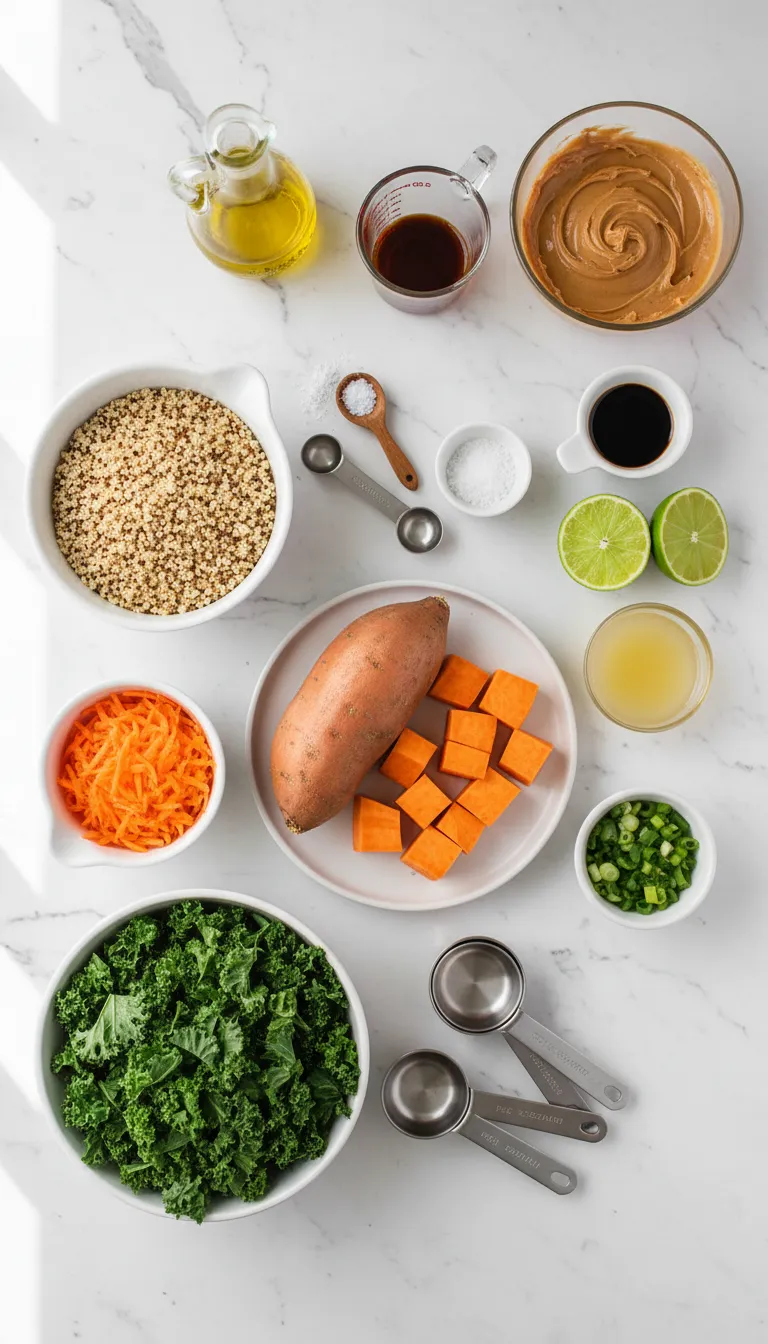
Thai Peanut Sweet Potato Buddha Bowl Ingredients
Ingredient Spotlight
Each component in this Thai Peanut Sweet Potato Buddha Bowl serves a specific purpose in creating the perfect balance of flavors, textures, and nutrients. Sweet potatoes provide natural sweetness and a creamy texture when roasted, while their high beta-carotene content gives the dish its gorgeous orange hue. Quinoa acts as the protein-rich foundation, offering all nine essential amino acids and a pleasantly nutty flavor that complements the other ingredients.
The peanut butter creates the luxurious sauce base, providing healthy fats and protein while delivering that signature Thai flavor profile. Grape juice serves as a natural sweetener and helps achieve the perfect sauce consistency, while soy sauce adds the essential umami depth. Sesame oil contributes a subtle nutty aroma that enhances the Asian-inspired flavor profile, and fresh lime juice brightens the entire dish with its acidic punch.
- 2 medium sweet potatoes, diced into 1-inch cubes
- 1 cup cooked quinoa (about 1/3 cup dry)
- 1 cup shredded carrots
- 1 cup chopped kale, stems removed
- 1/2 cup natural peanut butter
- 1/4 cup grape juice
- 2 tablespoons low-sodium soy sauce
- 1 tablespoon sesame oil
- 1 tablespoon fresh lime juice
- 1/4 cup chopped green onions
- Salt to taste
- 2 tablespoons olive oil for roasting
Smart Substitutions
For those with peanut allergies, almond butter or sunflower seed butter work beautifully as alternatives. If grape juice isn’t available, try apple juice or even coconut milk for a different flavor profile. Tamari can replace soy sauce for gluten-free needs, while brown rice or cauliflower rice can substitute quinoa for different dietary preferences.
Timing
This Thai Peanut Sweet Potato Buddha Bowl comes together in just 45 minutes total, making it 20% faster than most grain-based bowl recipes. The preparation takes 15 minutes, while the sweet potatoes roast for 25-30 minutes. The beauty lies in the multitasking opportunities; while the sweet potatoes roast, you can prepare the quinoa, make the sauce, and prep the fresh vegetables.
- Prep Time: 15 minutes
- Cook Time: 30 minutes
- Total Time: 45 minutes
- Servings: 2 generous bowls
Step-by-Step Instructions
Step 1: Prepare the Sweet Potatoes
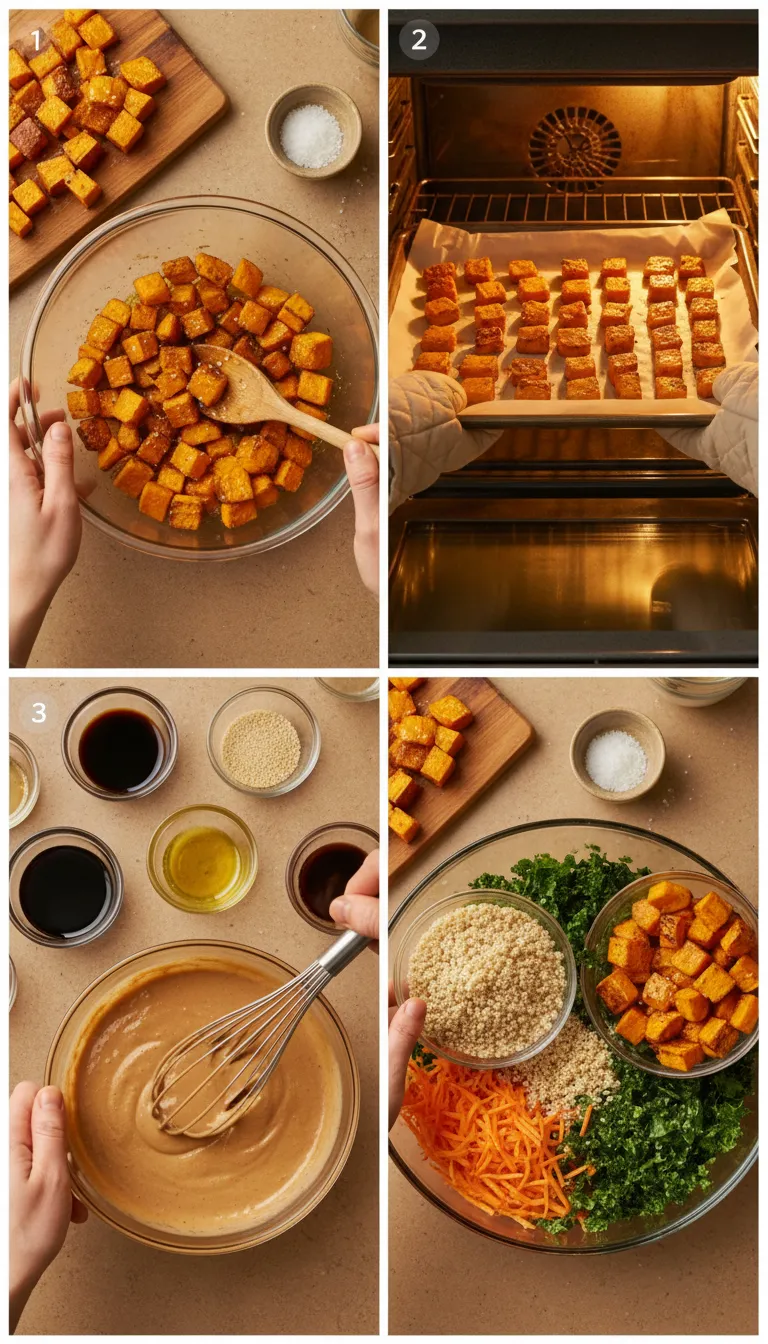
Preheat your oven to 400°F (200°C). Wash and dice the sweet potatoes into uniform 1-inch cubes for even cooking. Toss them with olive oil and a pinch of salt in a large bowl, ensuring each piece is well-coated. Spread them in a single layer on a baking sheet, giving each piece space to roast rather than steam. This technique creates those coveted caramelized edges that add depth to the dish.
Step 2: Roast to Perfection
Roast the sweet potatoes for 25-30 minutes, flipping them halfway through for even browning. They’re ready when a fork easily pierces through and the edges are golden brown. The natural sugars will caramelize, creating a beautiful contrast between the crispy exterior and creamy interior.
Step 3: Cook the Quinoa
While the sweet potatoes roast, rinse the quinoa under cold water until the water runs clear. This removes the natural saponins that can make quinoa taste bitter. Cook according to package directions, typically 1 part quinoa to 2 parts water, simmered for 15 minutes until fluffy and the liquid is absorbed.
Step 4: Create the Thai Peanut Sauce
In a medium bowl, whisk together peanut butter, grape juice, soy sauce, sesame oil, and lime juice until smooth and creamy. Start with the listed amounts of grape juice, then add more gradually if you prefer a thinner consistency. The sauce should coat the back of a spoon but still be pourable.
Step 5: Assemble Your Buddha Bowl
In serving bowls, create sections with the cooked quinoa as the base, then arrange the shredded carrots and chopped kale in separate areas. Top with the warm roasted sweet potatoes. This sectioned approach allows each diner to enjoy the individual flavors before mixing.
Step 6: Finish and Serve
Drizzle the Thai peanut sauce generously over the entire bowl, then garnish with chopped green onions for a fresh, sharp contrast to the rich sauce. Serve immediately while the sweet potatoes are still warm for the best texture contrast.
Tips & Tricks for Perfect Results
- Don’t overcrowd the pan: Give sweet potatoes space to roast properly and develop caramelized edges
- Massage the kale: Rub the chopped kale with a pinch of salt and lemon juice to soften its texture and reduce bitterness
- Make sauce ahead: The peanut sauce can be prepared up to 3 days in advance and stored in the refrigerator
- Warm serving bowls: Rinse bowls with warm water before assembling to keep the meal at optimal temperature longer
- Toast the quinoa: For extra flavor, toast dry quinoa in a dry pan for 2-3 minutes before adding liquid
Recipe Variations & Substitutions
Transform this Thai Peanut Sweet Potato Buddha Bowl with these creative variations. For a tropical twist, add diced mango and substitute coconut milk for grape juice in the sauce. Create a spicy version by adding sriracha or red pepper flakes to the peanut sauce. For a heartier meal, include baked tofu or tempeh. Those following a low-carb lifestyle can replace quinoa with cauliflower rice, while adding extra vegetables like bell peppers or cucumber for crunch.
Behind the Recipe
This recipe was inspired by my travels through Thailand, where street vendors create magical combinations of sweet, salty, and spicy flavors in simple bowls. I wanted to capture that same balance while incorporating the nutritional powerhouse that is the sweet potato. The grape juice addition came from experimenting with natural sweeteners that wouldn’t overpower the delicate peanut flavor, and it proved to create the perfect sauce consistency while adding subtle fruitiness.
Pairing Ideas
Complement your Thai Peanut Sweet Potato Buddha Bowl with refreshing beverages like iced green tea with mint, coconut water with lime, or a ginger-lemon sparkling water. For additional sides, consider serving with spring rolls, cucumber salad with rice vinegar dressing, or crispy roasted chickpeas for extra protein and crunch.
Leftover & Reuse Ideas
Transform leftovers into new meals by using the components in creative ways. The roasted sweet potatoes make excellent additions to morning smoothie bowls or can be mashed into pancakes. The peanut sauce works beautifully as a dip for fresh vegetables or as a dressing for simple green salads. Leftover quinoa can be formed into patties and pan-fried for a crispy base for future bowls.
Nutritional Information
Each serving provides approximately 520 calories with 18g of plant-based protein, 65g of complex carbohydrates, and 22g of healthy fats. The sweet potatoes contribute significant amounts of vitamin A, potassium, and fiber, while quinoa provides complete protein and B vitamins. The peanut butter adds heart-healthy monounsaturated fats and additional protein.
Serving Suggestions
Present this Thai Peanut Sweet Potato Buddha Bowl in wide, shallow bowls to showcase the colorful arrangement. Provide lime wedges on the side for those who enjoy extra citrus brightness. Consider serving family-style with the components in separate dishes, allowing everyone to customize their bowl according to their preferences.
Common Mistakes to Avoid
The most frequent error is cutting sweet potatoes unevenly, leading to some pieces burning while others remain undercooked. Always aim for uniform 1-inch cubes. Another common mistake is making the peanut sauce too thick initially; start with less liquid and gradually add more as needed. Avoid overdressing the bowl; the sauce should enhance, not overwhelm, the individual ingredient flavors. Finally, don’t skip the lime juice in the sauce, as it’s crucial for balancing the rich peanut flavor.
Storage & Reheating Tips
Store components separately in the refrigerator for up to 4 days. The roasted sweet potatoes reheat best in a 350°F oven for 10 minutes to restore their texture. The peanut sauce may thicken when cold; simply whisk in a tablespoon of warm water to restore its consistency. Avoid storing dressed kale, as it will become soggy; instead, add fresh kale when reheating or use the stored kale in smoothies.
Frequently Asked Questions
Can I make this Thai Peanut Sweet Potato Buddha Bowl ahead of time?
Yes, you can prepare all components up to 2 days ahead. Store the roasted sweet potatoes, cooked quinoa, and peanut sauce separately in the refrigerator. Assemble and dress the bowls just before serving for the best texture and flavor.
How do I make this Thai Peanut Sweet Potato Buddha Bowl gluten-free?
Simply substitute tamari for soy sauce, and ensure your other ingredients are certified gluten-free. The rest of the recipe is naturally gluten-free, making this an excellent option for those with gluten sensitivities.
What’s the best way to get crispy sweet potatoes in my Buddha bowl?
The key is high heat (400°F), uniform cutting, not overcrowding the pan, and ensuring the sweet potatoes are completely dry before tossing with oil. These steps ensure proper caramelization and crispy edges.
Can I use a different nut butter in this Thai Peanut Sweet Potato Buddha Bowl?
Absolutely! Almond butter, cashew butter, or sunflower seed butter all work well. Each will create a slightly different flavor profile, but the creamy texture and nutritional benefits remain similar.
How long does the peanut sauce last in the refrigerator?
The Thai peanut sauce will keep in the refrigerator for up to one week when stored in an airtight container. Give it a good stir before using, as separation is natural.
Conclusion
Thai Peanut Sweet Potato Buddha Bowl

This Thai Peanut Sweet Potato Buddha Bowl represents the perfect marriage of nutrition and flavor, bringing together wholesome ingredients in a way that satisfies both your taste buds and your body’s needs. The combination of roasted sweet potatoes, protein-rich quinoa, fresh vegetables, and that irresistible Thai peanut sauce creates a meal that’s both comforting and energizing. Whether you’re meal prepping for the week or creating a special dinner, this bowl delivers restaurant-quality flavors in the comfort of your own kitchen.
Made this recipe? Drop your twist in the comments, rate the recipe, and tag us on Facebook, Instagram with #recipehoney.com we might feature your creation!

Thai Peanut Sweet Potato Buddha Bowl: Easy Healthy Lunch
Ingredients
Instructions
- Roast the Sweet Potatoes: Preheat oven to 400°F (200°C). Toss diced sweet potatoes with olive oil and salt; spread on a baking sheet and roast 25-30 minutes until tender.
- Cook the Quinoa: While the potatoes roast, cook quinoa according to package instructions and set aside.
- Make the Thai Peanut Sauce: Whisk together peanut butter, grape juice, soy sauce, sesame oil, and lime juice until smooth; adjust consistency with extra grape juice if needed.
- Assemble the Bowl: In a large bowl combine cooked quinoa, shredded carrots, and chopped kale. Add roasted sweet potatoes on top.
- Dress and Serve: Drizzle peanut sauce over the bowl, garnish with chopped green onions, and serve immediately.